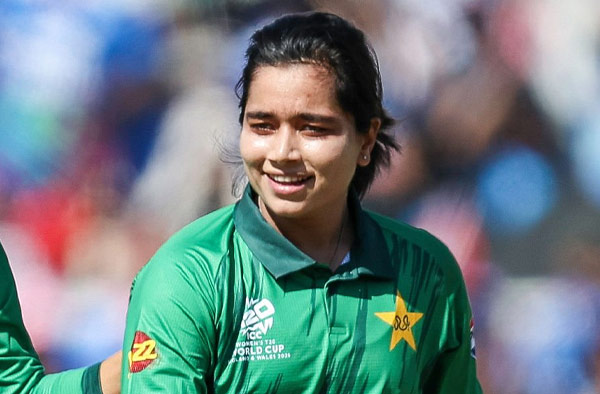
In a move that injects fresh international spice into an already transformed Women’s Hundred, franchises confirmed their wildcard signings on June 18, with Pakistan captain Fatima Sana the standout addition after a dramatic all‑round display at Edgbaston.
The 6th edition of the tournament runs from 21 July to 16 August 2026 and arrives on the back of sweeping changes: the ECB swapped the familiar draft system for a first‑ever player auction in March, and an unmistakable IPL influence has reshaped franchises and ownership. Those shifts frame a Hundred season that now also plays out while England and Wales host an expanded 12‑team ICC Women’s T20 World Cup (12 June–5 July), making this summer the most crowded and intriguing chapter yet in women’s domestic and international cricket.
Fatima Sana’s signing by Birmingham Phoenix, confirmed Thursday afternoon, is a headline moment. Sana replaces Australia’s Lucy Hamilton, who withdrew to manage workload, filling Phoenix’s fourth overseas slot at the Hundred’s minimum salary of £15,000 (roughly 5.6 million PKR).
Her availability is subject to Pakistan’s tour of Sri Lanka (23 July–4 August), but her selection is hardly symbolic: the pace bowling allrounder starred the morning before her signing, scoring a match‑defining 55* off 38 from No. 8 and then returning figures of 3–16 in Pakistan’s narrow defeat to South Africa at Edgbaston, the Phoenix’s home ground. “Signing Fatima Sana is a real statement of intent,” Birmingham’s performance director James Thomas said, praising her leadership and international class.
Sana becomes the third Pakistani contracted to the Hundred this year, joining Usman Tariq at Birmingham Phoenix and Abrar Ahmed, the mystery spinner who commanded £190,000 at the March auction and will turn out for Sunrisers Leeds. underscoring how the auction has broadened the tournament’s recruitment horizons beyond the draft model used in the first five seasons.
That auction, held on 11 March, and the subsequent flurry of direct signings have given the Hundred a distinctly IPL‑style feel: franchises have rebranded (Oval Invincibles to MI London; Northern Superchargers to Sunrisers Leeds; Manchester Originals to Manchester Super Giants), and IPL stakeholders have moved in; GMR (co‑owners of Delhi Capitals) now hold a 49% stake in Southern Brave.
Thursday’s wildcard round saw each franchise add two women on the minimum fee to finalise squads. Several other World Cup participants earned last‑minute spots: Scotland openers Darcey Carter and Katherine Fraser were snapped up by Sunrisers Leeds and Southern Brave, respectively, while names such as Mary Taylor (Phoenix), Niamh Fiona Holland (Welsh Fire) and Naomi Dattani (Southern Brave) completed lists that mix established internationals with local talent.
Across direct signings and retentions, squads already feature a constellation of stars. Birmingham retained Ellyse Perry while adding Alice Capsey, Lauren Filer and Lucy Hamilton earlier via direct routes; London Spirit kept Charlie Dean and Grace Harris and brought in Mahika Gaur and Marizanne Kapp; Manchester Super Giants retained Sophie Ecclestone and signed Meg Lanning and Smriti Mandhana; MI London secured Amelia Kerr, Hayley Matthews and Danni Wyatt‑Hodge and announced Hollie Armitage as captain; Southern Brave retained Lauren Bell, Maia Bouchier and Laura Wolvaardt while bringing in Jemimah Rodrigues; Trent Rockets retained Ashleigh Gardner and Nat Sciver‑Brunt and added Sophia Dunkley and Kim Garth; Welsh Fire signed Freya Kemp, Georgia Voll and Georgia Wareham.
The Hundred’s pivot to auction dynamics and high‑profile ownership ties signals an ambition to raise the tournament’s commercial and competitive hooks. For players like Sana, it creates new pathways to showcase talent in a high‑profile domestic window that overlaps with global tournaments and bilateral tours. For fans, the summer promises a blur of elite women’s cricket, a World Cup that has grown to 12 teams, followed immediately by a reimagined Hundred that blends local loyalties with global star power.
With squads now complete and wildcard names like Sana still carrying question marks over full availability because of international commitments, the stage is set for a summer of fixture clashes, selection puzzles and narrative gold, and for the Women’s Hundred, the 2026 edition may well define the competition’s next evolution as it leans into auction economics and a broader international footprint.

Loves all things female cricket