April 2026 might be the busiest month women’s cricket has ever seen. From a record-smashing knock in an Indian domestic final to seven nations battling it out under the Botswana sun, the women’s game is pushing boundaries that would have seemed unthinkable just a few years ago. This is not a niche story anymore. Women’s cricket is building a worldwide footprint, one tournament and one record at a time.
Sushma Verma’s Stunning 237
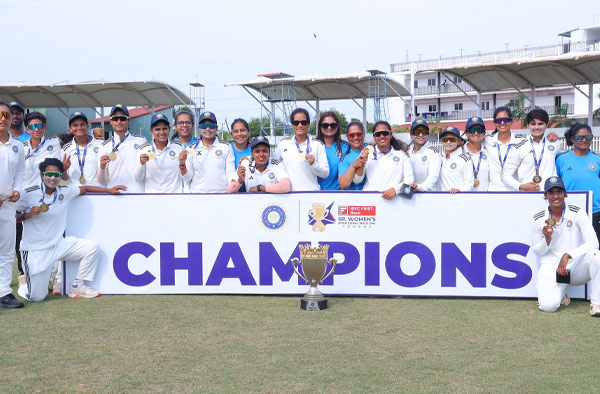
Wicketkeeper-batter Sushma Verma hit a match-defining 237 for North Zone in the Inter-Zonal Multi-Day Trophy final, but fell just short of a world-record women’s first-class score. It was a knock that came out of nowhere. This was Verma’s first ever first-class score in excess of fifty. Let that sink in for a moment. A player who had never crossed 50 in the format went on to blast 237, surpassing her previous best of 33 by over 200 runs.
After batting at No.5 and 6 in the quarterfinal and semifinal, the veteran was promoted to open the innings, and the change paid off spectacularly. Verma lost her opening partner Tanisha Singh cheaply in the tenth over, but Ayusha Soni dug deep with her, with the duo adding 231 runs for the second wicket, during which both batters completed their respective centuries. The partnership essentially sealed the title for North Zone on first-innings lead.
What makes this story special is who Sushma Verma actually is. Verma became the first cricketer (male or female) from Himachal Pradesh to represent India in international cricket. In 2017, Verma represented the Indian women squad that reached the finals of the Women’s Cricket World Cup. Now 33, she is still proving that age is just a number in women’s domestic cricket. For fans who like following the unexpected in sport, whether through watching live action or placing a wager through a custom-limit sportsbook, performances like this are a reminder that form guides do not always tell the whole story. If you do bet, remember to gamble responsibly and visit BeGambleAware for support.
The Kalahari Tournament Breaks New Ground
Meanwhile in Botswana, a different kind of history is being written. Botswana will host the third edition of the Kalahari Women’s T20I Tournament from April 6 to 11, 2026 in Gaborone. In total, seven nations will compete: Botswana, Sierra Leone, Malawi, Zambia, Lesotho, Mozambique, and Brazil.
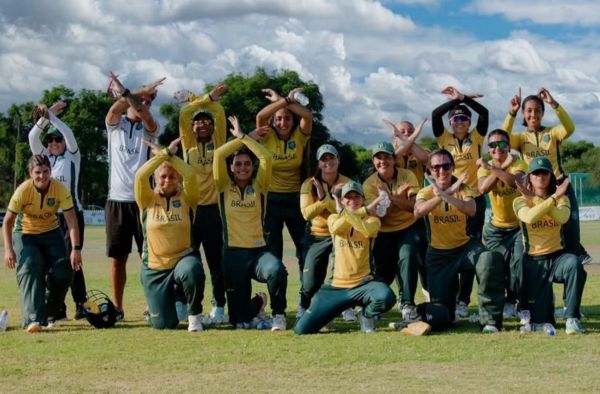
That last name probably caught your attention. Brazil Women add an exciting cross-continental element to what has traditionally been an all-African event. Their presence in Gaborone is not random. In 2020, Brazil, a developing cricket nation outside the sport’s top tier, put 14 women on full-time contracts, making it the only ICC member at the time with centrally-contracted women but no contracted men — a remarkable inversion of how cricket usually operates. That investment is clearly paying dividends, with Brazilian players now competing regularly in international T20 cricket.
The tournament grew from four teams in 2025 to seven in 2026, almost doubling in size within a single year. Sierra Leone Women enter as defending champions after beating Botswana in the 2025 final. Every match carries full T20I status, which means every match earns ICC Women’s T20I ranking points, which helps associate nations enter World Cup qualification pathways. For these teams, a good result is not just about pride. It is a stepping stone toward the global stage.
A Packed Schedule Ahead
The Kalahari event is just the beginning of a stacked April calendar. India, skippered by Harmanpreet Kaur, tours South Africa (April 17-27) for a 5-match T20I series against Wolvaardt’s Proteas. That series will serve as critical preparation ahead of the Women’s T20 World Cup this summer. Sri Lanka, led by Chamari Athapaththu, visits Bangladesh under Nigar Sultana Joty from April 20 to May 2 for three ODIs followed by three T20Is.
And perhaps the most impressive recent result came from New Zealand. South Africa Women scored 346/6, but New Zealand Women chased down the target, winning by 2 wickets with 2 balls remaining. That 347 target that New Zealand chased vs SA is the highest in women’s ODIs. The skipper Amelia Kerr smashed the bowlers to all parts of the ground, made 179 runs off 139 balls, stayed not out and won the game for New Zealand Women in the last over with 2 wickets in hand. It was the kind of performance that deserves to be talked about for years.
The World Cup Is Coming
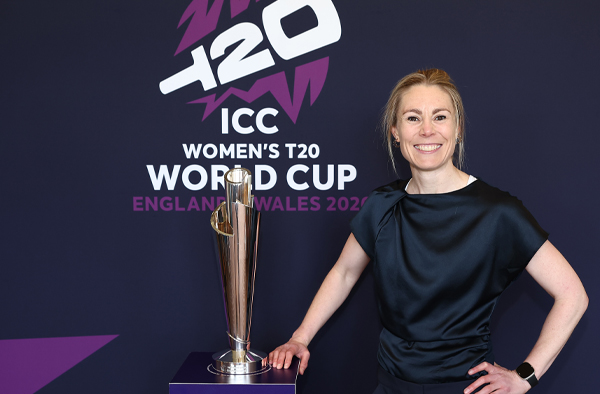
All of this activity feeds into the biggest event on the horizon. The full schedule for the ICC Women’s T20 World Cup 2026 has been confirmed, and it promises to be a landmark summer of women’s cricket. The qualifying quartet now join England, Australia, India, Pakistan, New Zealand, South Africa, Sri Lanka and the West Indies on the global stage from 12 June until 5 July across England and Wales.
The women’s T20 World Cup will include 12 teams in 2026 and expand to 16 by 2030, creating more qualifying berths and a clearer competitive ladder for emerging programmes. The expansion matters because it gives nations like Scotland, Ireland, the Netherlands, and Bangladesh genuine opportunities to compete against the best. The Dutch will make their debut in the Women’s T20 World Cup 2026.
The Olympic Effect
The upcoming World Cup is not the only catalyst driving growth. In October 2023, the IOC approved cricket (T20) for LA2028 — its first Olympic appearance since 1900, and the first time with both women’s and men’s T20 tournaments. That decision has changed the funding equation for several countries. For nations like Germany and the United States, that decision changed the funding landscape. Germany’s Deutscher Cricket Bund joined the German Olympic Sports Confederation in 2024, unlocking federal high-performance funding from 2025.
Why This Moment Matters
There is a temptation to view women’s cricket as a sideshow to the men’s game. But the numbers and the narratives of 2026 tell a different story entirely. By 2026, brands no longer view women’s cricket as a corporate social responsibility exercise or an add-on to men’s events. It stands as an independent commercial product. The WPL in India, the WBBL in Australia, and The Hundred in England have created viable professional careers where none existed before.
The grassroots growth is equally important. Events like the Kalahari Tournament show that the pipeline is getting wider, not just deeper. When a team from Brazil can fly to Botswana to play competitive T20I cricket against African nations, the sport has genuinely gone global. For fans across the UK who enjoy the thrill of the game both on screen and through related entertainment like online slots, the growing profile of women’s cricket means more matches, more narratives, and more reasons to tune in.
Final Thoughts
From Sushma Verma rewriting the record books in Puducherry to seven nations going head to head in the Kalahari heat, April 2026 is showing us what a truly global women’s game looks like. With a 12-team World Cup on English soil around the corner and the Olympics just two years away, the stage has never been bigger. Women’s cricket is not just growing. It has arrived.

Loves all things female cricket