As the curtains rise on the grand finale of the 2025 ICC Women’s ODI World Cup, the spotlight falls on Navi Mumbai’s Dr DY Patil Stadium, where India and South Africa will lock horns on November 2nd in what promises to be a spectacle of skill, emotion, and history in the making.
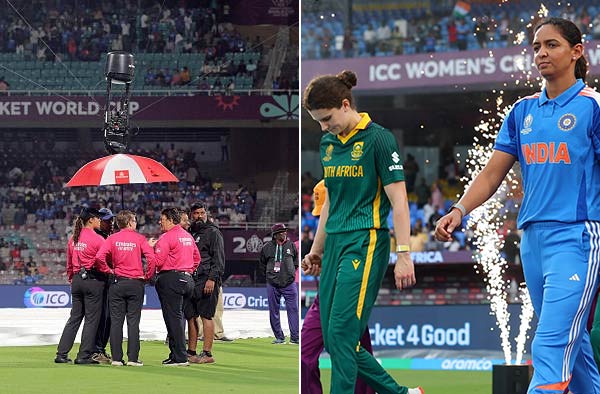
The atmosphere in Mumbai is charged — not only with humidity (74%), temperatures hovering around 31°C, and winds blowing at 18 kph, but also with the sheer anticipation of two sides chasing their maiden world title. However, amid the buzz and colour of the final, there’s one element neither team can control — the weather. Forecasts currently predict light rain with a 30% chance of showers, leaving fans anxiously eyeing the skies and wondering what happens if the biggest game of the tournament gets interrupted or even washed out.
Under current ICC regulations, the final on November 2 has a dedicated reserve day. But the ICC emphasizes that every possible effort will be made to finish the match on the scheduled day itself, even if it means a reduced-overs contest. Only if play cannot be completed despite all efforts will the game spill over to the next day.
To explain how the system works, the ICC has outlined several possible scenarios:
Scenario 1: If a full 50-over match begins but rain interrupts play — say, at 19 overs — and the game is later reduced to 46 overs per side but cannot resume on the same day, it will restart as a fresh 50-over contest on the reserve day.
Scenario 2: If play resumes after being reduced (for example, to 46 overs per side) but rain returns and stops play again, the match will continue from that reduced point on the reserve day — not as a new 50-over game.
Essentially, the distinction lies in whether the reduced-overs phase actually began before play was halted. If it does, the match continues from that point; if not, it starts afresh.
While a reserve day adds an extra layer of security, cricket’s unpredictability — particularly during the post-monsoon season in coastal Maharashtra — means there’s always the slim but real possibility of an outright washout.
If continuous rain prevents any play on both the scheduled day and the reserve day, and the final ends without a result, the trophy will be shared between India and South Africa. It’s an outcome that no player or fan wants, but one that remains a part of cricket’s long history of weather-induced heartbreaks.
The DY Patil Stadium has already experienced the frustrations of the weather this tournament. The India–New Zealand match witnessed lengthy interruptions, while the India–Bangladesh fixture became the first official abandonment of the World Cup on Indian soil. With clouds once again threatening to play spoilsport, the ICC and local ground staff are preparing every possible contingency to ensure the final reaches its natural conclusion.
For South Africa, this match is the culmination of a journey defined by grit, resilience, and redemption. The Proteas, featuring in their first-ever Women’s ODI World Cup Final, have been one of the most consistent teams of the tournament. They won five of their seven group-stage matches, their only losses coming against England and Australia. When it mattered most, they struck back emphatically — crushing England by 125 runs in the semi-final, exorcising the ghosts of their 2017 and 2022 knockout defeats.
For India, the story has been one of revival. The hosts endured a mixed group stage, winning three of seven matches, with one ending in a no result due to rain. Their defeats came against Australia, England, and South Africa, but the knockout phase brought out their best. In the semi-final against Australia, India produced one of their greatest-ever World Cup performances, chasing down 339 to win by five wickets with nine balls to spare, ending Australia’s 15-match unbeaten streak in World Cups. The triumph sent the Navi Mumbai crowd into delirium and set up a dream finale between two nations chasing their first world crown.
So as November 2nd approaches, the equation is simple yet tantalizing — two teams, one dream, and perhaps one unwanted variable. Whether the skies stay clear or not, this final is already etched in history as a contest between India’s resurgence and South Africa’s rise.
Every fan hopes the rain stays away long enough for cricket — not the weather — to decide who lifts the 2025 ICC Women’s World Cup Trophy.

Loves all things female cricket