Guwahati is all set to witness a blockbuster clash on October 29 as England and South Africa face off in the semi-final of the 2025 ICC Women’s ODI World Cup at the Barsapara Stadium. With rain clouds lingering overhead, the contest promises emotion, pressure, and plenty of history. England, the perennial powerhouse, will look to maintain their dominance, while South Africa chase redemption and a maiden finals berth.
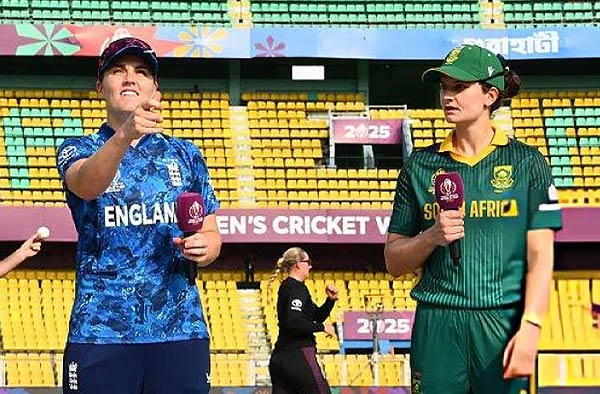
South Africa’s journey to this stage has been as dramatic as it has been resilient. Their World Cup campaign began in complete disarray — bundled out for just 69 against England in their opening match and losing by ten wickets. It was a humiliating defeat that could have shattered their confidence. Yet, under the leadership of Laura Wolvaardt, the Proteas showed remarkable character, bouncing back with conviction. Wins over New Zealand by 6 wickets and India by 3 wickets redefined their campaign, the latter a last-over thriller that turned momentum strongly in their favor.
The team then hit their stride with clinical victories over Bangladesh by 3 wickets and against Sri Lanka an emphatic 10‑wicket triumph that showcased the firepower of Wolvaardt and Tazmin Brits at the top. Their dominance peaked with a massive 150‑run thrashing of Pakistan before a minor stumble against Australia in their final group game, where they were bowled out for 97. Despite that collapse, South Africa enters the semifinals as a rejuvenated and a confident unit, aware that they’ve already come through adversity once in this tournament.
England, on the other hand, have looked every bit the title contenders they were expected to be. Their campaign began with ruthless efficiency — bowling South Africa out for 69 in their opener and sealing a ten‑wicket win. Against Bangladesh they bowled out them for 178 and won by 4 wickets while Nat Sciver-Brunt’s composed 117 against Sri Lanka where they won by 89 runs reaffirmed England’s depth and dominance. While the team struggled at 133/9 in a rain-curtailed 31-overs-per-side contest against Pakistan, the match was called off due to rain.
The defining moment for England came in their thriller against India. Skipper Heather Knight turned back the clock with a gutsy century, playing a crucial role in England’s narrow four‑run win that showcased their composure under pressure. That win also sealed their spot in the semi-final. Although their unbeaten run met resistance against Australia where England faced a roadblock as they lost by 6 wickets, the English team bounced back strongly against New Zealand — dismissing them for 168 and chasing effortlessly in 29.2 overs. They enter this semifinal with confidence, settled, and hungry for another shot at the title.
Statistically, England has a clear edge in this rivalry. Out of 47 ODIs, England have won 36 while South Africa holds just 10 wins, with one no result. But if cricket has taught anything, it’s that history guarantees nothing in knockout matches.
As the sun sets over Assam on October 29, South Africa will aim to avenge their opening-round humiliation, while England seek to move one step closer to reclaiming their supremacy. Expect a contest rich in emotion, grit, and everything that defines World Cup cricket.
Weather could play a subtle yet significant role in this Guwahati semifinal. Forecasts suggest partly overcast skies with intermittent spells of light rain, pegging precipitation chances around 30%. Humidity levels hovering near 66% may add heaviness to the air, creating ideal conditions for swing bowling, especially during the evening phases under lights.
Gentle winds at 8 kph are expected to blow across the Barsapara Stadium, possibly aiding seamers in generating lateral movement. While no severe weather interruptions are predicted, short rain breaks cannot be ruled out. If the cloud cover persists, batting could become tricky early on, rewarding bowlers who can exploit movement and maintain disciplined lengths.
In case weather conditions intervene on the scheduled semifinal day, the ICC’s tournament framework provides a clear and balanced safeguard to protect fairness and competitive integrity. Each semifinal along with the final has an allotted reserve day, ensuring every possible opportunity for play to resume and the match to reach a proper conclusion on the field. Match officials will prioritize completing the contest on the original date itself, even through overs reduction, if necessary, before resorting to the reserve day.
If rain or adverse conditions prevent a full result across both days, progression to the final will then be determined by the teams’ standings at the end of the league stage, allowing the higher-ranked side to advance. This policy reflects the governing body’s intent to combine sporting merit with logistical practicality vital principles in a global event of this magnitude, where every result must stand on both performance and fairness.

Loves all things female cricket