The impending conclusion of a golden era hangs heavy over New Zealand cricket, but for veteran pace spearhead Lea Tahuhu, the sentimental farewells can wait.
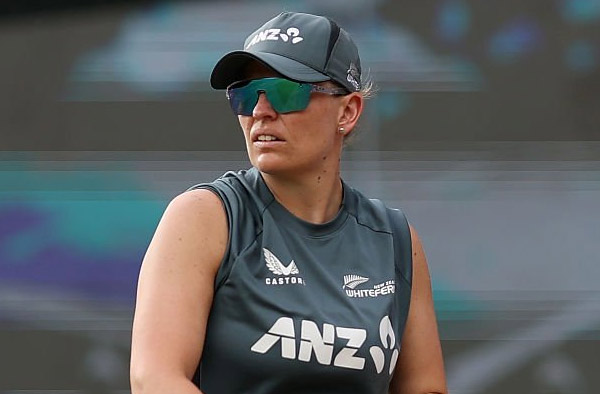
The upcoming ICC Women’s T20 World Cup 2026 in England and Wales marks the final international chapter for three titans of the White Ferns: Sophie Devine, Suzie Bates, and Tahuhu herself. Yet, while fans and pundits prepare to romanticize the end of an illustrious era, Tahuhu is treating the tournament not as a victory lap, but as a clinical business trip. The objective is singular, pragmatic, and entirely devoid of nostalgia: securing back-to-back world titles.
Blocking out the narrative of a final swansong is easier said than done, but the 35-year-old fast bowler has always excelled at focusing strictly on the patch of grass right in front of her. She is acutely aware that this is her final roll of the dice on the global stage, but she refuses to let the emotional weight of retirement compromise her execution.
“A lot of the talk will probably be outside of our team about those retirements happening, but for me, we’re just here to do a job,” Tahuhu stated with characteristic bluntness. “We’re here to try and win another World Cup. Your last opportunity—you probably know that, that’s sitting in the back of your mind—but for me, it’s pretty simple, go out there and do the role that you’ve been asked to do.”
A complicating factor in New Zealand’s campaign is their status as defending champions, having stunned the cricketing world to lift the trophy in 2024. Entering a major tournament with a crown to protect alters the psychological dynamic, transforming the White Ferns from dangerous underdogs into hunted favorites. Teams will undoubtedly scout them with greater scrutiny this time around, but Tahuhu insists that the squad is shifting its perspective from defense to offense to mitigate any creeping pressure.
“There might be some teams who have maybe got a bit more of a target on us, or maybe who are taking us as a bit more of a serious threat than what they did going into the last World Cup, but I don’t think it’s any extra pressure for us,” Tahuhu explained. “We’re going out there not to defend, but to really attack and look at winning another World Cup. It’s not about defending the one that we’ve already got.”
That aggressive tactical blueprint is backed by a bowling unit that Tahuhu believes is peaking at precisely the right moment. The recent One-Day International (ODI) series against England served as a valuable testing ground, showcasing a lethal blend of seasoned continuity and tactical variance. The emergence of fresh talent has injected a new dimension into the attack, ensuring that the champion quick isn’t carrying the burden of the powerplay and death overs entirely on her own veteran shoulders.
“I think we’re in a really good place,” Tahuhu remarked, assessing the tactical depth at their disposal. “Most of our bowlers have been around the squad or the environment for a couple of years at least. The way that Bree Illing’s come in as a left-arm pacer adds a bit more diversity to our group, an area that we haven’t had for a wee while.”
Crucially, the resilience within the bowling ranks extends beyond tactical variations to sheer mental fortitude under pressure. Tahuhu pointed to the redemption arc of her seam-bowling partner Rosemary Mair, who overcame a grueling injury layoff to seamlessly re-establish herself as a clutch performer, as a prime example of the squad’s current robustness.
“It’s been great to see the improvements in Rosemary Mair in the last couple of years,” Tahuhu noted. “She obviously had a bit of an injury and was out for a period of time, but the way that she’s come back and being able to just come straight back in and perform really well under pressure has been fantastic.”
When New Zealand lines up against the West Indies on June 13 to kick off their tournament, the romantic subplots of a legendary trio walking into the sunset will inevitably dominate the headlines. But if Tahuhu has her way, the headlines by the end of the month won’t be about how the legends said goodbye, but how they remained ruthless until the very last ball. For a competitor who has spent over a decade terrifying top orders, the perfect exit isn’t a tearful guard of honor—it is standing on a podium with a second consecutive World Cup medal around her neck.

Loves all things female cricket