Annabel Sutherland believes player workload management will become increasingly important in women’s cricket as the international calendar continues to expand, with the Australian allrounder returning refreshed and fully focused ahead of the ICC Women’s T20 World Cup 2026.
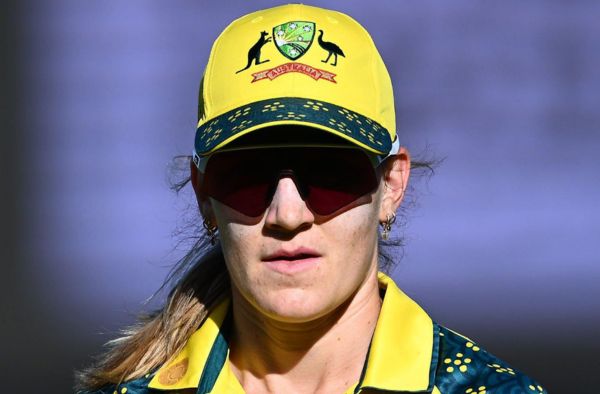
Sutherland was absent from Australia’s white-ball tour of the West Indies in March after choosing to take a short break following an intense six-month period that included the ODI World Cup in India and the multi-format home series against India. The decision was notable because Australia’s leading women’s cricketers rarely miss international assignments voluntarily. However, the 24-year-old said stepping away briefly was necessary to ensure she was physically and mentally prepared for the World Cup in England and Wales next month.
“I think it’s obviously tough when your teammates are playing and I absolutely love playing for and representing Australia, so I missed that – but I knew it was the right call for me, to be honest,” Sutherland told cricket.com.au in Brisbane this week.
Over the last year, Sutherland has become one of the most important all-rounders in world cricket. Her rise has been particularly impressive in longer formats, where she averages 89.37 in Test cricket from 10 innings. In ODIs, she has cemented her place in Australia’s top order with an average of 40.84 while also playing a key role with the ball. The only format where her batting numbers remain modest is T20 cricket, where she averages 11.55 at a strike rate of 136.84. However, those statistics also reflect limited opportunities, with most of her 23 innings in 48 T20Is coming at No. 7 or lower in a batting lineup filled with experienced stars.
Sutherland revealed that after withdrawing from a Women’s Premier League contract earlier this year, she spent several weeks completely away from cricket before gradually rebuilding her preparation for the World Cup. “Physically, mentally, just to refresh and prioritise what I needed to make sure that I’m raring to go for when it matters most – which is this T20 World Cup,” she said.
Australia’s schedule is only expected to become busier in the coming years. The women’s game will add a T20 Champions Trophy from 2027, while cricket’s return to the Olympics in 2028 and the continued growth of franchise leagues around the world are expected to further increase demands on players.
Sutherland said player wellbeing would need to remain a major priority as the sport continues to expand rapidly. “I think as the schedule gets fuller, the demands are just going to keep increasing and I hope that we’re prioritising the wellbeing of individuals,” Sutherland said.
Australia coach Shelley Nitschke also acknowledged the growing challenge of balancing international commitments with franchise cricket and major ICC events. Team management has already begun discussing long-term strategies to help players manage workloads without compromising performance.
[embedpress]https://x.com/i/status/2055240871147438555[/embedpress]
Despite the increasing demands, Sutherland enters the World Cup as one of Australia’s most valuable players because of her ability to contribute in multiple areas. Her bowling through the middle overs and at the death has become a major weapon, while Australia continues searching for the best batting role to maximise her impact in T20 cricket.
During the recent T20I series against India, Sutherland batted at No. 8 in the opening match in Sydney, scoring three, before moving to No. 7 in the third game, where she made 14 from nine deliveries. Australia’s deep batting order means she is often required to adapt according to match situations. “I want to impact the team as much as I can and doing that with bat and ball is part of my role,” Sutherland said.
With Australia aiming to defend their Women’s T20 World Cup title, the allrounder’s refreshed mindset, growing experience and ability to influence matches with both bat and ball could prove crucial during the tournament in England and Wales.
(Quotes sourced from cricket.com.au)

Loves all things female cricket