Australia’s women’s cricket team finds itself in uncharted territory. Having recently conceded the T20I series 1-2 to a resurgent India Women, the world’s most successful cricket side must now pivot to their strongest format to salvage pride. The upcoming ODI series, commencing tomorrow in Brisbane, is more than just a multi-format leg; it is an opportunity for Australia to reassert their authority on home soil and defend a legacy that spans nearly three decades.
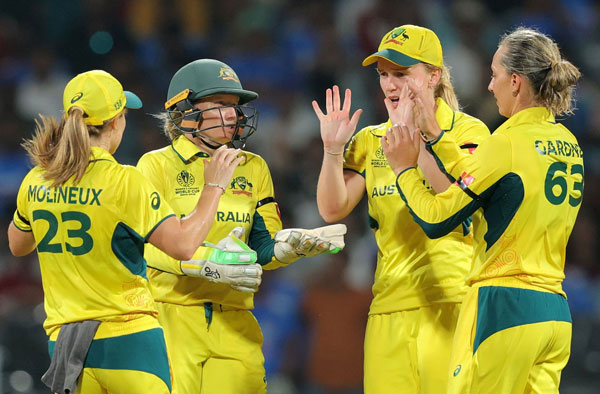
The loss in the T20I series was Australia’s first bilateral series defeat at home since November 2017—a staggering seven-year unbeaten run. Historically, Australia has been an impenetrable wall for visiting Indian sides. As per the latest stats, Australia holds a massive 49-12 win-loss record against India Women in ODIs since 1978. On home soil, that dominance is even more pronounced, with 15 wins out of 19 matches and a formidable win/loss ratio of 3.75. To avenge the T20I loss, the Aussies must tap into this historical psychological edge and remind India why touring Australia is considered the toughest assignment in the sport.
Perhaps the most significant “correction” for the ODI leg is the return of Alyssa Healy. After missing the T20Is, the veteran wicketkeeper-batter returns to lead the side in what will be her international swansong. Healy’s presence at the top of the order—bolstered by her explosive HS of 142 against India in the 2025 World Cup—provides the tactical stability and aggression that seemed missing during the T20I decider. With her retirement looming after this series and the subsequent Test, the Australian camp will be fueled by the “extra incentive” to send their legendary skipper off with a trophy.
In the T20Is, Australia struggled with “losing key wickets at really big times,” a trend Sophie Molineux highlighted after the final match. The shift to the 50-over format allows Australia’s deep batting lineup to play with more calculation. Boasting an average of 35.09 against India, the Australian batters like Beth Mooney and Ellyse Perry need to drop the “T20 rush” and focus on the patient accumulation that has seen them post scores as high as 412. Controlling the tempo during the middle overs—where India’s spinners like Shreyanka Patil and Deepti Sharma have thrived—will be the defining factor.
A major tactical error in the T20s was the exclusion of leg-spinner Alana King, who has now been recalled for the ODI squad. On Australian pitches that offer bounce and turn, King’s ability to break partnerships is vital. India’s Smriti Mandhana is in the form of her life, coming off a match-winning 82 in the T20I final. Australia’s bowling unit, led by Megan Schutt and Darcie Brown, must find a way to dismantle India’s top order early—much like they did during their record 25-match winning streak in 2021—to prevent India from capitalizing on their T20 momentum.
Currently, Australia trails 2-4 in the multi-format points table following the T20I series loss. With the ODI series offering 2 points per win, a clean sweep would not only avenge the recent loss but also put them back in the driver’s seat for the overall trophy. Australia hasn’t lost an ODI series at home in decades, and their ability to bounce back from rare defeats is what makes them champions. Tomorrow at Allan Border Field, expect a side that is less about “experimentation” and more about the clinical, ruthless cricket that has defined the green and gold for generations.

Loves all things female cricket