There is a distinct, clinical chill to the way the Australian women’s cricket team navigates the knockout stages of global tournaments. For over a decade, opponents have arrived at World Cup fixtures searching for a tangible crack in the powerhouse’s armor, only to discover they are not playing an isolated group of eleven individuals, but a highly synchronized, self-sustaining ecosystem.
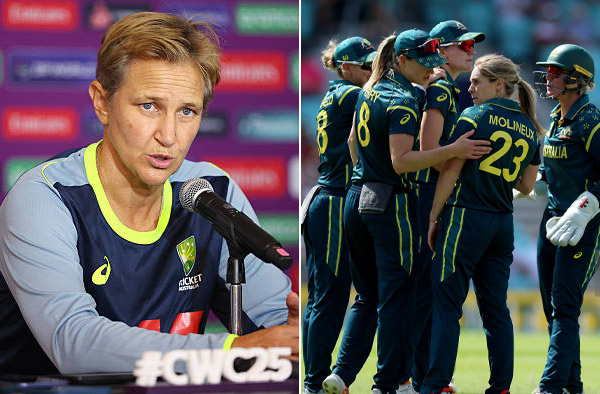
As Australia marches into yet another ICC Women’s T20 World Cup Final in 2026, the overarching narrative surrounding the squad isn’t about individual brilliance single-handedly dragging a flawed lineup across the finish line. Instead, it centers on an uncompromising collective that simply refuses to blink under pressure.
Reflecting on the campaign’s trajectory, Australian head coach Shelley Nitschke highlighted this relentless group ethos, observing, “I think the way we’ve played, the way we’ve gone about it and probably the number of contributions across the team. We’ve had different people stick their hand up with the bat and make a contribution.”
This specific tournament cycle has demanded a subtle, more flexible tactical evolution from the reigning giants. The familiar, immovable pillars of previous championship campaigns have shifted, requiring the newer scaffolding of the squad to bear immense weight. While veterans continue to anchor the side, the true marker of Australia’s undefeated surge through the group stages and semi-finals has been their terrifying positional fluidity.
Commenting on the balance between established stars and the emerging roster, Nitschke noted, “Obviously, Ellyse (Perry) and Ash (Gardner) have been excellent, but good to see Moons back in the runs. Georgia Wareham at different times with the bat and with the ball, I think it’s been similar. We’ve had different people at different times stick their hands up.”
The tactical elevation of Georgia Wareham has been a masterstroke in this tournament; she has transformed from a traditional leg-spinner into a dangerous, floating pinch-hitter capable of dismantling bowling plans before top-order mainstays like Ellyse Perry or Ash Gardner even stride out to the middle. Meanwhile, having a seasoned opener like Beth Mooney find her peak form at the business end of the World Cup leaves opposing captains with virtually no mechanical weaknesses to exploit.
This sustained dominance is the direct byproduct of an internal culture that consciously prioritizes instinctive, high-tempo risk-taking over cautious accumulation. In the high-stakes environment of a T20 World Cup, where a single poor over can derail a campaign, the coaching staff has actively encouraged the players to cast aside any fear of failure.
Nitschke reinforced this philosophical framework, stating, “It’s just about playing with a bit of freedom and not sort of second guessing yourself. It’s about taking the positive option and thinking about the positive outcome. And I think just trusting yourself and trusting your instinct and playing to your strengths.”
By granting the roster total tactical agency, Australia has eliminated the hesitation that so frequently paralyzes other teams during global knockouts. This unshakeable confidence filters down through every tier of the lineup, ensuring that whether they are defending a meager total or chasing a record target, the collective focus remains entirely locked on forward momentum.
The manifestation of this fearless mindset is arguably most evident within the bowling unit, where rigid, pre-determined roles have been completely abandoned in favor of bold, reactive decision-making. “Everyone’s sort of been embracing that as well,” Nitschke explained regarding the team’s tactical execution.
“With the ball too, it’s about being brave with the change-ups, knowing when to and when not to. And again, it’s about not second guessing. And that comes down to a lot of confidence and a lot of clarity and having your teammates and your captain right behind you there as well.”
This clarity was vividly illustrated when the selectors threw teenage bowling sensation Lucy Hamilton directly into the competitive furnace of a high-stakes Powerplay against a destructive Indian top order. Rather than shielding the youngster, the leadership group backed her natural skill set, a gamble that paid massive dividends for their defensive structures.
Nitschke praised the rookie’s temperament under extreme scrutiny, saying, “She’s been super impressive. Lucy, to come into that game against India and bowl in the Powerplay, to have the composure and bowl like she did was excellent. She’s got a pretty level head and has created some excellent opportunities for us.”
Concurrently, the strategic deployments of seam bowler Annabel Sutherland, epitomize the sheer adaptability that makes Australia such a harrowing matchup. Sutherland serves as the squad’s defensive anchor, a premier weapon capable of stifling scoring rates regardless of when she is handed the ball. “Belsey’s super important, I think, to our bowling structure,” Nitschke emphasized. “We do use her a lot at the death and she’s really reliable, but we also know she can bowl in the Powerplay if we need her to, as well as through the middle. It’s about working out where she’s best suited on any given day.”
Nitschke summarized this definitive mindset perfectly as the team stood on the precipice of yet another world title, concluding, “It’s about trying not to run from the moment. Just embracing that and enjoying the lead-up to the game. At the end of the day, we’ve got to play one more game of cricket. We’ve all been playing really well, so it’s about backing ourselves. It’s a big one, so we can’t hide from that. Just embrace it, enjoy it and back yourselves.”

Loves all things female cricket