Tazmin Brits became the latest South African batter to cross the 4,000 international-run mark during the ICC Women’s T20 World Cup 2026 semi-final against hosts England at Kennington Oval on 2 July 2026, but her gritty half-century could not prevent the Proteas from succumbing to a 40-run defeat as England booked a final against Australia at Lord’s.
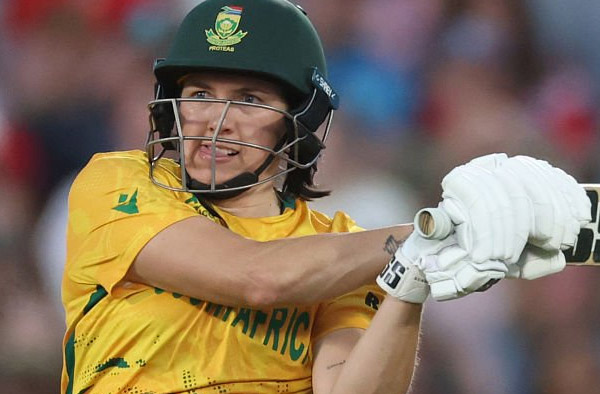
Tazmin Brits entered the semi-final 34 runs shy of the milestone and, in a scratchy but stubborn 51 off 45 balls, moved past the 4,000-run landmark in international cricket, a testament to her longevity and consistency across formats.
Opening with skipper Laura Wolvaardt, she added 43 for the first wicket and anchored the chase after England had posted a challenging 169/5. That total was largely built on skipper Nat Sciver-Brunt’s aggressive 75 off 47, the highest individual score by an England captain in a Women’s T20 World Cup semi-final, and the home side looked well set after a disappointing powerplay.
South Africa’s bowlers had fought back admirably. Nonkululeko Mlaba’s disciplined 4-0-25-2, Shabnim Ismail’s 4-0-31-2 and Marizanne Kapp’s miserly 4-0-16-1 kept the scoring in check and gave the Proteas belief of chasing down the target. When Wolvaardt fell for 17 to Linsey Smith late in the powerplay, the breakthrough galvanised England, and the chase shifted momentum.
Brits, who had earlier in the tournament produced a tournament-defining 114* (69) against the Netherlands at Bristol, a knock that included 15 fours and 3 sixes and underpinned South Africa’s 208/1, fought to keep her side in the hunt. Her 51 featured six boundaries and took her past the 4,000-run milestone, making her one of South Africa’s most enduring top-order presences.
But momentum proved elusive. After Brits’ dismissal by Charlie Dean in the 15th over, South Africa struggled to maintain the required rate. Support from the lower order was sparse: Nadine de Klerk’s 14* off 14, Chloe Tryon’s 12 and Sune Luus’ 11 could not stem the slide, and the Proteas were eventually restricted to 129/8. England’s attack, featuring Lauren Bell (4-0-28-2), Linsey Smith (4-0-25-1), Charlie Dean (4-0-31-2), Sophie Ecclestone (4-0-21-1) and Freya Kemp (3-0-11-1), executed their plans under pressure and sealed England’s fifth appearance in a Women’s T20 World Cup final.
Brits’ landmark is made more notable by the context of her career. Since her T20I debut on 19 May 2018 vs Bangladesh, she has been a model of steady accumulation: in 84 T20I international matches to date, she has compiled the runs that now total over 4,000.
In T20Is alone, she has scored 2,143 runs at a strike rate of 107.79 and an average of 32.46 from 81 innings, with 16 fifties and a century; in ODIs, she has amassed 1,838 runs at a strike rate of 81.07 and an average of 34.03 across 57 matches, including seven centuries. She also made her Test debut in February 2024 and has begun adding to her red-ball credentials.
This World Cup has been a career highlight: Brits is South Africa’s second-highest run-scorer in the tournament with 598 runs at a strike rate of 112.19 and an average of 46 across three World Cups, and in the ongoing edition she finished as South Africa’s leading scorer with 225 runs at a strike rate of 129.31 and an average of 75 from four innings, including the unbeaten 114 that earned her Player of the Match at Bristol.
Despite the heartbreak at Kennington Oval, where South Africa’s chase faltered, Brits’ 4,000-run milestone is a reminder of her centrality to the Proteas’ batting unit over recent years. As England and Australia prepare for a blockbuster final at Lord’s on 5 July, South Africa will reflect on missed opportunities in knockout cricket even as they salute a batter whose career continues to accumulate significant landmarks.

Loves all things female cricket