England women’s head coach Charlotte Edwards has described the 2026 English summer as a campaign of contrasting extremes, bookended by the elation of a home T20 World Cup final and the sobering reality of a historic Test defeat to India.
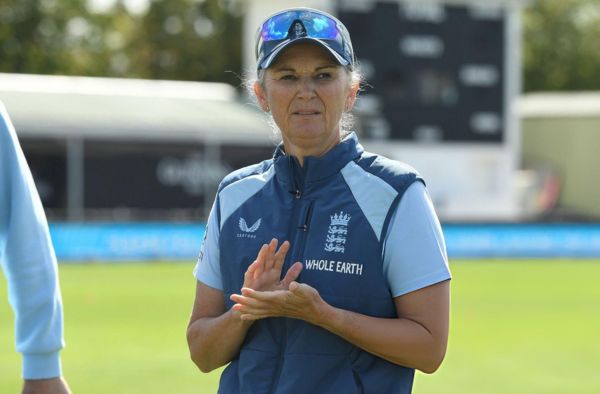
With her side finishing as runners-up in the ICC Women’s T20 World Cup 2026 before suffering a 270-run loss in the one-off Test at Lord’s, Edwards emphasised the need for greater red-ball preparation ahead of next year’s Ashes while celebrating emerging talent like Alice Capsey, who has staked a claim to become England’s No. 1 T20I wicketkeeper.
England’s 2026 campaign began with high hopes on home soil, as they hosted the 10th edition of the ICC Women’s T20 World Cup from 12 June to 5 July. Under captain Nat Sciver-Brunt, the hosts reached the final at Lord’s only to fall short against Australia, led by Sophie Molineux, who secured a seven-wicket victory. Just days later, the same venue witnessed history, and humiliation, as India, captained by Harmanpreet Kaur, recorded a dominant 270-run win in the first women’s Test at Lord’s, exposing England’s lack of red-ball readiness.
Charlotte Edwards refused to use the tight turnaround as an excuse. “That was a really tough four days off the back of a World Cup, and we had no preparation going into that,” she admitted. “But what I know is that we need to really upskill in that area.” With the 2027 Ashes set to begin with a Test match, the England coach outlined plans to prioritise four-day cricket, even if it means resting players from county white-ball fixtures. “Expect potentially some of the players to be removed from county cricket, to give ourselves the best chance of performing in that Test match; we have to play more of it.”
Amid the strategic recalibration, a bright spot emerged in the form of 22-year-old Alice Capsey. Standing in for Amy Jones during England’s 3-0 ODI whitewash of Ireland (1–6 September), Capsey impressed both with bat and gloves, scoring an unbeaten 41 in the opener and executing two crucial stumpings in the final match at Worcester. Her performance has positioned her as a serious contender for the primary T20I wicketkeeping role.
“You’ve obviously all witnessed how well she’s kept throughout this series, and I think the idea of this was to see where she’s at,” Edwards said. “I think there’s a real chance in T20 cricket, if I’m honest. She’s certainly put her hand up in that department.” Stand-in captain Charlie Dean echoed the sentiment: “She looked like she keeps every other week. She’s a huge talent. It seems like she can do everything.”
Statistically, Capsey and Jones are closely matched in T20Is, Alice Capsey averages 21.03 at a strike rate of 121.87, while Jones averages 20.2 at 121.98, but Capsey’s youth and recent form behind the stumps have shifted the conversation in her favour.
Beyond Capsey, Edwards highlighted several positives: Freya Kemp and Dani Gibson’s successful returns from back injuries, Charlie Dean’s composed leadership in Sciver-Brunt’s absence, and Sophia Dunkley’s resilience. Dunkley, named Player of the Series against Ireland, topped the run-scorers chart with a career-best 119 in the final ODI, scoring 212 runs at a strike rate of 105.47 and an average of 70.66 in three innings and matches with the bat for her side in the series.
Meanwhile, Issy Wong’s five-wicket haul in the second fixture underscored England’s growing bowling depth. Despite a concerning collapse in the third ODI, where England lost five wickets for 31 runs in 6.1 overs, Edwards remained optimistic about the squad’s trajectory. “I’m really happy with where the team’s at,” she said. “We’ve managed to develop a few players and give some opportunities throughout that, so it feels like a really, really positive end to the summer.”
With the Champions Trophy now relocated to India and a packed 2027 calendar featuring the Ashes, Edwards’ focus is clear: sharpen Test skills, deepen the talent pool, and ensure England are ready for the world’s best.
(Quotes sourced from Cricinfo)

Loves all things female cricket