Harmanpreet Kaur crossed the 4,000-run mark in T20 internationals on 30 May 2026, becoming only the third batter globally and the second Indian to achieve the feat, after Smriti Mandhana.
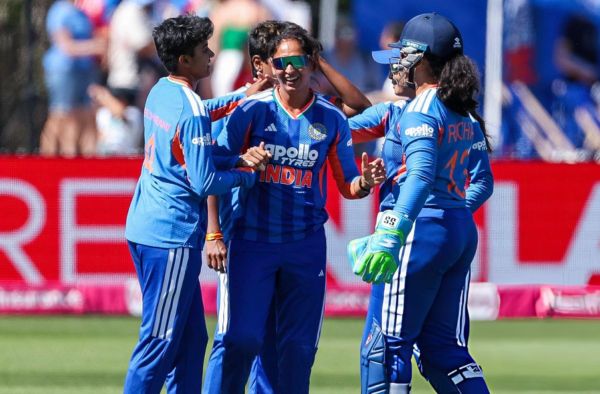
The 37-year-old India captain reached the milestone in the second T20I at County Ground, Bristol, scoring 28 off 22 balls while coming in at No. 4 during a chase of 169. India fell 26 runs short as England, captained for the series by stand-in skipper Charlie Dean, levelled the three-match series 1-1. The milestone, 4,019 runs in 196 matches, at an average of 29.77 from 175 innings, including one century and 16 fifties, cements Harmanpreet’s place among the most enduring and influential figures in women’s T20 cricket.
Harmanpreet Kaur’s international journey began with an ODI debut on 7 March 2009 against Pakistan at Bowral, and her T20I debut followed on 11 June 2009 against England at Taunton. Over nearly 17 years at the top level, she has blended raw power with situational awareness, producing match-defining innings and rescuing chases with regularity. Her signature T20 knock remains the electrifying 103 off 51 balls against New Zealand on 9 November 2018, at the Providence Stadium, Guyana.
An innings of seven fours and eight sixes set up India’s 194/5 and a 34-run victory in the opening match of the ICC Women’s T20 World Cup that year. That century remains the only one of her T20I career so far, and a reminder of her ability to turn games single-handedly. Reaching 4,000 T20I runs is not just about one big innings; it’s the product of sustained contributions over the years, tackling conditions, and opponents.
[embedpress]https://x.com/i/status/2060754257436086425[/embedpress]
Harmanpreet’s tally of 4,019 runs comes from 196 matches and 175 innings, with 16 half-centuries and an overall average of 29.77, numbers that reflect both her longevity and a consistency that teams can build around. She has adapted her role multiple times, ranging from the middle-order accelerator to a finisher, mentoring youngsters and adapting according to the team’s requirements. That flexibility has prolonged her international relevance and allowed newer players to develop confidence around her presence in the side.
She was rested in the T20I series opener on 28th May 2026, at County Ground, Chelmsford, which India won by 38 runs. In the 2nd T20I on her return, she came in at number 4, as India attempted to chase 169. Her 28 (22) featured composed strike rotation and selective aggression, the sort of innings that typifies her middle-order approach in tight chases. Despite her contribution, England’s bowling and depth proved decisive; India fell short by 26 runs, and the series was drawn heading into the decider on 2nd June 2026.
The timing of the milestone adds narrative weight to India’s preparations for the 10th ICC Women’s T20 World Cup, to be hosted by England and Wales from 12 June to 5 July 2026. The tournament expands to 12 teams from 10 in 2024, increasing its competitive depth. India will open their campaign against arch-rivals Pakistan, captained by Fatima Sana, on 14 June at Edgbaston (7 PM IST), a high-stakes fixture in which Harmanpreet’s form and leadership will be under close scrutiny. With the World Cup less than two weeks away, the Bristol landmark serves both as a personal milestone and a timely reminder of the experience India will rely on.
Harmanpreet turns the page from milestone to mission: fine-tuning form, managing fitness and rallying a balanced Indian side for a World Cup campaign that promises more teams and tougher tests than ever. The next fortnight, the final T20I in the series and the World Cup opener at Edgbaston, will keep her charged up for another ICC title hunt.

Loves all things female cricket