Defending champions New Zealand enter the expanded 10th edition of the ICC Women’s T20 World Cup (June 12 to July 5, 2026) in England and Wales, with a new leader at the helm in Amelia Kerr. They are placed in Group 2 alongside England, Scotland, Ireland, Sri Lanka, and West Indies, and kick off against Hayley Matthews’ West Indies on June 13 at Rose Bowl, Southampton (11 PM IST).
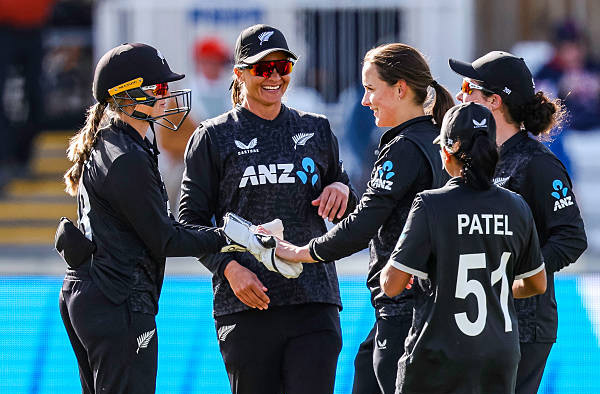
The White Ferns are currently involved in a white-ball series against England, involving a three-match ODI series followed by a three-match T20I series from 10th May to 25th May 2026. New Zealand are currently 1-0 down in the three-match ODI series courtesy of their 1-wicket defeat in the 1st ODI.
Fresh off their maiden title win under Sophie Devine, beating Laura Wolvaardt’s South Africa by 32 runs in the 2024 Dubai final, the squad announced on April 29, 2026, blends veteran firepower with emerging talent. Yet, with legends Suzie Bates, Sophie Devine, and Lea Tahuhu retiring post-tournament, this SWOT analysis spotlights their path to back-to-back glory amid swinging English conditions.
Strengths: Battle-Hardened Pace Attack Leads the Charge
New Zealand boasts one of the most experienced pace attacks in the upcoming edition of the ICC Women’s T20 World Cup 2026, a core strength that could dominate seaming pitches.
Sophie Devine, the 36-year-old veteran all-rounder, brings an unmatched pedigree. One of the few players appearing in her 10th ICC Women’s T20 World Cup since the 2009 inaugural edition, she ranks as New Zealand’s second-highest wicket-taker in the tournament with 29 wickets at an average of 17.1 and an economy of 6.17 in 28 innings, including a four-wicket haul across 38 matches. In T20Is, she has 128 wickets at 18.87 average and 6.67 economy in 128 innings (two four-wicket hauls) over 151 matches, plus 3,587 runs in 147 innings.
Lea Tahuhu, the 35-year-old stalwart, adds depth in her sixth T20 World Cup since 2016. She has claimed 21 wickets at 19.95 average and 6.34 economy in 22 innings across 23 matches for New Zealand in the tournament. Her T20I ledger shows 98 wickets at 19.85 average and 6.39 economy in 100 innings (two four-wicket hauls) over 101 matches.
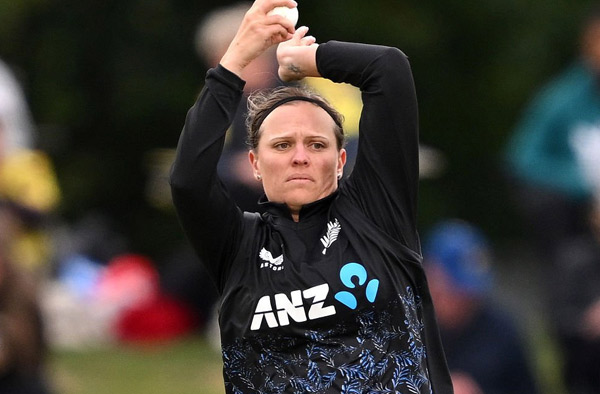
Jess Kerr, the 28-year-old pacer in her fourth World Cup since 2020, contributes 36 T20I wickets at 28.22 average and 6.44 economy in 48 innings across 49 matches. She also offers batting cameos with 189 runs at 117.39 strike rate and 12.60 average in 24 innings.
Rosemary Mair rounds out the attack in her third World Cup since 2020, including 2024. She has 31 T20I wickets at 28.64 average and 6.64 economy in 40 innings (one four-wicket haul) over 43 matches.
This quartet’s experience could stifle Group 2 rivals early.
Areas of Concern: Onus on Amelia Kerr to Anchor the spin attack
The onus falls heavily on Amelia Kerr to anchor New Zealand’s spin department, a potential vulnerability if she falters under captaincy pressures.
In her fifth T20 World Cup since 2018, and first as leader, Amelia Kerr is New Zealand’s all-time leading wicket-taker with 32 scalps at 11.21 average and 5.16 economy in 18 innings (one four-wicket haul) across 18 matches. She dominated the 2024 edition as leading wicket-taker (15 at 7.33 average, 4.85 economy in six innings, one four-wicket haul), scored 135 runs at 90 strike rate and 27 average in six innings, earned Player of the Match in the final, and Player of the Tournament.
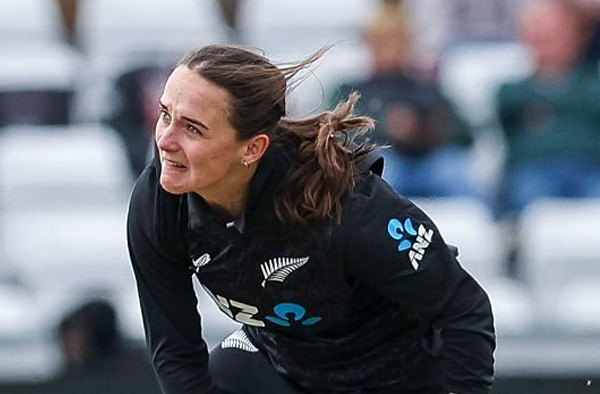
Her T20I stats: 104 wickets at 20.12 average and 6.06 economy in 94 innings (two four-wicket hauls) over 96 matches, plus 1,912 runs at 119.42 strike rate and 32.96 average (seven half-centuries, two centuries) in 77 innings across 96 matches.
With limited spin support, Amelia Kerr’s dual role as captain and spearhead tests the bowling balance.
Opportunities: Flora Devonshire’s Breakout Potential
Young all-rounder Flora Devonshire, 23, emerges as a wildcard poised for a key role, injecting power into the middle order.
The left-handed batter and left-arm spinner has three T20Is with two wickets in two innings, yet to bat. Her power-hitting shines in the recent New Zealand Women’s One Day competition for Central Districts, where she scored 181 runs at an 81.16 strike rate and 20.11 average in nine innings across nine matches and took 10 wickets at 40.40 average and 5.77 economy in nine innings (one four-wicket haul).
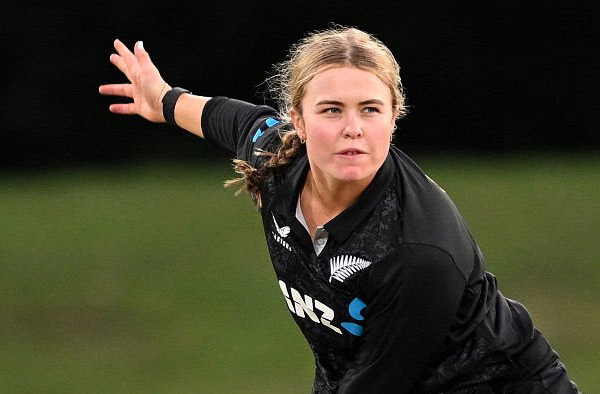
In England’s conditions, her versatility could unlock game-changing partnerships.
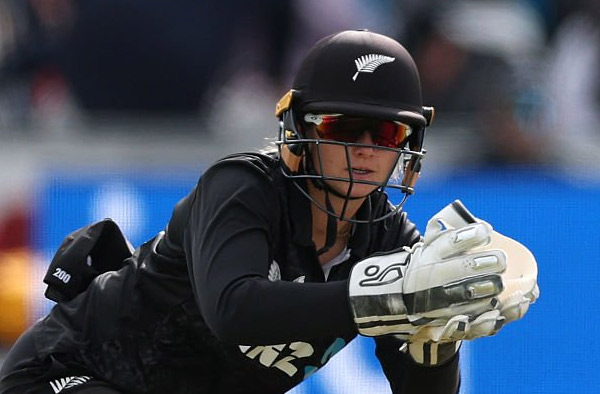
Threats: Wicket-Keeping Pressures on Isabella Gaze
Isabella Gaze, as a frontline wicketkeeper, faces scrutiny while adapting to seam-friendly English pitches under the spotlight.
She notched 89 runs at a 105.95 strike rate and 44.50 average (one half-century) in four innings for Auckland Hearts in the recent New Zealand women’s domestic One Day Competition. In T20Is, she has 436 runs at 121.11 strike rate and 21.80 average (three half-centuries) in 29 innings over 40 matches. Yet, she must refine her glove work amid pressure, swing, and seam, critical as the legendary trio of Bates, Devine, and Tahuhu bows out post-tournament.
New Zealand Women’s Squad for Women’s T20 World Cup 2026:
Amelia Kerr (C), Suzie Bates, Sophie Devine, Flora Devonshire, Izzy Gaze, Maddy Green, Brooke Halliday, Bree Illing, Polly Inglis, Jess Kerr, Rosemary Mair, Nensi Patel, Georgia Plimmer, Izzy Sharp, Lea Tahuhu

Loves all things female cricket