There is a lot of drama surrounding the Women’s ODI World Cup 2025 in both India and Colombo, Sri Lanka, the co-host cities. The excitement has been spoiled, though, by the rains in Colombo. Three washouts have already affected teams’ campaigns, and a fourth match—between Sri Lanka Women and South Africa Women—has been called off in the middle of the match because of more intense downpours but eventually concluded with a rain-curtailed contest.
The anticipated match between Sri Lanka and Australia Women was the first significant casualty of the rain; it was called off without even a toss, which was a frustrating development for both the teams and the supporters. The next washout had an impact on the match between Sri Lanka and New Zealand, which was canceled after Sri Lanka scored a high total, depriving both teams of crucial points and momentum. In addition, the match between England and Pakistan ended early despite promising play, leaving both teams with equal points.
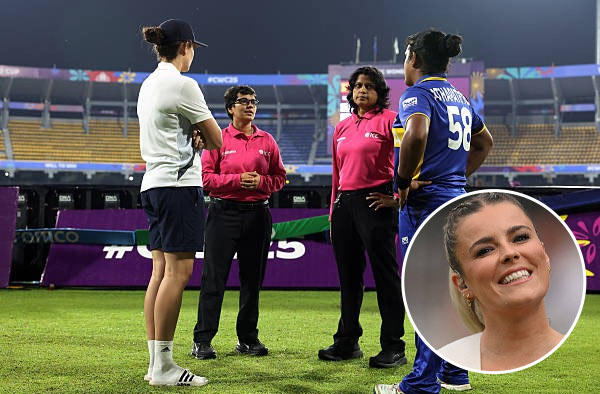
Cricket players and commentators are generally frustrated by this persistent problem. Notably, Alex Hartley took a swipe at the organizers on social media, raising doubts about the choice to hold important World Cup matches in Colombo at the height of the rainy season. Many people agree with her since the tournament’s integrity now appears to be dependent more on erratic weather than cricket prowess.
England’s World Cup winner-turned-broadcaster took to X to pen down her thoughts and didn’t mince her words, posting, “Wait, it’s not is it? It can’t be? Raining in Colombo during rainy season??? Who would have thought it… 🙄🙄🙄”
Team tactics and qualification hopes are changing as a result of the points table being reshaped by frequent washouts. With only shared points from games that were abandoned, Sri Lanka is still buried deep in the standings after being denied the opportunity to build on their recent success. Another level of complexity and annoyance is added when other important teams are forced to play shorter or less certain games in an effort to guarantee semi-final spots.
The discussion now shifts to future tournament scheduling and planning in light of these developments. This World Cup has highlighted the necessity of taking local climate patterns into consideration and making sure that cricket, not rain, can determine the outcome of crucial matches. In order to maintain the fairness and spirit of international cricket, supporters, players, and commentators hope that these lessons are taken into consideration at future international gatherings.

Loves all things female cricket