Pakistan’s Women’s cricket team faced a tough start in their ICC Women’s Cricket World Cup 2025 journey, suffering a significant defeat against Bangladesh in their first match. This loss highlighted some weaknesses in their batting when under pressure, and captain Fatima Sana emphasised the importance of learning quickly as they prepare to take on India.
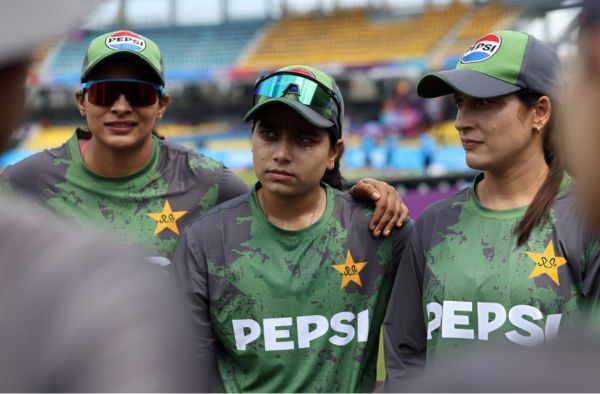
Right from the beginning, Pakistan’s batting lineup struggled to find its rhythm. The innings turned chaotic almost immediately, with early wickets falling on the fifth and six deliveries of the first overs, a situation that Sana recognised was largely due to their own mistakes. “The way we got out today, on the first ball, second ball, we’ll spend more time discussing this,” she stated candidly.
Pakistan faced a disastrous start, losing their first two wickets in just six balls with only two runs on the board. The team ended up with a disappointing total of only 129 runs in 38.3 overs. Bangladesh’s young pacer, Marufa Akter, delivered a fierce opening over that resulted in her dismissing two batters right away. Spin bowler Nahida Akter added to the pressure by taking two wickets for just 19 runs, while the rest of Bangladesh’s bowlers worked together effectively to stifle any hopes of a recovery from Pakistan.
Bangladesh, in their chase, easily reached the target, losing only three wickets and winning by seven wickets. Notably, debutant Rubya Haider played a composed inning that helped steer her team to victory. The scoreboard starkly reflected the way the match slipped from Pakistan’s grasp. Sana was honest about the mental challenges her players faced, acknowledging that many were experiencing high-pressure matches for the first time.
In her post-match comments, she noted that while the pitch had some support for fast bowlers, the batting failures didn’t stem solely from the conditions. “Nothing was happening on the pitch in those early wickets; that was purely our batters’ mistakes,” she observed. Her straightforwardness showed her determination to rally her team by owning up to their failures rather than making excuses.
On the bowling side, Pakistan did find some advantage from the pitch, which seemed to favour pace. Sana admitted this, saying, “I think the pitch does support the fast bowlers, so Marufa got some help, and, as you saw, every pacer got help from the pitch.” Marufa Akter made the most of this, delivering a strong opening spell that shook Pakistan’s top order and earned her the Player of the Match award.
Instead of dwelling on the recent defeat, Sana is determined to turn it into a valuable learning experience as they prepare for what many see as a crucial match against India. She has outlined a plan to improve, saying, “All the batters will sit together with our coach and make better plans… We’ll try to play the cricket we’ve been playing in the past.” This regrouping is essential, especially considering that in the year leading up to the World Cup, Pakistan’s top five batters averaged just 28.4 runs per innings.
Looking back, Pakistan’s batting unit had performed well, achieving four totals over 200 runs in their last eight WODIs before the World Cup, with the highest score of 271 against South Africa. This history shows that they can build competitive scores when their partnerships work. Comparing these recent successes with the disappointing 129 all out they posted against Bangladesh makes Sana’s call to return to the cricket they know and have played well in the past both realistic and crucial if they want to put up a fight against India.
Sana remains optimistic that this painful defeat could lead to positive changes. As the team sets its sights on the clash with India, all eyes will be on how quickly they can regroup and bounce back. Improved shot selection, clearer tactics, and stronger mental fortitude will be their most important tools moving forward. If Sana’s commitment is any indication, the team is ready to transform yesterday’s mistakes into tomorrow’s successes.

Loves all things female cricket