Former India captain Anjum Chopra has been inducted into the ICC Hall of Fame, receiving one of the biggest honours in world cricket. The recognition celebrates her outstanding international career and the important role she played in helping women’s cricket grow in India.
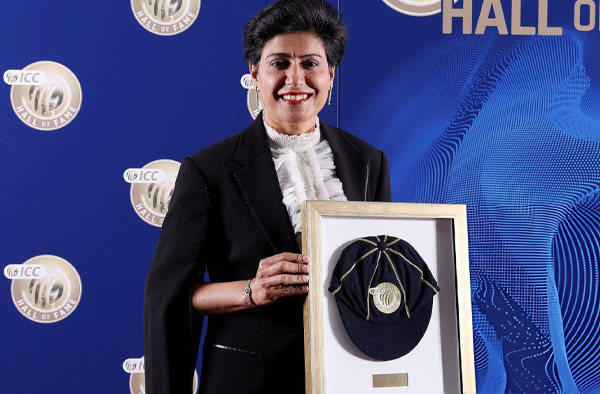
One of the pioneers of Indian women’s cricket, Chopra represented her country during a time when opportunities for women cricketers were very limited. Through her performances, leadership and dedication, she helped build a strong foundation for Indian women’s cricket and inspired many young girls to take up the game.
After receiving the honour, Chopra thanked everyone who supported her throughout her cricket journey and said the award belonged to all those who helped her succeed.
“As a kid growing up in a sporting household, I had heard stories of cricketing greats and momentous achievements. A dream to play for India got instilled very early on. I was encouraged to think big by my parents, teachers and coaches who have always been there to support me during tough times.
“I also got the timely support of administrators as I went on to wear the national colours with great pride. This honour – to be recognised amongst the game’s greatest – is an award for all those who have helped shape my career. I am thankful to all of them and delighted to be inducted into the ICC Hall of Fame.”
A dependable top-order batter and an excellent captain, Chopra represented India during one of the most important periods in the development of women’s cricket. She helped the Indian team become one of the strongest sides in international cricket.
She was known for her calm batting, elegant strokeplay, smart cricket knowledge and willingness to always put the team first. Her influence went beyond scoring runs, as she also helped women’s cricket gain more recognition across the country.
During her 17-year international career, Chopra scored more than 3,500 international runs, captained India with great success and became the first Indian woman to play 100 One-Day Internationals.
Before choosing cricket as her main sport, Chopra was active in several games. She represented her school and college in athletics, basketball and swimming while also playing age-group cricket for New Delhi.
Interestingly, when she first started playing cricket, many people believed she was a better bowler than batter. However, as time went on, she worked hard on her batting and became one of India’s finest players.
Chopra made her international debut against New Zealand in 1995 while still a teenager. She opened the bowling in that match but also showed great determination with the bat at No.10, helping India complete a two-wicket victory in the closing stages of the game.
Later that same year, she made her Test debut against England in Kolkata. Batting during a difficult evening session, Chopra showed patience and solid defence to help India take an important first-innings lead. She soon became one of India’s most dependable batters at a time when women’s cricket had very few international matches.
Comfortable against both fast bowlers and spinners, Chopra became known for her ability to play straight and through the off side. She brought stability to India’s batting line-up throughout the late 1990s and regularly handled difficult batting conditions.
As her experience grew, Chopra became one of the senior players in the team. She was appointed vice-captain during the 2000 Women’s Cricket World Cup, where she finished as India’s highest run-scorer and won two Player of the Match awards.
In 2002, Chopra became India’s captain and led the team during one of the most important periods in its history. Under her leadership, India started challenging the strongest teams in women’s cricket.
Her first assignment as captain ended with a clean sweep against England at home. She later guided India to their first-ever overseas Test victory after defeating South Africa in Paarl.
One of the biggest moments of her career came during the 2005 ICC Women’s Cricket World Cup in South Africa. Chopra finished as India’s highest run-scorer as the team reached its first-ever Women’s World Cup final.
Throughout her career, Chopra remained a reliable batter who combined patience, strong technique and the ability to adjust to different match situations. She also became one of the most respected senior players in the dressing room by helping younger teammates improve.
Her success continued after the World Cup. Chopra led India to a memorable Test series win over England away from home, with her brilliant 98 at Taunton playing a key role in a famous five-wicket victory.
She was also shortlisted for the first-ever ICC Women’s Player of the Year Award, narrowly missing out to Australia’s Karen Rolton. In 2006, Chopra helped India win a third straight Women’s Asia Cup title, and in 2007, she received the prestigious Arjuna Award, one of India’s highest sporting honours.
She later became the first Indian woman to play 100 ODIs and went on to represent India in six Women’s Cricket World Cups, including the first two ICC Women’s T20 World Cups. Along with scoring more than 3,000 international runs, Chopra was also an excellent fielder whose safe catching and commitment made her one of India’s most dependable players.
Even after retiring, Chopra has continued to serve the game as a broadcaster, author and ambassador for women’s cricket. Through her work off the field, she has helped bring women’s cricket to a much larger audience and has continued to support the growth of the sport. In 2016, she became the first Indian woman cricketer to receive an honorary life membership of the Marylebone Cricket Club (MCC), another major honour in her career.
When Indian women’s cricket was still finding its place on the world stage, Anjum Chopra was one of the players leading the way. Her performances, leadership and contribution to the game helped create the path that has made India one of the strongest teams in women’s cricket today.
Her induction into the ICC Hall of Fame is a well-deserved honour and a fitting reward for a career that has left a lasting impact on Indian cricket and inspired countless young cricketers to follow their dreams.

Loves all things female cricket