When the history of modern cricket is written, a special chapter will belong to the true pioneers who did not just play the game but completely rewrote its boundaries. At the absolute center of that historic chapter stands India’s iconic captain, Harmanpreet Kaur.
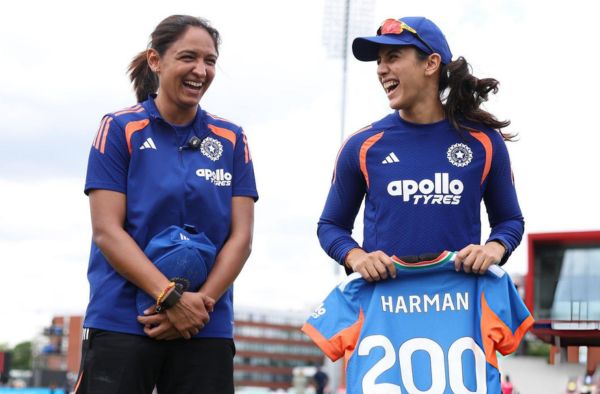
During the Women’s T20 World Cup, she stepped onto the grass to achieve something no player has ever done before in the shortest, most demanding format of international cricket, playing her 200th T20 International. To put that staggering milestone into perspective, legendary names across both men’s and women’s cricket, like Rohit Sharma or Ellyse Perry, haven’t even crossed the 180 game mark yet.
To truly understand the sheer weight of this monumental moment, you have to look past the scoreboard numbers and look directly into the locker room. T20 cricket is a young, volatile game built entirely on explosive speed, rapid reflexes, and immense physical strain. Remaining deeply relevant and dominant across 17 years and 200 matches requires an almost superhuman level of resilience.
Her longtime teammate Smriti Mandhana captured this beautifully when reflecting on what happens behind closed doors, away from the cheering crowds. “Playing 200 matches in all formats itself is such a huge thing, just to play it in one format is I feel a crazy achievement… She’s had a lot of niggles I would say, along the way, but she’s battled all of… that with a lot of grit and work ethic. I see her work hard even in a lot of pain.”
This historic milestone isn’t just about simple longevity, it is a testament to pure, unyielding endurance. It is the story of an athlete dragging a rapidly changing sport forward on her shoulders while quietly pushing through the exhausting physical pain that fans never get to see from the grandstands.
[embedpress]https://x.com/i/status/2068680688359116847[/embedpress]
Harmanpreet’s vast legacy is defined as much by her aggressive, tactical mind as it is by her legendary power-hitting. She took over a transitioning Indian side and forged it into a fearless global powerhouse that refuses to back down from any opponent. Head Coach Amol Muzumdar points to this fierce, tactical presence as her ultimate defining quality as a sportsperson, “If I have to pick only one, then it would be the leadership qualities. She is a complete leader. I consider myself really lucky that I’m part of this dressing room where Harmanpreet Kaur is the captain.”
Under her wing, a new generation of Indian cricketers has blossomed into world-class competitors. These young players don’t just see a tactical boss on the field; they see a shield. Her presence gives the entire batting lineup the structural license to play with absolute freedom, creativity, and a necessary touch of defiance. The fact that this historic 200th cap arrived during a high-stakes World Cup clash is poetry in motion. Harmanpreet has always been the ultimate big-match player, someone who actively feeds on high pressure and intense spotlights.
Mandhana highlighted exactly why the timing of this milestone was so perfect for India’s emotional anchor. “Playing your 200th match itself is such a big honor, but playing it in a World Cup is even bigger, and better, and such a crucial game for us… And you always get a lot of fire on the field. So, go out there, play with a lot of passion which you have always done.”
[embedpress]https://x.com/i/status/2068685264185434402[/embedpress]
As India continues its relentless hunt for global silverware, their “Harry Di” remains the burning heart of the entire team. Coach Muzumdar perhaps best summed up the collective emotion of an entire cricket-mad nation with a classic, spirited rallying cry to inspire their leader, “My one message to Harmanpreet Kaur would be, Oye, Chak De Phatte!”

Loves all things female cricket