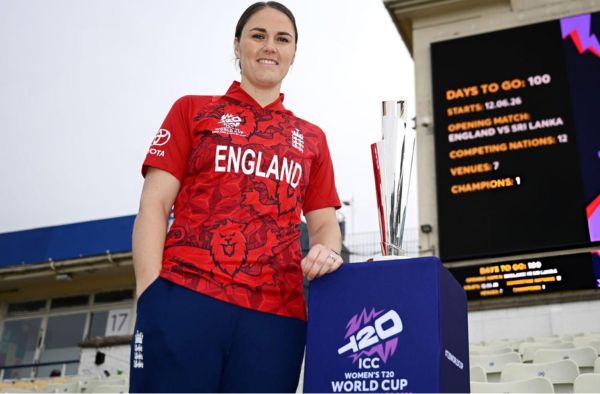
Women’s cricket has spent decades being talked about as a sport on the rise. In 2026, it isn’t rising any more — it has arrived. England and Wales host the ICC Women’s T20 World Cup in June and July, the tournament returns to home soil for the first time since the inaugural 2009 edition, and the field has expanded to twelve teams. Cricket itself returns to the Olympic programme in Los Angeles 2028 after a 128-year absence. The conversation has changed. So has the cricket.
A faster, sharper game
Watch a Women’s Premier League final from 2024 alongside a domestic T20 from a decade earlier and you’re looking at two different sports. Strike rates have climbed sharply, fielding standards now match the men’s game in most key metrics, and bowling attacks build pressure with the kind of relentless tactical variation that used to belong only to elite men’s T20.
The technical evolution is real, but the bigger change is strategic. Captains like England’s Heather Knight, India’s Harmanpreet Kaur and Australia’s Alyssa Healy treat each over as a discrete chess problem — matchups, field placements, bowling rotations — rather than running a fixed plan from ball one. Modern women’s T20 is a thinking game played at pace.
The strategic mindset, off the field
That probability-first mindset is what links elite cricket to other strategic disciplines — chess, poker, even the way a thoughtful player approaches casino games. The surface activity differs, but the underlying skill is the same: making the best available decision with imperfect information, then accepting that variance will sometimes punish a good call and reward a poor one.
A blackjack player who knows when to split, double or stand is doing what an opening batter does when reading a bowler’s first three deliveries — gathering signals, weighing odds, committing to a decision before certainty is possible. Even slot games online, often dismissed as luck-only, reward strategic thinking around stake sizing, volatility selection and bankroll management — the same disciplines a captain applies when deciding how aggressively to chase a target. The execution is different. The mental framework is recognisably similar: respect the maths, manage risk, don’t chase outcomes you can’t control.
It’s why so many cricketers describe their best innings in the language of decisions rather than shots. The shot is the visible part. The strategy is everything that happened before it.
The depth problem (and the depth solution)
The real story of the past three years sits below the international level. England’s Hundred and the WPL have professionalised entire pipelines that didn’t exist before. Ireland’s domestic structure, South Africa’s emerging bowling depth, and an expanded Associate-nation pathway through the West Indies and Asia Pacific have given the 2026 World Cup a competitive shape it never had.
The strategic implication for coaches is significant. Squads can now be built format-specific — a T20 unit of finishers and matchup-bowlers, an ODI unit with anchors and spin specialists — rather than relying on a single core of players who have to be everything. India’s selectors have already begun this shift; England’s bench depth makes them the format favourites at home.
What strategy actually means at this level
Watch any high-stakes T20 innings and you’ll see the same set of decisions repeated. When does the powerplay batter take a calculated risk versus a guaranteed single? When does the captain hold back her best bowler — sixth over or seventeenth? Which boundary do you protect with your fielding setup, knowing it tells the opposing batter where to aim?
These aren’t gut calls. They’re probability decisions made in real time, based on conditions, opposition data and what’s happened in the previous three balls.
The 2026 inflection point
By the time the World Cup final is played at Lord’s in early July, women’s cricket will have had its biggest mainstream platform in the sport’s history — a home tournament, twelve nations, a fortnight of front-page coverage. The ECB’s stated ambition is to convert that visibility into permanent infrastructure: stronger clubs, deeper domestic leagues, more pathways for the next generation of players who’ll be old enough for the LA 2028 Olympic squad.
Whether that ambition lands depends on what happens after the trophy is lifted. But the cricket itself — sharper, faster, more strategically sophisticated than at any point in the sport’s history — has already made its case.
The new era isn’t coming. It’s the one being played right now.

I am Yash Tailor, and I believe work should be driven by passion. Therefore, after completing my Engineering, I chose to work in the Cricket industry, my passion. My goal is to reach a stage where I truly enjoy what I do and give my best to every task with energy and purpose.