Recent comments by Afghanistan men’s team star Rashid Khan have drawn attention to the unresolved status of women’s cricket in Afghanistan, prompting a detailed response from national women’s team player Firooza Amiri, who has questioned how cricket’s governing bodies have handled the issue over the years.
Asked about the importance of a women’s team for Afghanistan, Rashid said that having one was “definitely” part of the criteria for being a full member nation and added that while decisions rest with the International Cricket Council (ICC) and the Afghanistan Cricket Board (ACB), he would love to see anyone represent Afghanistan on any stage. The remarks were widely seen as supportive but non-committal, reflecting the continued reliance on administrators to address the issue.
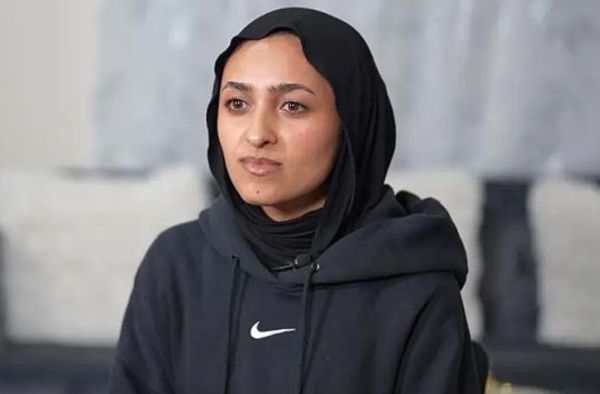
Firooza Amiri’s response focused less on intent and more on outcomes. In her statement, she argued that the ICC’s decision to grant Afghanistan Full Membership in 2017, despite the absence of an active women’s team, had lasting consequences. She said the decision was not neutral and instead allowed women’s cricket to be deprioritised, reinforcing the idea that only the men’s game mattered in Afghanistan’s cricketing success.
According to her statement, the ACB later capitalised on this regulatory gap, shaping a narrative that a women’s team was unnecessary. She stressed that such framing ignored the existence and efforts of Afghan women cricketers and contributed to their continued marginalisation. “With a decision this reckless and damaging, it is impossible to claim that the ICC and ACB “know best.”If they truly did, Afghan women’s cricket would not have been sidelined, silenced, and systematically ignored. Afghanistan already has a women’s cricket team. A lack of awareness does not change that fact,” she stated in her Instagram post.
In 2020, the ACB awarded central contracts to 25 women cricketers, a move that was widely seen as a formal step towards establishing a national women’s programme. However, in August 2021, the Taliban takeover led to sweeping restrictions on women’s participation in sport. As a result, many of those contracted players were forced to flee the country, with cricketing activity inside Afghanistan coming to a complete halt.
Since then, Afghan women cricketers have existed largely in exile, with no official pathway to represent their country. In early 2025, a group of these players came together in Melbourne to play an exhibition match, marking their first collective appearance since leaving Afghanistan. While the match provided visibility, it did not alter their official status or lead to formal recognition by the ACB.
Firooza Amiri’s statement made clear that symbolic gestures or expressions of goodwill were not sufficient. She emphasised that the issue was structural and rooted in governance decisions taken years earlier. Her response challenged the idea that cricket’s authorities “know best,” arguing that if that were the case, Afghan women’s cricket would not have been sidelined for so long.
[embedpress]https://x.com/i/status/2020142401881325717[/embedpress]
By directly addressing the assumptions underlying Rashid Khan’s remarks, her statement reframed the conversation around accountability rather than aspiration. The focus, she argued, should not be on whether women’s cricket might exist in the future, but on acknowledging that it already exists — and has been consistently ignored.
As the men’s team continues to compete internationally, the divide between participation and exclusion remains unresolved. For players like Firooza Amiri, the debate is no longer about representation in principle, but about recognition, responsibility and the enforcement of standards that were meant to apply equally to.

Loves all things female cricket