As the 13th edition of the ICC Women’s ODI World Cup approaches, set to unfold in India and Sri Lanka from September 30 to November 2, 2025, it is fitting to pay tribute to the groundbreaking woman whose vision and determination made this global spectacle possible: Rachael Heyhoe-Flint.
Former England batter and captain, Heyhoe-Flint, was not just a remarkable cricketer but a pioneering catalyst who dared to dream of a Women’s Cricket World Cup long before the idea was embraced by the world. Her legacy transcends runs and records; it is a story of passion, perseverance, and breaking barriers that paved the way for the thriving women’s cricket that today celebrates.
Early Life and Defying Stereotypes
Growing up in post-war Wolverhampton, young Rachael faced societal norms that attempted to limit her passion for cricket. When a policeman once dispersed a boys’ street game but excused her participation with the blunt remark, “Girls don’t play cricket,” many would have quietly accepted the verdict. But Rachael’s spirit ignited a rebellion from that moment, one that challenged the status quo and championed the belief that women not only could play cricket but could excel and inspire through it.
Cricketing Excellence and Leadership
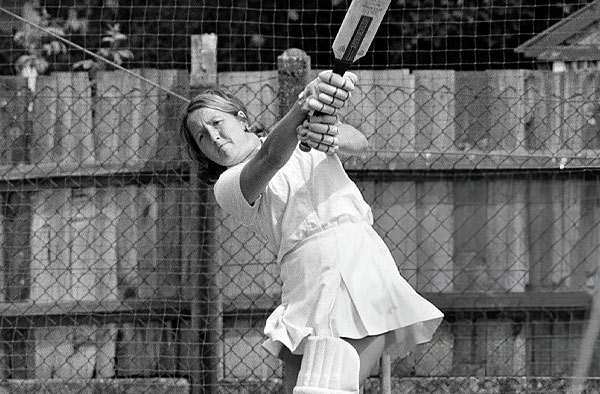
On the pitch, Rachael Heyhoe-Flint’s achievements were extraordinary. She amassed 1,594 runs in 22 Test matches at a stellar average of 45.54, including three centuries, a record for runs at her retirement. In the One Day International format, she scored 643 runs at an unmatched average of 58.45 in 23 matches. As captain, she led England in 12 Tests without defeat, underscoring her tactical acumen and leadership.
Her moments of cricketing artistry and resilience are etched in history. In 1963, at The Oval, she hit the first six ever recorded in women’s Test cricket, a “hoick to leg” that symbolised the game’s emerging power. As captain from 1966, she scored a commanding 113 and a 59 not out against New Zealand in her debut series at the helm, finishing with a series average over 71. In the landmark 1976 Test at The Oval, her marathon 179 runs over 521 minutes was a heroic innings that rescued her team and epitomised grit.
Architect of the Women’s ODI World Cup
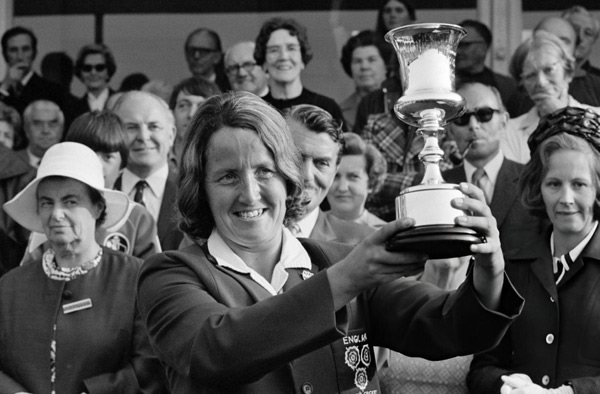
In the early 1970s, women’s cricket struggled with limited visibility and funding. Undeterred, Heyhoe-Flint envisioned a global tournament to elevate the women’s game. In 1971, during a late-night conversation with businessman Jack Hayward, she proposed the Women’s Cricket World Cup, years ahead of the men’s first World Cup. Hayward’s funding made history in 1973 when the inaugural women’s World Cup took place in England, with seven teams participating.
Heyhoe-Flint starred on home soil, scoring a commanding 114 and a match-winning 64 in the final against Australia. Under her steady leadership and with teammates like Enid Bakewell, England clinched the trophy, marking a new era. The women’s tournament planted the seeds for cricket’s global expansion and inspired generations.
Breaking Barriers Beyond the Boundary
Heyhoe-Flint’s fight extended beyond runs and trophies. The “Home of Cricket,” Lord’s, long barred women from playing there. Her relentless advocacy, including a threat to the MCC for discrimination, broke down walls. By 1976, England played their first women’s ODI at Lord’s, and years later, she became one of the first ten female members of the MCC in 1999 and its first female full committee member in 2004.
Her charisma and wit, coupled with her journalistic prowess, brought much-needed attention to women’s cricket. She penned her own match reports, championing media coverage, and lightening tense moments with her ukulele and infectious humour.
Enduring Legacy and Honours
Rachael Heyhoe-Flint’s impact is immortalised through numerous accolades: she was the first woman inducted into the ICC Hall of Fame in 2010, honoured with an MBE and an OBE, and elevated to the House of Lords as Baroness Heyhoe-Flint. Her influence reaches far into cricket administration and beyond.
The prestigious MCC Life Membership includes many of the finest women cricketers from India, Australia, England, and more, reflecting a continuing celebration of women’s contributions, a journey begun with Heyhoe-Flint’s breakthrough.
The ODI World Cup Through the Years
The Women’s ODI World Cup has grown into a premier global event. Australia leads the tally with seven titles, spanning from 1978 to most recently in 2022. England follows with four titles, including the inaugural 1973 win under Heyhoe-Flint’s captaincy. New Zealand and India have also left their marks, with New Zealand’s maiden triumph in 2000 and India’s valiant runner-up finishes in 2005 and 2017.
A Tribute as We Enter the 13th Edition in 2025
As the 2025 Women’s ODI World Cup beckons from India and Sri Lanka, the tournament stands as a testament to the dreams and determination of Rachael Heyhoe-Flint. Every player who steps onto the field walks on a path she helped carve, through historic sixes, World Cup triumphs, and battles for equality.
Rachael Heyhoe-Flint did more than play cricket; she transformed it. By turning dismissal into defiance, she gave women’s cricket a voice, a platform, and a future. The World Cup exists because she dared to dream it into being a legacy that will inspire players and fans for generations to come.
Rachael Heyhoe-Flint passed away on January 18, 2017, aged 77, but her spirit remains the heartbeat of women’s cricket today and always.
(Inputs sourced from Abhishek AB’s X Handle)

Loves all things female cricket