Eight years ago, the hallowed turf of Lord’s played host to one of the most dramatic finals in the history of women’s cricket. On 23rd July 2017, England edged out India by just nine runs in a tense ICC Women’s World Cup final, claiming their fourth title and sending a packed crowd into raptures.
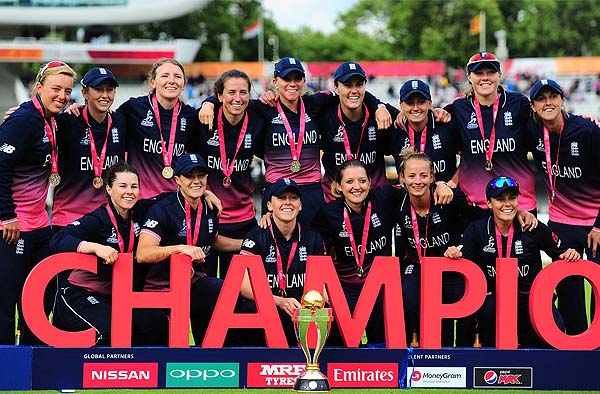
While England was crowned champion, India earned global respect with a performance that captured the imagination of millions. The match marked a pivotal moment in the rise of women’s cricket in the subcontinent.
Having won the toss, England opted to bat first and was immediately tested by disciplined Indian bowling. Opener Lauren Winfield fell early, but a steady partnership between Sarah Taylor (45) and Natalie Sciver (51) helped stabilise the innings.
India’s pace spearhead Jhulan Goswami was at her very best, returning figures of 3 for 23 in 10 overs, removing key batters including Sciver and Fran Wilson. Her control and late swing reduced England to 164 for 6 at one stage, before vital late runs from Katherine Brunt and Jenny Gunn pushed the total to a competitive 228 for 7.
India’s reply got off to a shaky start, losing Smriti Mandhana cheaply. But Punam Raut produced a calm and composed 86 off 115 balls, anchoring the innings superbly. Mithali Raj, playing in what was likely her final World Cup, added 17 before being run out in a mix-up that proved costly.
At 191 for 3 in the 43rd over, India looked to be in command. With just 38 runs needed and seven wickets in hand, the trophy appeared within reach.
Then came the collapse.
India lost 7 wickets for just 28 runs in a stunning turnaround. England’s bowlers, led by a fired-up Anya Shrubsole, tore through the lower order. Shrubsole finished with 6 for 46, including the final wicket of Rajeshwari Gayakwad to seal victory and spark wild celebrations at Lord’s.
Shrubsole’s fiery spell remains one of the finest ever seen in a World Cup final. Her swing and accuracy under pressure turned the match on its head. Her 6 for 46 is still the best bowling performance in a Women’s World Cup final and played a decisive role in England’s narrow win.
The 2017 final did not just crown a champion; it reshaped the narrative around women’s cricket in India. Over 26,000 spectators filled Lord’s that day, while millions tuned in on television. Despite the heartbreak, India’s spirited campaign ignited a new wave of support and visibility for the women’s game.
Next year, England will have another opportunity to lift a world title in front of a home crowd. The 2026 ICC Women’s T20 World Cup is set to take place in England, with the final once again scheduled at Lord’s.
For many players and fans, it will be a chance to revisit the scene of their 2017 triumph. But this time, the stakes may be even higher. With global competition stronger than ever, England will know that defending home turf will not come easy.

Loves all things female cricket