Writing about the pink-ball Tests in the women’s game is a trip through some of the most atmospheric moments in recent cricket history. There’s something special about that twilight period—when the sun dips, the lights hum to life, and that bright fluorescent ball starts doing things it doesn’t do at noon. It’s a challenge that tests a player’s technique and vision in a way a standard day game just can’t replicate.
While the men’s side of the game has seen quite a few “under the lights” encounters, the women’s circuit has been more selective, saving the pink ball for the biggest stages. These matches haven’t just been about the novelty of the color; they’ve been career-defining milestones for some of the greatest to ever pick up a bat or ball. You can also take a look at the top 3 Indian players who could be game-changers in the upcoming one-off test at the W.A.C.A.
1. Australia vs. England – North Sydney Oval (2017)
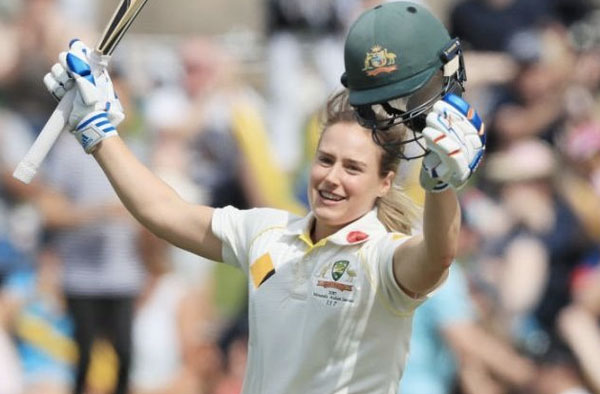
The first-ever day-night Test for women was a historic affair that felt more like a festival under the Sydney lights. While the match eventually ended in a draw, it will forever be remembered as the “Ellyse Perry Show.” This wasn’t just the first day-night Test; it was a baptism of fire for the format. England batted first and ground out a solid 280, thanks to half-centuries from Tammy Beaumont and Heather Knight. At that point, the match was anyone’s. But then, Ellyse Perry walked out.
She didn’t just play an innings; she occupied the crease for over seven hours. Her 213* remains the stuff of legend, particularly the way she accelerated as the lights took effect. England’s bowlers, including a young Sophie Ecclestone, threw everything at her, but Perry was impenetrable. When Australia eventually declared at 448/9, England were effectively batting for survival. They showed incredible resolve to bat out 105 overs in their second innings, finishing at 206/2 to secure the draw, but the image of Perry celebrating her double-ton under the North Sydney floodlights remains the defining snapshot of the inaugural pink-ball era. The real winner was the format itself, proving that the pink ball had a permanent place in the women’s calendar.
2. Australia vs. India – Metricon Stadium, Gold Coast (2021)
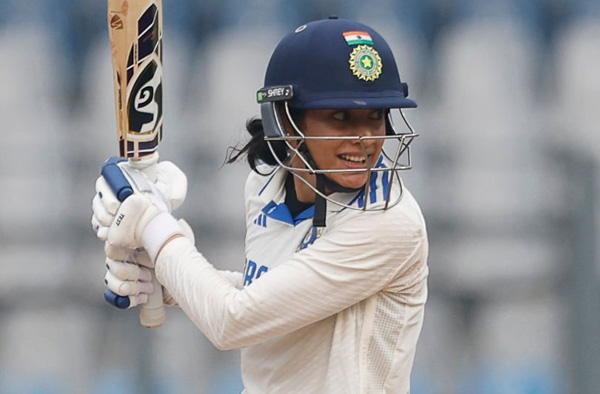
If you want to talk about dominance that didn’t lead to a win, this is it. India, playing their first-ever pink-ball Test, looked far more comfortable than the hosts. This was a match that many felt India deserved to win, but the Queensland weather had other plans. In what was India’s first-ever outing with the pink ball, Smriti Mandhana looked like she was playing on a different planet. Mandhana played a dream of an innings, scoring 127 with a grace that made the pink ball look like a beach ball. She became the first Indian woman to score a Test century on Australian soil, and she did it with flair.
India declared at 377/8, and then their seamers went to work. The legendary Jhulan Goswami used her height and experience to make the ball talk under the lights, leaving Australia’s top order looking uncharacteristically shaky. However, the weather was the real antagonist here. Massive chunks of play were lost to rain on the first two days. Despite India’s best efforts to force a result—even declaring their second innings quickly to set a target—there simply wasn’t enough time. Australia survived at 36/2 in the final session, but everyone left the Gold Coast knowing India had won the tactical and psychological battle.
3. Australia vs England – MCG, Melbourne (2025)
The most recent encounter was a complete masterclass in dominance. Played at the iconic “G” in front of a record-breaking crowd, this wasn’t just a game; it was a coronation for an Australian team at the peak of their powers. Australia had figured out the pink ball’s secrets, and they used them to devastating effect at the Melbourne Cricket Ground. This was a “dead rubber” in name only; Australia wanted a 16-0 multi-format whitewash, and they played like it. England were rolled for just 170 in their first innings, struggling with the extra bounce and zip that the MCG deck offered under the lights.
In reply, Annabel Sutherland proved why she’s the next big thing in the long format. Her 163 was a clinical. Beth Mooney also notched a milestone century, becoming the first Australian woman to score hundreds in all three formats. But the real story was the final day. England’s second innings was a collapse of epic proportions, losing their last 8 wickets for just 69 runs. Alana King turned the ball “Warne-style” to take 5 wickets, and Australia secured an innings victory in front of a record-breaking crowd. It was the perfect, brutal, conclusion to a historic series. England had no answers for Australia’s relentless pressure, eventually falling to an innings defeat. It was a ruthless display that wrapped up an Ashes clean sweep, proving that while the pink ball adds a layer of unpredictability, class usually finds a way to shine through.

I’m a Senior Masters student pursuing Journalism and Mass Communication. An all time Cricket enthusiast. I could never play the game but always loved watching it, and now writing about it!