In a landmark move unveiled amid the ongoing 10th edition of the Women’s T20 World Cup 2026 in England and Wales, the International Cricket Council (ICC) has launched its Return to Play Post-Pregnancy Guidelines, a comprehensive framework designed to help female cricketers navigate pregnancy and a safe, sustainable return to elite cricket.
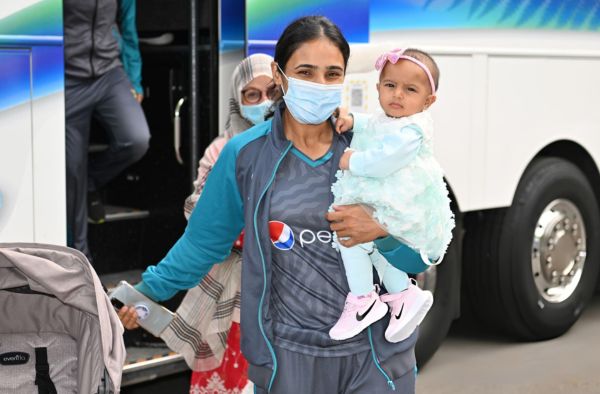
The policy, aimed at players, Member Boards, medical teams and coaches, places player welfare and family life at the heart of the professional game, signalling that motherhood and an international career no longer need to be competing choices but complementary chapters in a player’s journey.
The launch comes at a time when women’s cricket has never been more competitive, professional or visible. With central contracts, thriving T20 leagues and year-round international calendars, more players are now choosing to start families mid-career and then push for a return to the highest level. The ICC’s new framework sits under its broader 100% Cricket movement and its strategic priority of women’s cricket, reinforcing that health and welfare are not add-ons, but core pillars in how the global game is governed.
At the centre of the document is a clear message: pregnancy is personal, and support must be individual. The Guidelines stress that disclosing pregnancy remains entirely at the player’s discretion, with no mandatory testing by boards, protecting privacy and autonomy while encouraging open, trust-based conversations within teams. Once a player chooses to disclose, the recommendation is that a dedicated case manager, typically a doctor or physiotherapist, coordinates medical, psychological and logistical support, keeping the needs of both mother and baby front and centre at every stage.
Safety and performance are treated as partners, not rivals. Exercise during pregnancy is strongly encouraged as safe and beneficial, but only when closely monitored and adapted to each player’s circumstances, workload and risk profile. The Guidelines highlight critical considerations such as the risk of fetal trauma in high-impact scenarios, changing musculoskeletal demands on a bowler’s body, and the realities of long-haul travel in packed schedules. Decisions around training loads, match participation and travel are framed as shared, informed choices between the player, medical staff and team management, rather than blanket rules.
The backbone of the policy is a structured six-stage roadmap, the “6 Rs”: Ready, Review, Restore, Recondition, Return and Refine. In the Ready phase (0–6 weeks post-birth), the emphasis is on recovery, rest and gentle movement as the body heals. Review (around 6–8 weeks) triggers a full medical and well-being assessment, including pelvic floor, musculoskeletal, mental health and lifestyle factors, to outline what a realistic path back might look like.
From there, Restore (8–16 weeks) supports a gradual reintroduction to training, acknowledging fatigue, sleep disruption and the emotional toll of early parenthood. Recondition (from roughly 12–16 weeks onwards) focuses on cricket-specific conditioning, sprinting between the wickets, repeat spells for bowlers, fielding volume, and allowing the body to re-adapt to high-intensity demands.
The Return phase marks full resumption of competitive cricket, while Refine is all about ongoing monitoring once a player is back inside the high-performance environment, recognising that recovery and parenting needs continue to evolve well beyond a single season.
Dr Philippa Inge, Australia team doctor and member of the ICC Medical Advisory Committee, played a leading role in drafting the Guidelines and their practical recommendations. Her vision extends well beyond medical checklists, into the everyday realities that often determine whether a comeback is possible.
Flexibility is a recurring theme: flexible training environments, continued access to high-performance facilities, travel support where possible, and clear advice and provision around childcare. Equally important is the physical space, private, suitable areas at venues for feeding and caring for babies, so players are not forced to choose between their roles as mothers and professionals on match days.
“The ICC’s Return to Play Post-Pregnancy Guidelines are designed to show players that having a baby doesn’t need to be the end of their career,” Dr Inge explains, underlining the intent to give Member Boards a practical template that can be adapted to local conditions. She emphasises that “strong support for an athlete returning to cricket post-pregnancy needs to be individualised to the specific needs of them and their family,” echoing the broader shift in elite sport toward person-centred, not policy-centred, care.
For current players, the policy is more than paperwork; it is recognition. West Indies leg-spinner Afy Fletcher, competing at this T20 World Cup after giving birth to her son in 2021, sees it as a turning point. “It gives you a chance to have your family and then return,” she says, calling it “one of the best things” cricket could do for women. Fletcher is candid about her own journey: the physical demands of returning to bowling were real, but the harder part was emotional, leaving her child and missing irreplaceable moments. That is why, she explains, every performance now is driven by him, each over and each wicket woven into her story as a mother and an international cricketer.
At the governance level, the tone is equally clear. ICC Chairman Jay Shah frames the Guidelines as central to the sport’s future, stating that “no player should have to choose between motherhood and representing her country”. For him, opportunity, inclusion and care are not slogans but the foundations on which the next decade of women’s cricket will rest. By providing Members with a detailed, adaptable framework, from education resources to alternative employment options during pregnancy and postpartum, the ICC aims to retain talent, secure pathways, and normalise pregnancy as one phase of a long, successful career, not the finish line.
As the world watches the best players on the planet contest the ICC Women’s T20 World Cup 2026 under the early northern summer skies of England and Wales, these Guidelines add another powerful layer to the narrative. Records will fall, careers will blossom, and trophies will be lifted, but away from the cameras, the sport has quietly taken a decisive step: telling every girl who picks up a bat or ball that the game will be there for her, before, during and after motherhood.
(Quotes sourced from ICC Media Release)

Loves all things female cricket