Ireland arrives at the expanded 10th edition of the ICC Women’s T20 World Cup seeking to translate strong qualifying form into a competitive showing on the biggest stage. Placed in a demanding Group 2 alongside hosts England, New Zealand, Sri Lanka, West Indies and Scotland, Ireland, under the new leadership of 25-year-old Gaby Lewis, will open their campaign against Scotland at Old Trafford on 13 June.
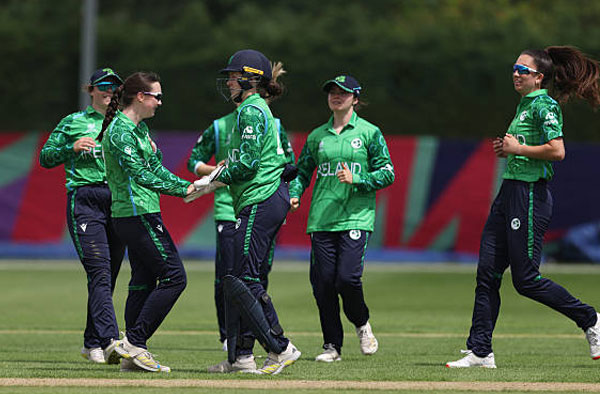
This will be Ireland’s fifth appearance at the global event since their debut in 2014 and the first time Lewis will captain the side at a T20 World Cup. Having secured their place in the upcoming 10th edition with a comprehensive 62-run victory over Thailand in the Global Qualifier on 1 February 2026, Ireland brings momentum and genuine match-winners to a tournament that promises little margin for error.
Their blend of youthful aggression and experienced all-rounders gives them the tools to spring surprises, but questions remain about spin leadership and pace-bowling depth, aspects that will define whether Ireland can punch above their ranking in a stacked group.
Strengths: Genuine Match Winners Providing the Edge
Gaby Lewis
Gaby Lewis will lead Ireland, playing in her 4th ICC Women’s T20 World Cup campaign and her first as captain at the tournament. At 25, she already sits among Ireland’s most prolific T20I performers, topping the charts: 3,048 runs at a strike rate of 117.14 and an average of 31.42 across 112 innings, including 18 half-centuries and two centuries in 114 matches. In the T20 World Cup, she is the third-highest run-scorer for Ireland with 194 runs in 10 innings at a strike rate of 88.18 and an average of 24.25.
Beyond her run-scoring, Lewis offers part-time leg-spin (3 wickets at an economy of 8 in seven T20I innings) and recent form to back her leadership. She was the leading run-scorer in the Global Qualifier with 276 runs at a strike rate of 119.48 and an average of 39.42 in seven innings. Her responsibilities are twofold: provide a solid, aggressive start at the top of the order to set the powerplay tone and marshal a balanced unit capable of competing against elite attacks. Her ongoing involvement in English cricket, representing Lancashire in the ECB Women’s One Day Cup 2026, where she scored 138 runs at a strike rate of 106.97 and an average of 69, including a century, only sharpens her credentials as Ireland’s focal point.
Orla Prendergast
Orla Prendergast brings the quintessential modern T20 all-round skillset and will be central to Ireland’s plans, leading the pace attack while providing important hard-hitting lower- and middle-order contributions. At 23, she already has experience on the global stage and in Ireland’s T20 World Cup record, with 109 runs in four tournament innings at a strike rate of 125.28 and an average of 27.25, alongside three wickets at an economy of 6 across four innings.
Her Global Qualifier returns underline her dual value: 145 runs at a strike rate of 116.93 and an average of 24.16, plus six wickets at an average of 18 and an economy of 4.69 in seven matches. Her speed, variations and ability to bowl in different phases give Ireland the flexibility to attack or consolidate as matches require, and her recent form, with the Blaze in the ECB competition, 219 runs at a strike rate of 99.09 and three wickets at an economy of 4.89, suggests she is peaking at the right time.

Amy Hunter
The 20-year-old Amy Hunter is a quick-impact batter who can change momentum in the power play and early middle overs. She will be making her second World Cup appearance after debuting in 2023. Though her World Cup returns to date are modest (23 runs in four innings), Hunter’s recent return in the Global Qualifier was a statement: 111 runs at a strike rate of 132.14 and an average of 37 in four matches. In T20 internationals, she is Ireland’s fourth-highest run-scorer, with 1,503 runs at a strike rate of 114.47 and an average of 30.67 in 59 innings, including five half-centuries and two centuries in 61 matches. Her natural aggression at the top complements Lewis’s more anchoring approach, and when both fire, Ireland can post and chase competitive totals against higher-ranked opposition.
These three players, Lewis, Prendergast and Hunter, form a core that can produce match-winning performances on any given day. Their collective ability to score quickly, rotate strike and produce late-innings hitting gives Ireland the attacking promise needed to compete in T20 cricket’s compressed format.
Areas of Concern: Onus on Cara Murray to lead the Attack
Leading Ireland’s spin charge will likely fall on 25-year-old leg-spinner Cara Murray. With 45 T20I wickets at an average of 24.57 and an economy of 6.84 from 58 innings in 59 matches, Murray is one of Ireland’s most experienced spin options. However, she missed the Global Qualifiers in Nepal and will carry the responsibility of anchoring a spin unit that looks thinner than it might ideally be for conditions in England that might offer spin variations at times.
Murray’s role will be pivotal in the middle overs, where controlling the scoring rate and creating breakthroughs are essential against quality batting line-ups. Her capacity to execute variations and hold her nerve in pressure phases will be tested repeatedly in Group 2.
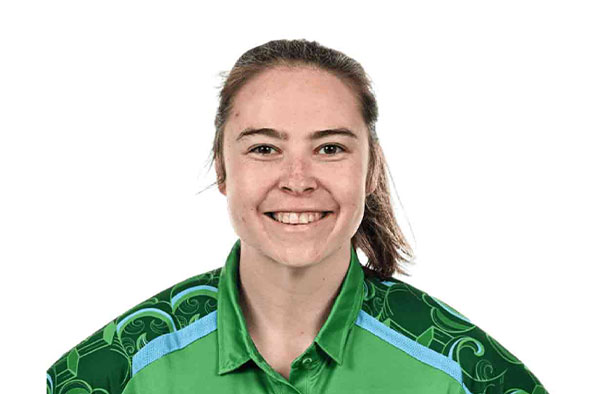
Support spin options: Aimee Maguire or Lara McBride will need to offer consistent backup. Lara McBride, at 20, finished as Ireland’s third-highest wicket-taker in the Global Qualifier with 10 wickets at an average of 10.30 and an economy of 4.86 in six matches, highlighting her promise as an off-spin option. Aimee Maguire’s left-arm spin (six wickets at an average of 17.16 and economy of 6.11 in the qualifiers) gives Ireland another angle to mix attack plans. Still, relying heavily on a small spin group against teams with global-class batters places an onus on tactical fielding and careful matchups.
Opportunities: Time for Leah Paul and Arlene Kelly to step up
Leah Paul
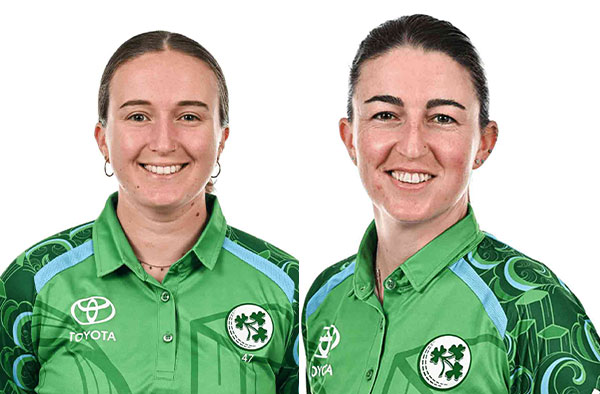
The 26-year-old batting all-rounder has the potential to be the missing middle-order stabiliser Ireland needs. In the Global Qualifier, Paul produced 168 runs at a strike rate of 123.52 and an average of 28 in seven innings, while her T20I career figures (768 runs at a strike rate of 107.26 and an average of 20.75 in 47 innings) reveal a player who can accelerate and also play the longish cameos Ireland craves. With 30 T20I wickets at an average of 19.03 and an economy of 5.85, her part-time left-arm spin adds depth and a useful bowling option. In Manchester, Paul’s role is clear: consolidate when the top order wobbles, provide late hitting when required, and chip in with overs of spin to break partnerships.
Arlene Kelly
Arlene Kelly’s role as a frontline seamer and a useful lower-order batter was reaffirmed in the qualifiers, where she finished as Ireland’s leading wicket-taker (13 wickets at an average of 10.61 and an economy of 5.52). Overall, she has 87 T20I wickets at an average of 13.97 and an economy of 6.02 in 63 innings, 2nd on the all-time list for Ireland in the T20I format, figures that underline her capacity to produce crucial breakthroughs. Kelly offers control and aggression with the new ball and in the death overs, and her knack for producing standout spells can keep Ireland competitive in matches where margins are fine.
This experienced spine, Paul and Kelly, gives Ireland multiple avenues to stabilise innings, pick wickets and manage pressure; if these players reproduce their qualifier form on English pitches, Ireland can tilt a few encounters in their favour.
Threats: Pace Bowling backups need to deliver
Ireland’s seam attack hinges on a handful of dependable performers but lacks the depth that top-tier opponents can consistently exploit. Ava Canning’s 26 T20I wickets at an average of 27.23 and an economy of 5.41 in 44 innings make her a candidate to start regularly. Yet to rotate and sustain pressure across 20 overs, Ireland will need contributions from Georgina Dempsey, Alana Dalzell and Louise Little, players who may be required to step up in key matches. If these backups are not at their best, Ireland will be vulnerable to strong top-order batting displays from teams like England and New Zealand, where any lengthy partnership can decisively swing contests.
Ireland will have two warm-up fixtures, against South Africa on 6 June and Bangladesh on 9 June at Loughborough, opportunities to sharpen roles, test combinations and acclimatise to English conditions. These matches take on heightened importance for bowlers who must demonstrate consistency and for batters who need to adjust to powerplay and middle-over tempo against varied bowling attacks. Tactical flexibility will be key: Ireland’s most effective route to results is likely through fighting totals built on aggressive starts from Lewis and Hunter, consolidation and acceleration via Paul, and wicket-taking spells from Prendergast, Kelly and the spin pairing of Murray and McBride/Maguire.
Ireland enters Manchester with momentum, match-winners and tournament-hardened leaders, but also with definable gaps. The positives are clear: a top order capable of explosive starts, multi-dimensional all-rounders capable of altering games, and experienced wicket-taker in Kelly. The concerns are equally tangible: a spin department waiting for a leader to shoulder responsibility consistently, and seam-bowling depth that will be tested by elite batting line-ups.
For Ireland to exceed expectations, key players must replicate qualifier form, and role clarity must be established early, particularly who will lead the spin overs and which pacers can be relied upon across multiple matches.
If Gaby Lewis’s form and captaincy combine with strong contributions from Orla Prendergast, Amy Hunter, and Leah Paul Ireland will not only be competitive but capable of upsetting favourites on their day. Conversely, if the spin and pace backups fail to deliver, Ireland risk being edged out in close encounters within a fierce group. Manchester offers Ireland the stage to show that their qualification was no fluke; it will demand that they turn potential into consistent performance.

Loves all things female cricket