Former India captain Anjum Chopra believes Harmanpreet Kaur’s defining legacy as skipper will be the historic 2025 Women’s ODI World Cup triumph, and the stronger, more confident team she leaves behind. As Harmanpreet steps down after nearly a decade in charge and Smriti Mandhana takes over across formats, Chopra has reflected on the captain’s growth, the demands of leadership and why India’s T20 World Cup exits should not be reduced to a question of captaincy.
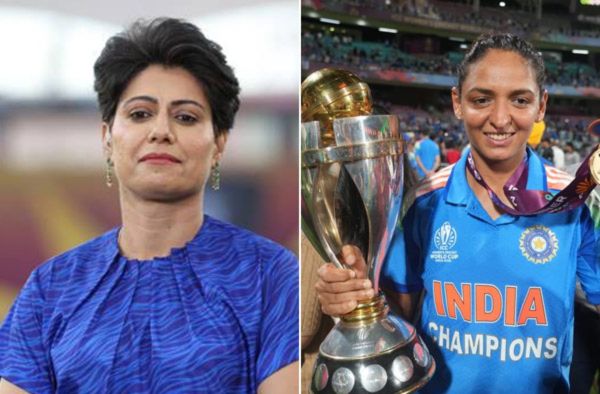
Harmanpreet Kaur led India in five Tests, 51 ODIs and 155 T20Is. Her tenure brought major milestones across formats: India’s first senior-level ICC title, the 2025 ODI World Cup on home soil; a runners-up finish at the 2020 Women’s T20 World Cup; and semi-final appearances in 2018 and 2023. She also led India to consecutive Asian Games gold medals in 2023 and 2026, and the 2026 Women’s T20 Asia Cup. In that tournament, she became the first player, male or female, to appear in 150 T20Is as captain.
“The biggest legacy Harmanpreet will always have to her credit as a leader is winning the ODI World Cup in 2025,” Chopra told IANS. She pointed to the team’s collective contribution, including Harmanpreet’s vital 89 in the semi-final against Australia and Jemimah Rodrigues’ 127, before India beat South Africa by 52 runs in the final. “It wasn’t just Harman. With every player contributing, Harman was able to lift that crown, and India was able to win.”
For Chopra, the World Cup title tells only part of the story. India, she said, became a more skilful, experienced and energised side during Harmanpreet’s captaincy, while her aggression and confidence helped shape the dressing room. Chopra first encountered Harmanpreet at a training camp in 2008 and has followed her journey from her first World Cup appearance in 2009 to the captaincy.
“I don’t think the person Harmanpreet Kaur has changed, even though things around her have changed dramatically for the women’s game,” she said. Chopra described a leader who could challenge a teammate after a lapse in the field, then be the first to offer praise after a good stop, wicket or catch. That balance, she suggested, reflected a captain who remained true to herself while growing with the team.
India’s path to the 2025 title included painful near misses: the 2017 ODI World Cup final, the 2023 T20 World Cup semi-final against Australia and early exits at the 2024 and 2026 T20 World Cups. Chopra cautioned against treating those exits as proof that Harmanpreet’s leadership had failed. She argued that India needed to examine its approach and preparation, particularly after relying on similar batting templates in T20 cricket despite the increasing demands of the format.
“A captain does not decide that style of cricket; individual players decide that style by how they go out and play,” Chopra said. She also noted India’s limited bowling reserves, even during the successful 2025 campaign. Her broader point was that leadership can guide a team, but players must execute the approach on the field.
That challenge, Chopra said, is also why captaincy demands sacrifice. A leader may have to accept a different batting position, set aside personal preferences or make difficult decisions about selection and roles to serve the team’s needs. The responsibility extends beyond match day: a captain must consider how to help the whole group prepare and perform.
“The speed of the leader is the speed of the team,” Chopra said, describing the balance between setting direction and moving at a pace the team can follow. She added that captaincy is “time-consuming and energy-draining”, a responsibility whose weight is difficult to grasp until a player is making those decisions.
With Mandhana succeeding Harmanpreet, India’s leadership changes as a new cycle begins. Harmanpreet’s record will be measured not only by titles, but by the confidence and experience she helped build into the side. As Chopra put it, the team will keep moving; the task for its next leader is to carry that progress forward.
(Quotes sourced from IANS)

I am Yash Tailor, and I believe work should be driven by passion. Therefore, after completing my Engineering, I chose to work in the Cricket industry, my passion. My goal is to reach a stage where I truly enjoy what I do and give my best to every task with energy and purpose.