Harmanpreet Kaur’s decision to step down as India’s women’s captain across all formats arrives not as a retreat, but as a calculated handover at the peak of her legacy, freeing her to chase the 2028 Los Angeles Olympics as a player while ushering in Smriti Mandhana’s era with momentum and clarity.
A Legacy Sealed in Gold and Glory
Announced via Instagram on Tuesday morning, the 37-year-old’s exit caps a captaincy defined by historic firsts and resilient leadership. Under her watch, India clinched back-to-back Asian Games gold medals, first in Hangzhou 2023, then again in Nisshin on 22 September 2026, crushing Sri Lanka by 147 runs. She also steered India to a record fourth ACC Women’s T20 Asia Cup title in Dubai on 13 September 2026, becoming the first player, male or female, to captain 150 T20Is during that tournament.
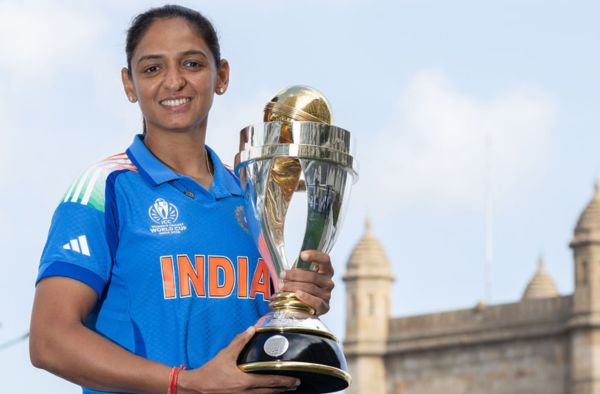
Her crowning achievement came on home soil: leading India to their maiden senior ICC title at the 2025 ODI World Cup, defeating South Africa by 52 runs in the final at DY Patil Stadium. That campaign included a semi-final masterclass, her vital 89 alongside Jemimah Rodrigues’ 127 chased down 339 against Australia. In Tests, she broke new ground too: India’s first-ever Test win over Australia (December 2023, Wankhede) and the historic Lord’s Test victory over England in July 2026 stand as a testament to her tactical boldness.
The Weight of Expectation and the Wisdom to Let Go
Despite her successes, pressure mounted after India’s league-stage exit at the 2026 T20 World Cup in England, their second such early departure under her leadership. Media narratives and former players increasingly framed vice-captain Smriti Mandhana as the inevitable successor, creating an atmosphere where transition felt less like a choice and more like a necessity. Yet Harmanpreet’s timing suggests agency, not acquiescence. Her meeting with BCCI secretary Devajit Saikia alongside Mandhana and coach Amol Muzumdar in Guwahati signals a coordinated handover, not a fractured exit.
In her heartfelt post, she wrote: “I have given everything I had to this team and to Indian women’s cricket, my blood, my sweat, my time, and many times, a part of my own game and personal ambitions.” That line cuts to the core of her captaincy: selfless, often at personal cost. As skipper in winning T20Is, she averaged 35.82 at a strike rate of 114.97; in ODIs, 63.57 at 92.38, numbers that reflect both consistency and clutch performance under pressure.
Why Now Makes Perfect Sense
At 37, with the 2028 Los Angeles Olympics on the horizon, Harmanpreet’s priority shifts from leading to performing. “Now, it is time for me to turn the page,” she said. “Captaincy ends. The journey continues.” Free from administrative burdens, she can focus on what she does best: anchoring innings, accelerating and playing attacking, fearless cricket when needed, and mentoring the next generation from within the XI.
Her record backs the wisdom of this move. In T20Is, she boasts a 59.35% win rate across 92 victories, the most by any captain in women’s T20I history. In ODIs, 58.82% win rate across 51 matches, including that iconic 143* against England in Canterbury (2022) that powered India to a historic series whitewash. In Tests, an 80% win rate, losing only once, to Australia in Perth in March 2026. She didn’t leave because she couldn’t lead; she left because she chose to evolve and hand over the prestigious responsibility of leading the side to the next generation.
Smriti Mandhana’s Moment and India’s Future to Take the Legacy Forward
Smriti Mandhana, 30, now takes the reins across all formats, with Shafali Verma and Deepti Sharma named T20I and ODI vice-captains respectively. Her first assignment, a historic white-ball series against Zimbabwe from 16–28 October 2026, offers the perfect low-pressure platform to settle into command before the high-stakes tour of South Africa (December 2026) and the inaugural Women’s T20 Champions Trophy in February 2027 in India.
Harmanpreet Kaur’s blessing is implicit in her words: “I genuinely believe my team is in a good place. A team with talent, character, belief and a future that I am incredibly excited to watch and be a part of.” That’s not resignation; it’s endorsement.
The Bigger Picture
This isn’t an ending; it’s a recalibration. Indian women’s cricket has never been stronger, globally competitive, commercially viable, and deep in talent. Harmanpreet’s exit doesn’t create a vacuum; it opens space. Space for Mandhana to imprint her style. Space for Harmanpreet to rediscover her free-flowing batting without the weight of strategy meetings and selection debates. And space for a new generation to rise, knowing the standard has been set, not by perfection, but by persistence.
As she signed off: “Blood. Sweat. Sacrifice. Pride. I gave it all.” And now, finally, she gets to play for love, not duty. That’s not just good for her personally; after all the mentally exhausting narrative games surrounding her leadership in recent times, despite all the success for India under her regime, it’s good for Indian cricket.

I am Yash Tailor, and I believe work should be driven by passion. Therefore, after completing my Engineering, I chose to work in the Cricket industry, my passion. My goal is to reach a stage where I truly enjoy what I do and give my best to every task with energy and purpose.