The International Cricket Council (ICC) for the first time has outlined a timeline that could see an Afghan women’s refugee team compete in international qualification pathways by 2030, offering a significant boost to a group of players whose cricketing dreams were disrupted following the Taliban’s return to power in 2021.
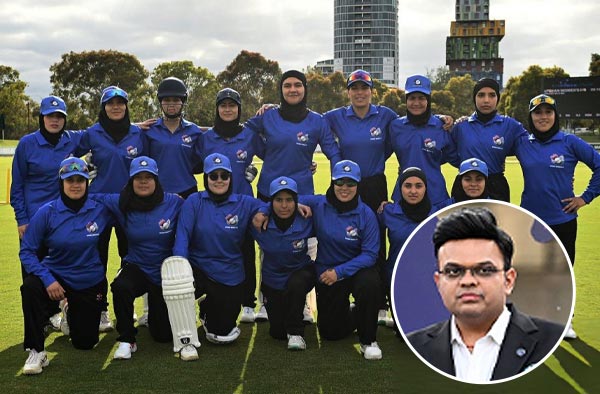
The roadmap was approved at the ICC Annual Conference in Edinburgh, where the governing body reconstituted its Special Taskforce to oversee the long-term development of the refugee team. Although the players will not represent Afghanistan officially since they remain without the backing of the Afghanistan Cricket Board (ACB), the initiative creates a pathway for them to compete internationally under a different identity.
The expanded Taskforce now includes representatives from the BCCI, ECB and Cricket Australia, alongside ICC independent director Dr Ros Rivaz and Cricket Ireland chief executive Sarah Keane. The group will oversee coaching, physiotherapy, training camps and competitive fixtures as the players work towards potential ICC qualification events later this decade.
The announcement marks another milestone for a group that has steadily rebuilt its cricketing journey in exile. Many of the players were among the first women contracted by the ACB in 2020 before political developments forced them to flee Afghanistan. Since then, most have settled in Australia, with others based in the United Kingdom and Canada. The team reunited for the first time in Melbourne in January 2025 before touring India during the Women’s ODI World Cup and England alongside the 2026 Women’s T20 World Cup.
Nahida Sapan said the programme had already restored more than just opportunities to play cricket. “This programme has already made a real difference to us, not only by helping us continue playing cricket, but by enabling us to come together and play as a team.” She also welcomed the ICC’s long-term commitment, saying it was reassuring to know the governing body was investing in their future and recognising that they deserved “the same rights and opportunities as players of other countries.”
For fellow player Firooza Afghan, the tours over the past two years have laid the foundation for a future that once seemed impossible. “A long-term view of participation in ICC qualification pathways gives us a clear goal to work towards, and we are determined to make the most of every opportunity along that journey.”
The ICC is yet to confirm which regional qualification pathway the team will enter. While Afghanistan’s men’s side continues to compete in Asia under the ACB, the refugee women’s squad is predominantly based in Australia, making the East Asia-Pacific region one possible option.
Former Australia international Mel Jones, who has worked closely with several of the displaced players since they arrived in Australia, believes the roadmap is about much more than cricket. “The continued support for these remarkable women, alongside a clear roadmap towards ICC qualification pathways by 2030, represents an important commitment to their future.”
Jones added that the decision sends “a powerful message that talent and determination deserve opportunity,” describing the players as role models whose progress over the last year had been extraordinary.
While the team still cannot compete as Afghanistan, the ICC’s latest move represents its strongest commitment towards giving the displaced cricketers a place in the international game. If the programme develops as planned, the refugee side could enter ICC qualification pathways by 2030.

Loves all things female cricket