The Finnish Women’s Bears Are Building Around Skill, Not Noise
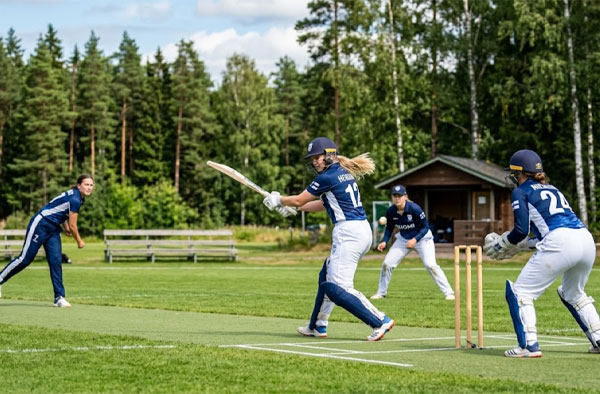
Finland’s women’s cricket project is young, but it already has the shape of a national pathway. Cricket Finland lists the Women’s Bears as a representative team established in 2024, after Finland XI fixtures against Nordic and Estonian opposition gave the programme a competitive base. The current story is not about one superstar. It is about wicketkeeping control, batting depth and bowling discipline.
Paikallisessa urheiluvedonlyönnin keskustelussa korostuu nyt sama maltillinen analyysi: kun naisten kriketti saa lisää otteluita ja tilastoja, jokainen uusi vedonlyöntisivusto joutuu käsittelemään markkinoita datan, kertoimien ja vastuullisen pelikassan hallinnan kautta, ei pelkän lajibuumin varassa.
The names matter because the structure is still being written
Finland does not have decades of women’s international scorecards to lean on. That makes the published player roles more important. They show where the team wants control: behind the stumps, through the batting order, and in the overs that stop a T20 chase from becoming a sprint.
The leadership group listed by Cricket Finland features Stella Sheridan, a wicketkeeper, and Traijila Mulepati, a batter. That pairing says plenty. A keeper sees every delivery, sets fielding rhythm and reads batters early. A batter in the leadership orbit adds scoreboard pressure, shot selection and the nerve to rebuild after two quick wickets.
Stella Sheridan gives Finland a field general in gloves
Sheridan’s value starts before the ball reaches her hands. In developing cricket nations, a wicketkeeper often becomes the tactical hinge because coaches cannot communicate every adjustment from the boundary. She can slow the tempo, sharpen energy after a misfield, and spot when a batter is late on the pull.
Why wicketkeeping changes a young T20 side
A clean keeper protects bowlers from wasted pressure. One missed take can turn a tight over into panic; one sharp stumping can make a part-time spinner look dangerous. For Finland, that matters because T20 cricket rewards small margins.
Traijila Mulepati and the search for innings control
Mulepati is listed as a batter, and that role carries extra weight in a young national side. Finland’s challenge is not only to score quickly. It must learn when not to attack, when to absorb two quiet overs, and when to target the weaker fifth bowler.
Batters such as Hansika Dassanayake, Abinaya Shanmuganathan, Pragati Bhandari, Subhashree Rautra, Mira Kaitaranta, Haiyen Nguen and Tiina Leskinen give the squad options rather than a single fragile order. That depth is where progress usually begins.
Aanchal Khullar stands out because bowling identity is scarce
Cricket Finland’s public squad page lists Aanchal Khullar as a bowler, which immediately makes her profile important. In T20, a developing side needs at least one player whose primary job is over-by-over control. Dot balls are not glamorous. They are the currency that buys wickets.
A bowler who can land a repeatable length gives captains a planning tool. Finland can protect weaker matchups, delay risk, and force opponents into lower-percentage strokes.
What Finnish supporters should watch next?
The useful indicators are not only runs and wickets. Supporters who read the game analytically should track repeatable habits:
- Powerplay wicket loss: fewer than two wickets down after six overs keeps the innings alive.
- Boundary spread: one batter scoring all boundaries usually signals structural weakness.
- Dot-ball pressure: sustained dots in overs seven to fifteen often decide T20 matches.
- Fielding errors: young teams lose more games through missed chances than bad tactics.
- Strike rotation: singles matter when boundary hitting is still developing.
A squad built by pathways, not headlines
| Player | Listed role | Practical value for Finland |
| Stella Sheridan | Wicketkeeper | Controls field energy, dismissals and tactical tempo |
| Traijila Mulepati | Batter | Adds batting leadership and innings structure |
| Aanchal Khullar | Bowler | Gives the attack a specialist pressure point |
| Hansika Dassanayake | Batter | Expands top-order and middle-order options |
| Tiina Leskinen | Batter | Adds local depth to a developing batting unit |
The real test is repeat competition
Cricket Finland has put clear emphasis on year-round training, support staff and women’s development events. Regular Nordic fixtures, scoring education and showcase events build match literacy, not just participation.
Selection pressure will decide the next leap
The next standout player may come from outside the current public names. That is healthy. Finland’s women’s cricket will grow fastest if selection becomes a contest rather than a recognition ceremony.
- Powerplay wicket loss: fewer than two wickets down after six overs keeps the innings alive.
- Boundary spread: one batter scoring all boundaries usually signals structural weakness.
- Dot-ball pressure: sustained dots in overs seven to fifteen often decide T20 matches.
- Fielding errors: young teams lose more games through missed chances than bad tactics.
- Strike rotation: singles matter when boundary hitting is still developing.
| Player | Listed role | Practical value for Finland |
|---|---|---|
| Stella Sheridan | Wicketkeeper | Controls field energy, dismissals and tactical tempo |
| Traijila Mulepati | Batter | Adds batting leadership and innings structure |
| Aanchal Khullar | Bowler | Gives the attack a specialist pressure point |
| Hansika Dassanayake | Batter | Expands top-order and middle-order options |
| Tiina Leskinen | Batter | Adds local depth to a developing batting unit |

Loves all things female cricket