The announcement of India’s squad for the ICC Women’s T20 World Cup 2026 has not only sparked conversations around exciting debutants but has also brought equal attention to some key omissions, notably Amanjot Kaur, Kashvee Gautam, and Sneh Rana. These absences are significant, not merely because of their names but due to the balance, experience, and all-around depth they bring to the Indian side. As India prepares for a high-stakes global tournament, the absence of these impactful players highlights the fine margins and tough decisions that define World Cup squad selections.
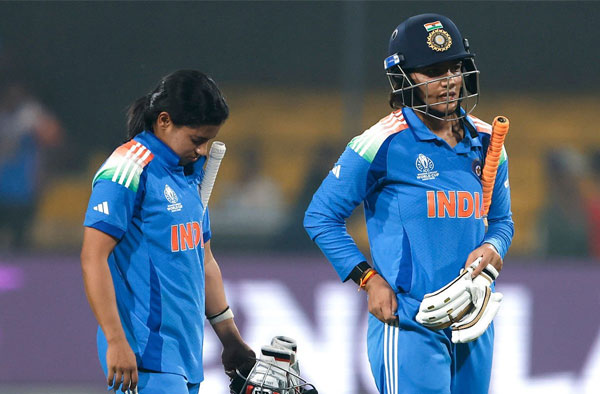
The most talked-about omission is undoubtedly Amanjot Kaur, a player who has steadily become one of India’s most reliable all-rounders in the shortest format. Captain Harmanpreet Kaur herself acknowledged her importance, stating that replacing Amanjot has been “very difficult,” underlining her value to the team setup. Amanjot’s absence is primarily due to a back injury that has kept her away from cricket for several months, ruling her out of selection. In T20 Internationals, Amanjot has already showcased her all-round capabilities, contributing crucial runs in the lower middle order while also picking up wickets at key moments. She averages in the 23.62 with the bat, scoring 189 runs with the highest score of 63* and maintains an economy rate under 8 with the ball, picking up 8 wickets, numbers that reflect her efficiency in pressure situations. Her performances in the Women’s Premier League (WPL) further elevate her reputation; playing for Mumbai Indians, she has delivered impactful spells and scored quick runs at a strike rate above 129, scoring 348 runs in 25 innings and picking up 9 wickets, often acting as a game-changer in crunch moments. Her ability to provide balance, especially as a seam-bowling all-rounder, is something India will undoubtedly miss in English conditions.
Another major absentee is Kashvee Gautam, whose rise in Indian cricket has been both rapid and inspiring. Unfortunately, her exclusion is injury-driven, with a serious knee issue requiring surgery, making her unavailable for the tournament. Kashvee is not just a promising youngster but a proven performer across formats. She grabbed national attention for her historic 10-wicket haul in domestic cricket and her recent performance in the South Africa series, where she picked one wicket in three matches. She has since backed it up with consistent performances. In international cricket, she has already shown glimpses of her potential, including a valuable 43-run knock in an ODI against Australia and crucial wickets in the same series. In the WPL, Kashvee made headlines by becoming one of the most expensive signings and justified her price tag with impactful all-round displays. She has picked up 19 wickets and scored 110 runs; her best bowling figures in WT20Is are 3/11. She has contributed with both bat and ball, maintaining a healthy strike rate and consistently breaking partnerships. Her absence deprives India of a genuine seam-bowling all-rounder who could have been a vital asset on pace-friendly pitches.
The omission of Sneh Rana, however, is more of a selection call than an availability issue, making it equally intriguing. Sneh has been a consistent performer for India over the years, especially in the all-rounder’s role. In T20Is, she has contributed with both bat and ball, picking up over 26 wickets while maintaining an economy rate close to 6.3, an impressive figure in modern T20 cricket. With the bat, she has often played crucial cameos, stabilising innings under pressure. Her WPL performances further underline her value; she has been consistent in delivering economical spells and chipping in with important runs. Despite her experience and consistency, the selectors have opted to go with younger, more dynamic options, signalling a shift towards a future-oriented approach.
These omissions also reflect the evolving dynamics of Indian women’s cricket, where competition for places has intensified significantly. The rise of young talents, coupled with the influence of the WPL, has created a scenario where even established players are not guaranteed a spot. While this depth is a positive sign for Indian cricket, it also leads to difficult decisions, especially when it involves players who have consistently delivered.
From a team composition perspective, the absence of Amanjot and Kashvee leaves a noticeable gap in the seam-bowling all-rounder department. Both players offer the rare combination of pace bowling and lower-order hitting, which is crucial in T20 cricket. Their ability to contribute in multiple phases of the game, power play, middle overs, and death adds flexibility to team strategy. Without them, India may have to rely more heavily on spin options or inexperienced pace alternatives, which could impact the team’s balance in challenging conditions.
At the same time, the omission of Sneh Rana suggests a strategic shift rather than a forced absence. The selectors appear to be backing players who bring either greater batting firepower or more specialised bowling roles, aligning with the modern demands of T20 cricket. However, Sneh’s experience in high-pressure situations, including World Cups, is something that cannot be easily replaced.
In conclusion, while India’s squad for the ICC Women’s T20 World Cup 2026 is filled with promise and fresh talent, the absence of key players like Amanjot Kaur, Kashvee Gautam, and Sneh Rana adds an element of uncertainty. These players are not just names on a list but proven performers with strong international and WPL records. Their omissions highlight the challenges of squad selection in a competitive era and underscore the importance of fitness, timing, and team strategy. As the tournament unfolds, it will be interesting to see how India compensates for these gaps and whether the new faces can rise to the occasion in the absence of these impactful players.

On a mission to promote women’s cricket around the world! Follow our story: