Former England wicketkeeper Sarah Taylor has offered a powerful and deeply reflective account of her journey through cricket, tracing a path from the intense pressures of international sport and personal mental health struggles to a renewed sense of purpose in coaching.
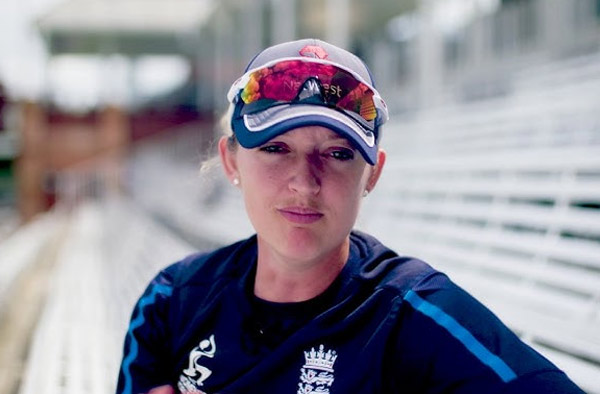
Now embedded within the England Lions setup under head coach Andrew Flintoff, Taylor’s re-entry into elite cricket began with what seemed like a simple phone call but one that carried immense personal significance. Having spent time at Loughborough working with young wicketkeepers, she was unexpectedly asked to join the Lions on tour to South Africa. It was a moment that forced her to confront fears that had once defined her life.
“Internally I was absolutely petrified. I hadn’t flown for quite a few years. But what came out my mouth was: ‘Absolutely, when are we leaving?’ And that was the start of it.”
For Taylor, that instinctive “yes” represented far more than a professional opportunity; it was a quiet but decisive victory over years of anxiety and self-doubt. Not long ago, even the idea of travelling, particularly flying, would have been overwhelming. During the final phase of her international career, she was battling severe performance anxiety and a form of agoraphobia that made everyday situations feel suffocating.
At her peak, when she was widely regarded as one of the finest wicketkeepers in the world, those internal struggles intensified. The expectation to perform, combined with a fear of judgment, created a relentless mental burden that eventually distanced her from the game she once loved. “Oh, I absolutely wanted to bin the game off. I was so bitter about it. Stupid game. And it is a stupid game. But that’s what makes it lovable.”
Her eventual retirement in 2019 brought a sense of relief, allowing her to step away from the noise and rediscover balance. Over time, that distance helped reshape her relationship with cricket—from one defined by pressure to one grounded in appreciation and curiosity. Coaching emerged as a natural progression, offering her a way back into the sport without the same emotional weight.
Within the England Lions environment, Taylor has not only contributed her technical expertise but also become part of a close-knit group navigating the demands of international touring. During a recent assignment, when external circumstances created a tense atmosphere around the squad, she witnessed firsthand the calming influence of Flintoff, whose leadership left a lasting impression. “If Fred speaks, you do not want to be the person speaking afterwards. He’s so genuine, just such a lovely, lovely guy. He cares so much about the guys and how they do, he probably cares in equal parts about them as people, and wants to get the best out of them, but also to make sure they’re OK.”
Taylor’s transition into coaching, particularly within men’s cricket has also been a story of adaptation and quiet confidence. Initially, she grappled with impostor syndrome, stepping into environments where she was often the only woman in the room. But her deep understanding of wicketkeeping, honed over years at the highest level, quickly established her authority. She has come to view the role through a universal lens, focusing on skill, technique and individual development rather than differences between men’s and women’s cricket. In doing so, she has carved out a unique space for herself in a traditionally male-dominated arena.
Beyond the technical side, Taylor has also observed the broader evolution of the sport. From modest beginnings, playing in front of sparse crowds, to witnessing packed stadiums, high-profile auctions and significant financial investment in both men’s and women’s cricket, the transformation has been striking. Yet, despite the changing landscape, she remains at peace with her own journey, accepting both its highs and its hardships.
Perhaps the most profound aspect of her story lies in how she has learned to manage the challenges that once felt invincible. Situations that previously triggered anxiety like long journeys, team travel, unfamiliar environments have gradually become part of her routine. While she acknowledges that the struggle has not entirely disappeared, her perspective has shifted in a meaningful way.
“I have good days and bad days, like everyone else, but I couldn’t get on trains, coaches, buses, nothing – taxis, no good. I was the driver all the time, in control, and then I blink and I’m in Abu Dhabi on a coach, or I’m in India and the ground’s an hour away, and I don’t even think twice about getting on the bus, whereas before that would have been unthinkable. This is the part of the game, Sarah, this is life, crack on. Like I say, it has its challenges. But to anyone listening to this who did suffer, oh my God, it gets better.”
From the outside, Taylor’s career has long been defined by elegance behind the stumps and match-winning performances. But her story beyond the boundary now carries equal weight, one of resilience, self-awareness and gradual healing. In rediscovering cricket on her own terms, she has not only found a new role within the game but also a renewed sense of control over her own narrative.
(Quotes sourced from The Guardian)

Loves all things female cricket