For more than a century, cricket has been a sport of patience, precision, and poetry — a game that once unfolded over five long days under the sun. Yet, in the modern era, the sport has been reshaped by two revolutionary formats: One Day Internationals (ODIs) and Twenty20 (T20) cricket. Together, they have transformed not only how cricket is played but how it is thought about — redefining tactics, athleticism, fan engagement, and even the very soul of the game.
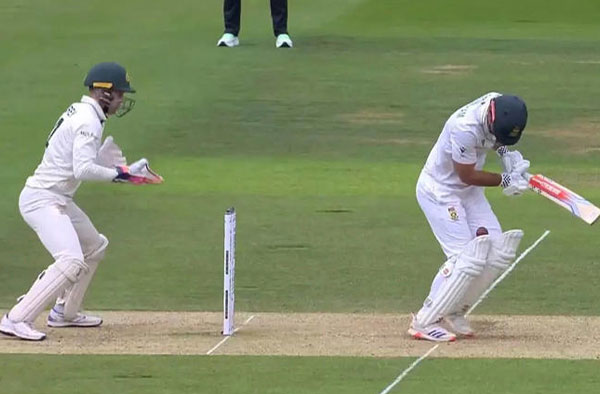
From Timeless Tests to the Era of Limited Overs
Cricket’s early identity was built on the Test match — a contest of endurance and intellect that rewarded consistency and concentration. Then came the One Day International (ODI) format in the 1970s, introducing a new dimension: limited overs and immediate results. Suddenly, every delivery mattered. Run rates became statistics of survival, and fielding — once a secondary skill — became an art form.
The revolution deepened in 2003 with the birth of T20 cricket, a shorter, louder, and more explosive version of the game. Matches that once spanned days now concluded in just three hours. Entertainment merged with athleticism; strategy evolved from endurance to acceleration.
What followed was a tactical renaissance — where innovation, adaptability, and risk management replaced conservatism and patience. Here you can get the actual and up-to-date link for registration and the official 1xBet app betbangladesh.net, making it easy to join the action and stay connected with the world of cricket betting and live sports.
The Tactical DNA of ODI Cricket
The One Day International (ODI) remains the bridge between tradition and modernity. It demands both the patience of Test cricket and the urgency of T20.
1. The Art of Phases
In ODIs, strategy unfolds in three distinct phases:
- Powerplay (Overs 1–10): Teams exploit fielding restrictions to maximize early runs. Aggressive openers aim to dominate pace bowlers, forcing captains to react.
- Middle Overs (11–40): Control replaces chaos. Teams rotate strike, manage risks, and set the platform for a late surge. Spinners become key — choking the run rate, building pressure, and forcing mistakes.
- Death Overs (41–50): Precision becomes paramount. Bowlers mix yorkers and slower balls; batters target specific zones. A well-timed boundary in this phase can define the match.
2. Role Definition
Unlike Tests, ODIs rely on specialized roles: power hitters, anchor batsmen, finishers, and death-over specialists. This clarity allows teams to balance aggression with structure.
3. Tactical Anchoring
Captains in ODIs must master tempo control — knowing when to attack, when to consolidate, and when to gamble. Partnerships are measured not just by runs, but by momentum shifts.
ODI cricket, in essence, is a chess match with limited moves — every piece must be used with foresight and calculation.
The T20 Revolution: Strategy Meets Spectacle
If ODIs demanded precision, T20 cricket demanded reinvention. Introduced as a crowd-friendly spectacle, it evolved into the most strategic format of all — where every ball is a mini-battle.
1. Powerplay Maximization
With only six overs of fielding restrictions, T20 teams focus on explosive starts. The concept of a “steady opener” has nearly vanished; instead, power hitters like Jos Buttler, David Warner, and Rohit Sharma set the tone by attacking from ball one.
2. Dynamic Bowling Rotations
Captains use bowlers in short bursts, rarely allowing predictability. Matchups are algorithmic — a left-arm spinner might bowl specifically to a right-handed batter with a poor sweep percentage. Bowling plans are micro-targeted and data-driven.
3. Death-Bowling Innovations
T20 has revolutionized death bowling — the final overs where precision determines victory. Bowlers mix yorkers, slower bouncers, knuckleballs, and wide deliveries, each premeditated for specific batters. Success lies in deception, not just execution.
4. Batting Data Science
Analytics rule modern T20 batting. Players train with heat maps and predictive AI models, identifying bowlers’ patterns and shot probabilities. The “matchup era” means teams select lineups not just on form, but on projected efficiency against opponents.
5. Fielding as a Weapon
T20 forced teams to value athleticism. Diving stops, relay throws, and boundary saves can change momentum in seconds. Fielding is no longer supplementary — it’s decisive.
Psychological and Physical Adaptation
The rise of shorter formats has demanded a new athlete archetype. Where endurance once defined greatness, now it’s explosiveness, adaptability, and nerve under pressure.
- Fitness: T20 demands agility over stamina — players train like sprinters, not marathoners.
- Mental Conditioning: Decision-making time is microscopic. Batters must assess field positions, bowler type, and scoring options within seconds.
- Recovery: With tournaments like IPL, Big Bash, and CPL packed into tight schedules, recovery protocols and load management are critical to longevity.
The modern cricketer must be multidimensional — equally skilled in aggression and restraint, strategy and spontaneity.
The Crossover Effect: How T20 Is Reshaping ODI and Test Cricket
Ironically, T20’s influence has transcended its boundaries. ODIs and even Tests have absorbed its tempo, aggression, and innovation.
- Strike Rates Over Averages: Once, a player’s worth was measured by consistency; now, by impact.
- Attacking Mindset: Even in Tests, players like Ben Stokes, Rishabh Pant, and Travis Head display T20-inspired aggression.
- Creative Bowling: Variations such as knuckleballs and back-of-the-hand slower deliveries, born in T20s, are now ODI and Test staples.
- Accelerated Fielding Standards: T20’s athletic demands have revolutionized global fielding quality.
The formats are bleeding into each other — creating a hybrid style of cricket that blends the artistry of patience with the thrill of unpredictability.
Tactical Intelligence: The Data Era of Cricket
Cricket strategy is no longer crafted solely in dressing rooms — it’s engineered by data. AI and analytics firms like Hawk-Eye, CricViz, and Stats Perform provide real-time insights on batting angles, fielding positions, and optimal matchups.
- Coaches use predictive models to simulate outcomes before matches begin.
- Analysts build “what-if” scenarios — how pitch conditions or dew factors might alter plans.
- Decision-making is increasingly algorithmic — yet still dependent on instinct.
The result is a new kind of captaincy: data-informed but emotionally intelligent. Captains must interpret metrics, yet lead with feel — knowing when to trust numbers, and when to trust the moment.
Global Impact: The Cultural and Economic Transformation
T20 has democratized cricket’s reach. Nations once peripheral to the sport — like the USA, Nepal, or Namibia — now find opportunities through franchise leagues. Economically, leagues like the IPL, SA20, and Major League Cricket have turned cricket into a global entertainment industry worth billions.
But this growth comes with philosophical tension: Has the soul of cricket shifted from contest to spectacle? Purists fear the erosion of endurance and subtlety, while progressives argue that the sport’s survival depends on adaptability. In truth, both views hold merit. Cricket’s diversity of formats ensures that artistry and adrenaline coexist — the game’s poetry now comes in different rhythms.
The Evolution of Team Composition
Team building has become a strategic science. In ODIs, balance is key — a mix of accumulators and finishers, pacers and spinners. In T20s, flexibility reigns — players must bat anywhere, bowl anytime, and field everywhere.
- All-rounders have become gold dust.
- Floating batters can be promoted or demoted based on match context.
- Specialists are replaced by hybrids — athletes who adapt on the fly.
T20 has essentially compressed the skill set of a Test cricketer into a 20-over performance — intensity over longevity.
The Future: The Next Phase of Tactical Evolution
As technology, data, and global exposure expand, cricket’s next evolution is likely to center on adaptive intelligence — real-time strategy shifts guided by AI and performance analytics.
Imagine:
- Smart helmets providing live feedback to batters;
- AI-powered tactical dashboards for captains;
- Predictive fatigue tracking for bowlers.
The convergence of machine precision and human instinct could define the next decade. But even as strategy evolves, one truth remains: cricket’s charm lies in its unpredictability.
Conclusion: A Game Rewritten, Not Replaced
The evolution of cricket’s formats — from Test to ODI to T20 — mirrors the evolution of sport itself: faster, sharper, more global. Each format has forced teams to rethink not just how to play, but how to think.
ODIs taught discipline and planning. T20s taught audacity and innovation. Together, they’ve created a new cricketing language — one where power meets precision, and instinct meets analytics.
The modern game is no longer a single narrative — it’s a tapestry of styles. And as teams continue to adapt, the real beauty of cricket lies not in its tradition or its transformation alone, but in its timeless ability to evolve.

Loves all things female cricket