For decades, the path to cricket stardom in India was a well-worn highway running through a few big cities. Mumbai. Delhi. Bangalore. But the Women’s Premier League (WPL) has blown up that map. A new kind of hero is emerging.

The End of the Metro Monopoly: A New Map for Indian Cricket
The old system was a funnel. To get noticed, a talented young cricketer almost always had to move to a major metropolitan center with established, high-profile academies and state associations. This created a massive geographical bias, leaving a vast pool of talent in smaller “Tier-2” and “Tier-3” cities undiscovered. The WPL, with its franchise-based model, has completely shattered this monopoly. The five teams, backed by significant investment, have a singular goal: to find the best talent, no matter where it comes from. Their scouts are now fanning out across the country, attending local tournaments and holding trials in places that were previously just flyover country for the cricketing elite. It’s a decentralization of opportunity, creating a new, more inclusive map for Indian cricket where a player’s postcode no longer determines their potential.
‘If She Can Do It, I Can Too’: The Power of Visible Role Models
The most profound impact of the WPL is psychological. It’s a simple, powerful idea: visibility. One cannot be what one cannot see. For generations, a girl in a town like Moga, Punjab, or Sangli, Maharashtra, had few, if any, female sporting heroes from a similar background to look up to. The dream of a professional cricket career felt abstract, almost impossible. Now, they can turn on the television and see players like Harmanpreet Kaur (from Moga) or Smriti Mandhana (from Sangli) captaining teams and dominating the game on its biggest stage. This visibility is amplified by modern media. Every match is broadcast in high definition, and every player’s performance is analyzed. This kind of engagement is a key principle in modern digital entertainment. To understand the mechanics of how different platforms are designed for user engagement, one can read more about various approaches in the interactive space. For a young girl watching the WPL, however, this isn’t just entertainment. It’s a powerful, tangible demonstration that a girl from a town like hers can make it, transforming a distant dream into a believable goal.
The Grassroots Gold Rush: A Boom in Local Academies
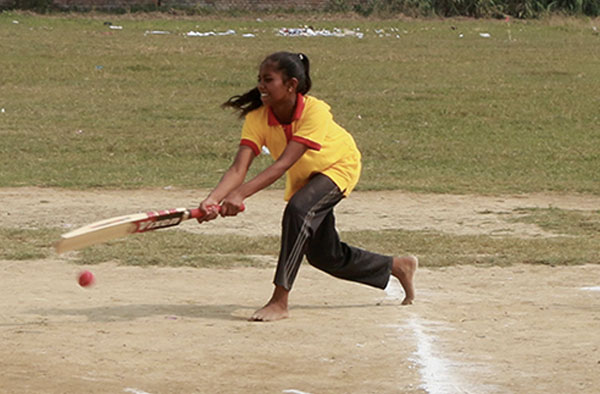
This new, visible pathway to success has created a gold rush at the grassroots level. The WPL didn’t just create a league; it created a viable and lucrative career path. Parents who might have once discouraged their daughters from pursuing sports now see it as a legitimate and respectable profession. The result? A massive boom in girls’ cricket academies and coaching camps in smaller cities all across the country. Local coaches and grounds that were once exclusively for boys are now seeing a huge influx of girls. This is the ripple effect in action. The high-profile success of the WPL is directly fueling the growth of the entire grassroots ecosystem, creating a much larger and more competitive talent pool for the future. The next generation of superstars is being forged right now on the dusty grounds of these Tier-2 cities.
Handling the Spotlight: The Unique Pressures of a Small-Town Hero
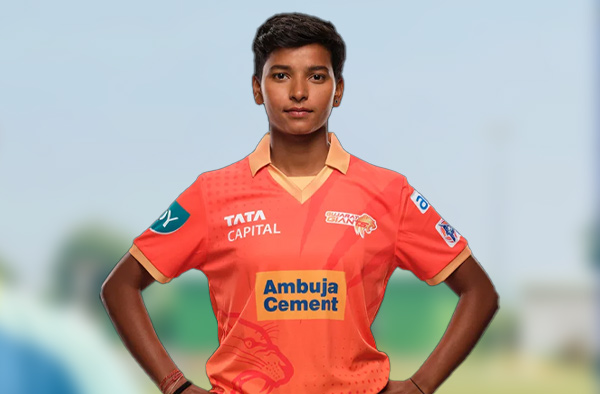
It is not easy to turn into a superstar. It can even be more difficult to become a superstar in a small town. These athletes experience a special and pressurizing combination. When a player who is in a mega city such as Mumbai gets to be a star, he/she is not the only one. However, when a player born in a small town such as Rohtak (where Shafali Verma was born) makes it big, he/she will be a hero in his/her whole area. They are not only representing a team, but the hopes, dreams, and expectations of their whole community rest on their shoulders. Any success is welcomed as a group achievement, whereas any failure will be observed with a level of scrutiny that is almost overwhelming. These athletes must balance the vertigo of new-found fame and fortune and still be the hometown hero in whom everyone feels they have a personal stake. It is a challenging juggling process that needs no end of mental strength out of the field.
Beyond the WPL: The Ripple Effect on the Entire Ecosystem
The consequences of such a revolution are much more than those involved in the game. It is establishing a whole professional environment of females in sports in areas where it has never existed previously. The current growth in local academies leads to a demand of more qualified coaches, which has opened up a new career sector of previous female players. Emphasis on the fitness and health of the players necessitates the increase of female physiotherapists, nutritionists, and sports psychologists. These new stars need to be handled by female agents and managers. The WPL is demonstrating that an effective women’s sports league is not only going to provide 75 jobs to the players involved on the ground; it provides thousands of jobs to women off the field too. It is an effective career-booster in the professional growth of women because they can establish a career in the sports field without relocating to one of the big metros.
Conclusion: The True Democratization of the Game
Women’s Premier League is not only a successful T20 competition. It is an effective agent of social and economic change. Its high-visibility, high-stakes platform has shattered the geographical monopoly held by the large cities and demonstrated that world-class talent is everywhere in the country. It is also influencing the new generation of girls to grab a bat and ball, and they have real and relatable heroes to follow. It is building a grassroots revolution, establishing a strong and diverse talent pipeline of the future. And it is creating a whole system of a professional environment of women in sports. W-P-L is, in the real sense of the word, democratizing the game of cricke,t and we can be sure that the future era of Indian sporting history will not be written in the metros alone but also in the small towns and cities that are the real heart of the nation.

Loves all things female cricket