As the series moves into its third Women’s T20I, Sri Lanka find themselves searching not just for a result, but for rhythm, belief and a performance that reflects the fight within this group. Against a dominant Indian side, moments of resistance have appeared in flashes, an innings here, a spell there, but consistency has remained elusive. Yet, if Sri Lanka are to turn the tide, the answer once again lies with three players who represent the team’s spine across generations: Chamari Athapaththu, Harshitha Perera and Kavisha Dilhari.
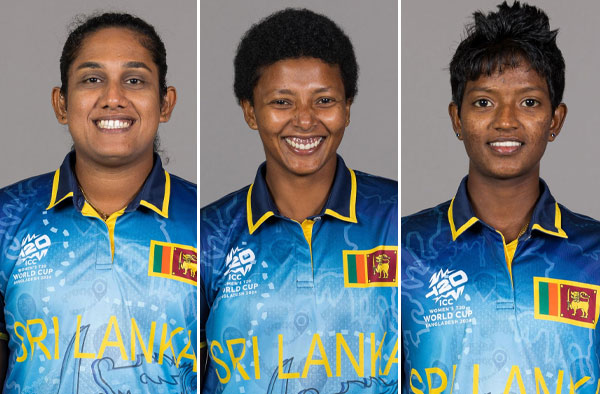
Chamari Athapaththu
No conversation about Sri Lanka’s hopes can begin without Chamari Athapaththu. The captain continues to carry not only the expectations of her team, but the identity of Sri Lankan women’s cricket itself. Across her T20I career, Chamari has amassed 3,504 runs, a landmark that places her among the most prolific batters in the format. Her strike rate reflects her fearless intent, built on years of taking risks because her team needed someone to.
In the second WT20I, Chamari once again tried to set the tone at the top, showing flashes of aggression early on before being dismissed at a stage where Sri Lanka desperately needed her presence to last longer. She scored 31 runs off 24 balls. While the scorecard may not show a defining innings, her intent was unmistakable, stepping down the track, backing herself, and trying to disrupt India’s bowling plans.
Hasini Perera
In contrast to Chamari’s raw aggression, Hasini brings calmness and elegance. Over the years, she has quietly built a respectable T20I record, scoring over 825 runs, that reflects her role as a stabilizer in the middle order. Hasini’s strength lies in her timing; she doesn’t overpower bowlers; she outsmarts them. In the last match, Hasini showed glimpses of her composure, rotating strike efficiently and attempting to rebuild after early wickets. She scored 22 runs off 28 balls.
While she couldn’t convert her start into a substantial score, her ability to read spin and find gaps remains one of Sri Lanka’s most reliable assets, especially against an Indian attack that thrives on pressure. For Sri Lanka, Hasini’s role in the third WT20I becomes crucial. If she can bat deeper into the innings, she allows others around her to play with freedom. Hers is the kind of innings that may not always dominate highlights but often determines whether a total becomes competitive or collapses prematurely.
Kavisha Dilhari
Among the younger faces, Kavisha Dilhari stands out as a player who brings balance to the side. A batting all-rounder with sharp cricketing instincts, Dilhari has already made an impression in her growing T20I career with handy runs and economical bowling spells. Her overall T20I numbers may still be modest, but they reflect versatility, contributing across departments when the team needs it most. Dilhari has picked up 55 wickets in 71 WT20Is.
In the second WT20I, Dilhari once again showcased her fighting spirit, chipping in with a valuable contribution and showing willingness to take responsibility in pressure situations. DIlhari picked up one wicket by conceding 15 runs in 2 overs. Whether it was with the bat or in the field, her energy was evident, a reminder that Sri Lanka’s future is slowly taking shape alongside its present struggles. For the third T20I, Dilhari represents an opportunity. She has the license to play freely, to take calculated risks, and to disrupt India’s rhythm, especially in the middle overs where momentum often swings.
As Sri Lanka steps onto the field for the 3rd WT20I, the task ahead remains daunting, but not impossible. With Chamari Athapaththu’s enduring fire, Harshitha Perera’s quiet control, and Kavisha Dilhari’s youthful versatility, the ingredients for a competitive performance are firmly in place. What remains is execution, and in T20 cricket, sometimes that is just one brave innings or one inspired spell away.

Loves all things female cricket