Scotland arrive at the ICC Women’s T20 World Cup 2026 (12 June–5 July 2026) under skipper Kathryn Bryce with experience from their maiden appearance in 2024 and momentum from qualification in Nepal. Drawn into a challenging Group 2 with England, New Zealand, Sri Lanka, Ireland and the West Indies, Scotland begin their campaign at Old Trafford against Ireland on 13 June (3 PM IST).
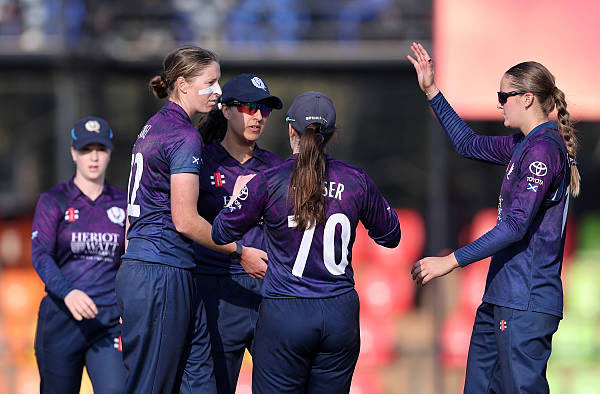
Their route to Manchester was secured by a 41-run Super Six victory over the USA in the Global Qualifiers; with the tournament expanded to 12 teams, Scotland have another chance to translate promise into results. This analysis breaks down the side’s strengths, weaknesses, opportunities and threats, which will determine how far the Kathryn Bryce-led side will go in their 2nd T20 World Cup appearance
Strengths: Potent Spin Attack
Scotland boasts one of the most intriguing spin units in the tournament, combining international experience, craft and match-winning potential. Their spin resources can control middle overs, choke run rates and create wicket-taking pressure on turning surfaces or slow wickets, an asset against teams that favour spin-heavy line-ups.
Kirstie Gordon: A left-arm orthodox spinner who rejoined Scotland in December 2025 after previously representing Scotland (2012–2017) and a later stint for England (2018–2019), including appearances at the 2018 T20 World Cup, where she took 3/16 on debut against Bangladesh. She initially debuted for Scotland aged 14, made 60 appearances before switching to England, and gained valuable experience across domestic teams, including The Blaze, where she remains active in 2026. Back in the Scotland fold, Gordon brings international tournament experience, left-arm variation and control, attributes Scotland will rely on to stifle middle overs and provide important breakthroughs at this World Cup.
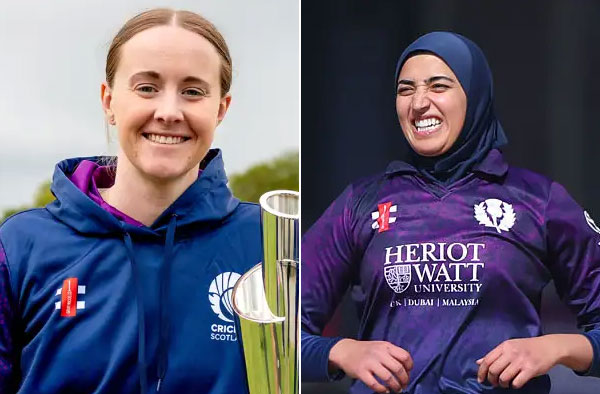
Abtaha Maqsood: Scotland’s right-arm leg-break wicket-taker and a proven match-winner in T20 cricket, with 71 T20I wickets at an average of 17.52 and an economy of 5.58 across 73 innings in 74 matches for Scotland in the format so far. At 26, Maqsood has been central to Scotland’s bowling plans for years and continues to develop her craft within the English domestic structure, representing Essex in 2026; her leg-spin gives Scotland an attacking option to break partnerships and dictate middle-over play. With leg-spin’s value in limiting scoring and taking wickets in T20s, Maqsood will be expected to deliver consistent strike overs and support the spin-heavy strategy.
Areas of Concern: Onus on the Experienced Trio to Anchor the Bowling
Scotland’s seam battery is thin on depth, placing heavy responsibility on an experienced core to deliver consistently. Against top international sides with strong pace line-ups, that burden could expose Scotland unless their senior seamers maintain form and youngsters produce unexpectedly strong contributions.
Kathryn Bryce is Scotland’s captain and all-round fulcrum whose dual contributions with bat and ball define Scotland’s identity; in T20Is, she has 1,395 runs at a strike rate of 104.72 and an average of 34.02 in 54 innings, including 10 half-centuries, alongside 60 wickets at an average of 14.58 and an economy of 4.72 in 55 innings with three four-wicket hauls in 56 matches.
Bryce’s recent 2026 domestic form for The Blaze (166 runs at SR 78.30 and 9 wickets at 26.11 in 8 matches) indicates she remains central both tactically and statistically to Scotland’s plans. As captain, Bryce’s on-field decisions, fitness and ability to anchor innings or produce crucial overs will heavily influence Scotland’s chances in a tough Group 2.
Priyanaz Chatterji is a vital senior all-rounder who brings balance to Scotland’s XI, holding 45 T20I wickets at an average of 20.11 and an economy of 5.56 in 61 innings (74 matches) and 597 T20I runs at a strike rate of 94.46 and an average of 14.92 in 54 innings. Currently representing Surrey in the 2026 ECB Women’s One Day Cup (84 runs at SR 75.67 and 3 wickets at 27.33 in 3 matches), Chatterji’s role is to bolster both the seam attack alongside Bryce and Slater and to provide stability in the lower middle order with useful runs. Her experience will be important in managing pressure situations and filling overs when frontline pacers need support.
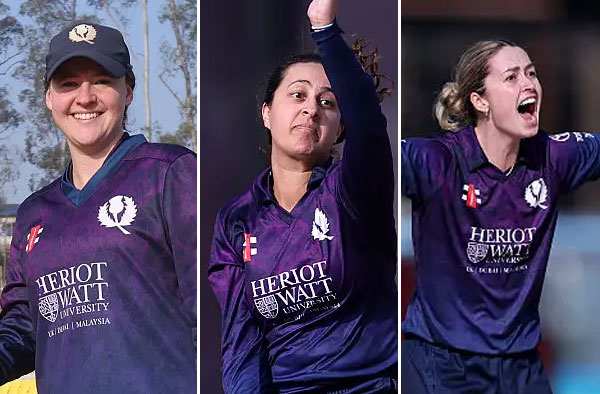
Rachel Slater is a promising 24-year-old left-arm pacer who has become integral to Scotland’s pace strategy, particularly in the powerplay; she has 35 T20I wickets at an average of 20.42 and economy of 6.53 in 37 innings (38 matches), including a five-wicket haul, plus useful lower-order runs (109 at SR 82.57 in 22 innings). Playing for Yorkshire in the 2026 ECB Women’s One Day Cup, Slater has 8 wickets at 24.12 and an economy of 4.70 in six matches, showing growing consistency in domestic cricket. Her ability to make early inroads and control powerplay scoring will be critical for Scotland to contain stronger batting sides.
Opportunities: Youngsters to Step Up in the Middle Order
The World Cup gives Scotland’s younger batters a global stage to change the team’s narrative. Fresh, fearless batting and energetic match awareness can create favourable situations for their side under pressure.
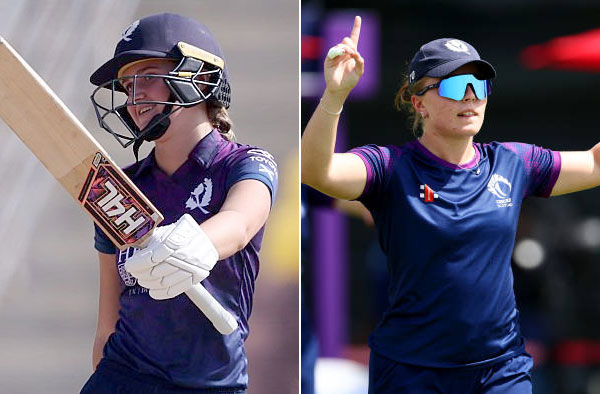
Darcey Carter is a 20-year-old all-round attacking prospect who can change games with both bat and ball; she already has 791 T20I runs at a strike rate of 99.12 and an average of 26.36 in 37 innings, including seven half-centuries, and 19 wickets at an average of 16.36 and economy of 5.98 in 21 bowling innings. Carter has featured for Lancashire in the 2026 ECB Women’s One Day Cup with limited returns so far, but her aggressive batting and useful spin make her a genuine game changer who can swing tight contests and provide Scotland with dynamic middle-order hitting and off-spin bowling options. If she finds form, Carter can be Scotland’s most explosive match-winner.
Ailsa Lister is a 22-year-old wicketkeeper batter whose fearless approach and power-hitting offer Scotland late-innings acceleration; she has 718 T20I runs at a strike rate of 119.86 and an average of 16.69 in 48 innings, with four half-centuries in 54 matches. Representing Lancashire in the 2026 ECB Women’s One Day Cup, Lister has scored 94 runs at a strike rate of 97.91 in seven matches, showing she can translate T20 explosiveness into domestic 50-over cricket. As a modern keeper-batter, Lister’s ability to counterattack under pressure could provide the crucial impetus Scotland needs in close World Cup games.
Threats: Fairly inexperienced backups in the Pace Department
While Scotland’s spin and senior seamers offer a platform, their benches and pace backups are comparatively inexperienced. Injuries, loss of form or tactical mismatches against world-class pace attacks could amplify vulnerabilities, especially on bouncy or fast surfaces. Chloe Abel: Best of the experienced backups; 21 T20I wickets at 17.38 and economy 5.96 in 21 innings (25 matches). Provides depth but not an abundance of international exposure. Maisie Maceira and Gabriella Fontenla: Yet to make T20I debuts; selectors will hope they can fill roles if called upon, but World Cup pressure is a steep learning curve.
Group challenge: Facing England and New Zealand in Group 2 is a stern test; both have depth, power and world-class batters. Sri Lanka and West Indies add spin and variety, while the Ireland fixture (13 June, Old Trafford) opens a direct contest between two nations under contrasting expectations.
Scotland’s home tri-series in Edinburgh (vs Bangladesh and Netherlands) offers crucial match practice, their first home fixtures since 2022, and will be important for finalizing combinations. Warm-up T20Is vs Netherlands (6 June, Derby) and Pakistan (9 June, Derby) provide further match-time before the tournament begins.
They should play to their strengths by using spin to stifle middle overs and rely on Carter, Maqsood and Gordon to chisel out breakthroughs. On surfaces offering turn or low bounce, Scotland’s spin-led plans can create upsets. The pace attack’s effectiveness will shape results. Bryce, Slater and Chatterji must deliver early breakthroughs and control power plays if Carter and Lister fire, Scotland gain the batting depth needed to match stronger sides in the lower middle order and finish games. Progressing from a tough Group 2 will be difficult but not impossible. Scotland’s best path is picking points against Ireland and Sri Lanka, using their spin strength and home-series tuning to build confidence before facing the top-tier opposition.
Scotland’s second successive World Cup appearance comes with a clearer identity: a spin-heavy threat, a captain who leads by example, and a crop of young hitters ready to make statements. The combination of Gordon’s reintroduction, Maqsood’s leg-spin, Bryce’s all-round leadership and emerging talents such as Carter and Lister gives Scotland a credible chance of causing surprises, provided the pace department holds up, and the youngsters step up when it matters most.
Scotland Squad for ICC Women’s T20 World Cup 2026:
Kathryn Bryce (C), Chloe Abel, Olivia Bell, Sarah Bryce, Darcey Carter, Priyanaz Chatterji, Gabriella Fontenla, Katherine Fraser, Kirstie Gordon, Ailsa Lister, Maisie Maceira, Abtaha Maqsood, Megan McColl, Rachel Slater, Pippa Sproul

Loves all things female cricket