In a pre-match press conference ahead of Afghanistan’s Men’s T20I World Cup campaign opener against New Zealand, Rashid Khan, Afghanistan’s premier all-rounder and skipper, addressed a topic that sits at the confluence of sport, politics, and human rights: the fate and future of the Afghanistan women’s cricket team.
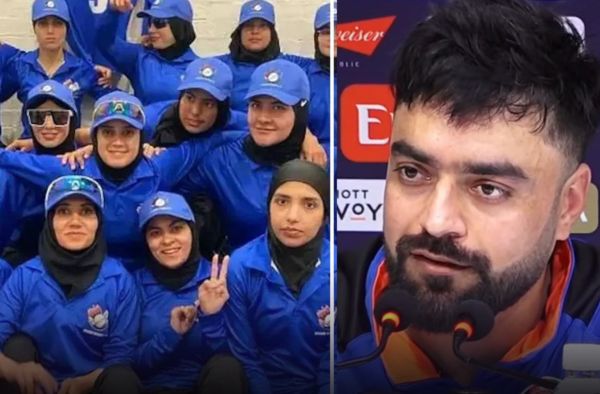
The 27-year-old bowling all-rounder, famed for his match-turning spells and leadership, spoke with measured clarity about a subject that has divided opinion, drawn international support, and forced cricket to reckon with its responsibilities beyond the boundary rope. The central thread of his remarks, whether and how Afghan women can represent their country on the biggest stages, reveals both a pragmatic understanding of governance and a Bollywood-scale yearning for progress in a country wrestling with its own identity on and off the field.
Rashid’s stance, as he framed it, underscored three interwoven ideas: first, the immense pride in Afghan representation, whether on the field or in a broader sense of national identity; second, the practical constraints that come with governance, recognition, and eligibility within ICC structures; and third, the needs of the players themselves, who have endured exile, displacement, and ongoing pursuit of formal recognition.
“Women’s team? Oh, well, definitely, you know, I feel like that’s the kind of criteria for becoming a full member nation of the ICC,” he said, acknowledging a path that is as much about institutional decision-making as it is about athletic merit. “The ICC and the Afghanistan Cricket Board, you know, they have a better idea, but we love to see anyone representing Afghanistan on any stage. It’s a huge, proud moment, and you’re representing your country.
So, but definitely, yes, I think it’s all about the decision to be taken by the ACB and ICC. You know, sometimes, as a player, you don’t have much control over some things, and we only think about the controllable things, you know, but in this situation, we are in a kind of situation where you can’t really have much say in it. But yes, the support you have there, it’s always there, but bigger, bigger people come in, and they make the decision, and they take it forward.”
[embedpress]https://x.com/i/status/2020142401881325717[/embedpress]
These reflections arrive against the backdrop of a complex reality: Afghanistan’s women’s team, having faced a ban on women’s sports following the Taliban takeover in 2021, exists today as an exiled group primarily based in Australia. Although not formally recognised by the Afghanistan Cricket Board (ACB), they have garnered support from the ICC, the BCCI, the ECB, and Cricket Australia (CA) as they seek recognition as a refugee team capable of competing in ICC events.
Their journey includes an exhibition match in Melbourne in January 2025, a symbolic indicator of resilience and potential pathways for formal status. The team’s narrative is one of resilience and advocacy, underscored by international support structures that see sport as a bridge to rights and visibility rather than a mere contest of runs and wickets.
From a governance perspective, Rashid’s comments deflect the pressure onto the institutions that shape the sport. The question of when and how Afghan women can compete in ICC events involves ICC membership criteria, refugee status considerations, and the willingness of cricket boards to align under shared standards of eligibility and ethics. In Rashid’s framing, players and fans can only rely on these “bigger people,” the decision-makers within the ACB and ICC, to chart a credible course that respects both athletic merit and humanitarian considerations.
The broader cricketing ecosystem has already witnessed significant support for Afghan women’s cricket. The ICC has initiated a support package, with funding from the BCCI, ECB, and CA, to facilitate training and development. Exiled players have pursued formal recognition as refugees in their bid to compete on the world stage, and prominent figures have added their voices to the cause. The narrative of the Afghanistan women’s team is now interwoven with the sport’s global governance, where advocacy and policy must align with the passion for competition that fans crave.
The question remains: when will Afghanistan’s women athletes be able to compete as officially recognised representatives of their country at ICC events? The answer lies not only in talent and training but also in the courage of institutions to make difficult, principled decisions that honour both sportsmanship and human rights.
As the World Cup campaign commences for Afghanistan, Rashid Khan’s front-and-centre narratives remind fans that cricket is more than a scoreboard. It is a domain where national identity, gender equity, and global solidarity converge. If the sport’s governance systems can translate aspiration into official status, Afghan women will not just play cricket; they will redefine what it means for a cricketing nation to be truly inclusive on and off the field.

Loves all things female cricket