Women’s cricket has seen some truly magical bowling performances that not only turned matches around but also shaped the careers of remarkable athletes. From fiery pace to skillful spin, these iconic displays highlight the incredible talent and determination that make the Women’s World Cup such a thrilling occasion. Let’s take a look at the top three bowling performances in Women’s ODI World Cup history, where bowlers showcased their skill, accuracy, and brilliance.
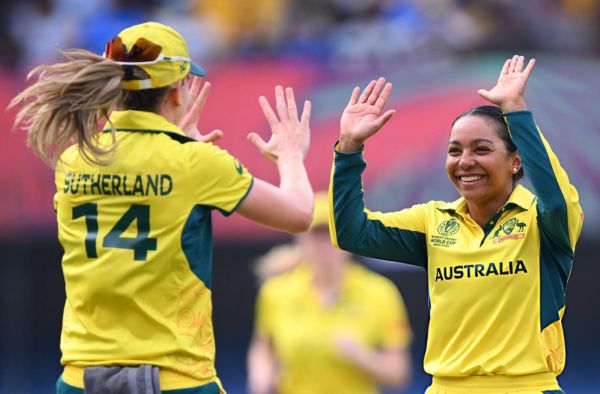
Alana King (Australia) – 7/18 vs South Africa, Indore
Alana King’s historic spell at Indore is sure to be remembered for years to come. The Australian leg-spinner bowled with incredible control and sharp turn, dismantling the South African Women’s batting lineup by taking 7 wickets for just 18 runs over 7 overs. With an economy rate of 2.57, her mastery was evident in the way she combined subtle variations with relentless pressure.
Her spell formed the architect of a dramatic collapse as South Africa went from being 32/0 in the 7th over of the innings to 97/10 in 24 overs, losing their last nine wickets after the departure of their skipper, Laura Wolvaardt (31 off 26 balls), for just 65 runs. Australia eventually won the game by 7 wickets to extend their unbeaten streak and seal the top spot in the league stages of the tournament. Alana King deservedly earned the Player of the Match for delivering one of the most iconic spells in the history of the tournament.
The conditions in Indore were perfect for her leg-spin; there was grip, bounce, and enough turn to deceive even the most seasoned batters. King’s ability to break through South Africa’s middle order, just as they seemed to be recovering, was nothing short of remarkable. Each delivery was tactically sound, whether it was her clever googly or flighted leg-break, leaving batter’s guessing. This performance not only became the best figures in Women’s World Cup history but also established Alana King as Australia’s spin spearhead, marking a defining moment in the team’s dominance in women’s cricket.
Jackie Lord (New Zealand) – 6/10 vs India, Auckland
In 1982, during a time when women’s cricket was still establishing its place on the global stage, Jackie Lord made a significant mark in World Cup history. She inspired her side to script an unthinkable performance in a World Cup tournament. In a tense, low-scoring match defending a total of 81 in a 60-over contest in Auckland, the New Zealand leg-spinner delivered a stunning performance, taking 6 wickets for just 10 runs against India. New Zealand managed to scrape through a miraculous 43-run win, wrapping the Indian innings for just 37 runs in 35 overs. Her economy rate of 1.25 speaks volumes about her discipline and control during that era, when resources were limited and infrastructure modest.
Lord’s pinpoint accuracy forced Indian batters into making mistakes, triggering a batting collapse that swung the game in New Zealand’s favour. Though the 1982 Women’s World Cup lacked the massive coverage of today, Jackie Lord’s performance remains one of the most destructive spells ever recorded in women’s cricket. Her figures stood unchallenged for decades, serving as a testament to her bowling intelligence and competitive spirit. Today, when conversations about iconic World Cup bowling figures arise, her name is always among the first mentioned.
Glenys Page (New Zealand) – 6/20 vs Trinidad & Tobago Women, St Albans
The inaugural Women’s World Cup in 1973 introduced many cricketing pioneers, including Glenys Page. Her spell of 6 wickets for 20 runs against Trinidad & Tobago Women in St Albans is still celebrated as one of the earliest examples of bowling brilliance in women’s cricket. With a calm demeanour and precise line, Page expertly exploited the conditions to achieve one of the finest figures in the tournament’s history. Despite the limited support systems available at the time, her control and ability to read the batters’ intentions were exceptional.
Defending a total of 198, the left-arm spinner Glenys Page (6.2-0-20-6) single-handedly turned the game in favour of the White Ferns against a spirited Trinidad & Tobago batting unit. New Zealand eventually won the game by a massive 136-run win in Clarence Park, St Albans.
This performance set the tone for New Zealand’s competitive spirit in that tournament, showcasing how disciplined bowling could shine even in batting-friendly environments. It paved the way for future generations of bowlers who would leave their mark in Women’s World Cups, remaining a prime example of New Zealand’s illustrious bowling legacy, characterised by intelligence, consistency, and determination.
From Alana King’s modern-day brilliance to the vintage mastery of Jackie Lord and Glenys Page, these three performances are timeless reminders of the artistry in women’s bowling. Each of these spells not only defined specific matches but also marked moments in cricket history, shaping the legacy of the Women’s ODI World Cup as a stage for excellence, precision, and passion.

Loves all things female cricket