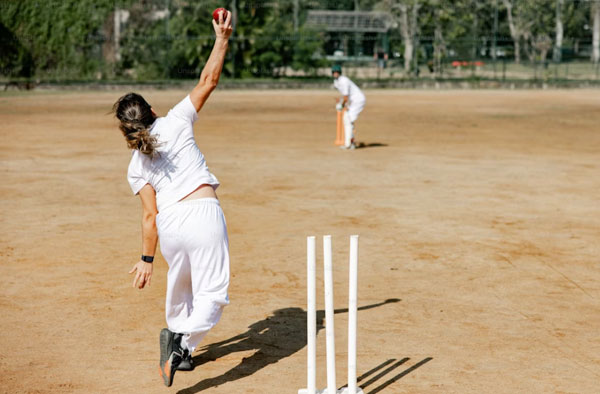
To begin with, women’s cricket is a considerably older sport than some might envision. Dating back to the 16th century, this bat-and-ball game was played in England, but as the colonial empire expanded, the pastime went global.
Over time, cricket has revolutionized significantly, much like Forex trading ‒ the sphere that has seen the rise of cutting-edge trading apps like metatrader 5 download apk. If you are looking forward to extending your knowledge on cricket history as a women’s discipline, this article is for you.
The Origins of Women’s Cricket as a Spectator Sport
It is believed that before gaining momentum in England, cricket used to be a children’s game. Then, in the 17th century, official matches began to be held. Interestingly, people were making bold attempts to bet on teams to determine the winner. Gradually, the game has turned into the country’s national sport and a beloved pastime.
One might wonder how females established their presence in a male-oriented cricket world. The history of women’s cricket can be traced back to a report in The Reading Mercury on July 26, 1745, considering a thrilling match between the villages of Bramley and Hambledon, near Guildford, Surrey. The Mercury stated the following:
“The greatest cricket match that was played in this part of England took place on Friday, the 26th instant last, on Gosden Common, near Guildford, between eleven Bramley maids and eleven Hambledon maids, all dressed in white. The maids wore blue ribbons, and the Hambledon maids wore red ribbons on their heads. The Bramley girls scored 119 marks, and the Hambledon girls 127. This was the largest number of either sex ever seen on such an occasion. The girls played ball, hitting, running, and catching just as most men could do in this game.”
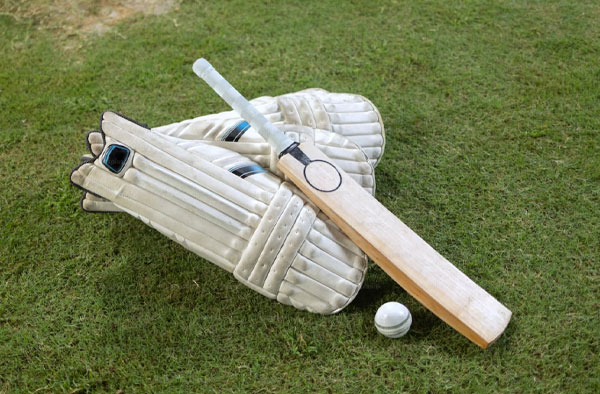
Correspondingly, the equipment used in cricket has drastically transformed as well. Previously, the cricket bat used to resemble a stick, which, according to some historians, is where the name comes from. Although the origin of the name is still debated, all the discussed versions possess the same meanings, like stick, staff, or club. Eventually, the game has evolved greatly, adding more complex rules and terms. For instance, a straight bat was adopted for its better hitting properties, and the pitching method also changed.
A century later, the first women’s Cricket Club, known as White Heather Club, was formed. To reach the highest point of development, a women’s World Cup was held two years before the first men’s tournament. This formation established a robust presence of women’s cricket as a particular sport in history.
Cricket’s Ultimate World Expansion
By the mid-19th century, the game had gained popularity in India, Australia, America, and South Africa. Consequently, global-scale matches began to be held, resulting in women’s cricket becoming a trend.
In 1909, England, Australia, and South Africa set up the International Cricket Council (ICC). After World War II, Pakistan, Sri Lanka, and Bangladesh joined the ranks. Today, 16 countries, including Afghanistan and Kenya, are members of the Council.
The female equivalent of ICC is the International Women’s Cricket Council (IWCC), which was launched in 1958 and ran the women’s game for almost half a century before merging with the ICC in 2005.
The Modern Era of Women’s Cricket
Probably, the most significant moment in the history of women’s cricket happened in 2015, when a fateful decision was made. From 2007 to 2014, women competed in T20 format cricket alongside one-day cricket, with games held on the same pitches.
On the contrary, in the 2014/15 season, it was decided to schedule some contests of the top-notch Big Bash League (Australia’s men’s T20 cricket championship). Above all, the women’s league final was also broadcast live on television.
The following season, a major reboot led to the implementation of the Women’s Big Bash League. Thrill and excitement marked this remarkable event as most games were on TV. Many females from various countries came to play in the league, including some well-known players, Meg Lanning and Ellyse Perry, among others.
Finally, a risky decision was made: the Women’s Big Bash League was to be held separately from the men’s league, and also to start and finish earlier than the men’s league! This contradictory opinion raised a lot of concerns about whether there would be any interest from viewers.
Fortunately, the risk paid off! Since the season was a roaring success, spectators actively attended the women’s matches, which weren’t tied to the men’s league. Women’s cricket matches drew around 2,000 people, which was an amazing number of spectators. Game reports and players’ names dominated the front pages of sports sections. Most importantly, female athletes no longer felt like appendages of men’s cricket. This shift has led to a noticeable increase in female interest in this discipline.
Final Thoughts
According to present-day statistics, approximately 40 percent of cricket fans in Australia are female. Given that online sports streaming has skyrocketed nowadays, women’s cricket can gain more visibility in a male-oriented environment.

Loves all things female cricket