As the countdown intensifies to the Women’s ODI World Cup in India and Sri Lanka, Australia’s fierce captain Alyssa Healy is quietly engineering a technical evolution to extend her career at the highest level. The reigning champions’ skipper, renowned for her dynamic wicketkeeping and explosive batting, has faced a series of injury challenges that have forced her to rethink a key aspect of her game, her wicketkeeping technique.
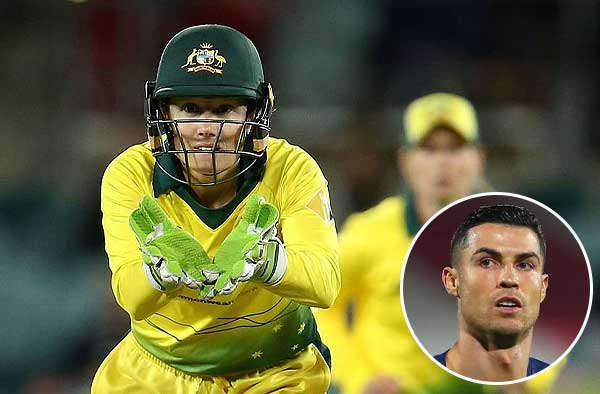
Healy’s recent months have been marked by a frustrating foot injury, originally sustained at last year’s T20 World Cup, which flared up again during the Ashes ODI series against England. Meanwhile, a knee injury also truncated her WBBL season. With the World Cup looming, Healy’s priority is clear: protect her body while maintaining her top form behind the stumps. And in a remarkably insightful paralleling of sports science, she credits a “Cristiano Ronaldo moment” as the inspiration behind her adjustments.
Drawing from conversations with a podiatrist, Healy reflected: “When Cristiano Ronaldo started to get towards the back end of his career, they changed positions for him to make it a little bit easier on the body,” Healy told reporters at unveiling of Cricket Australia’s new four-year partnership with Westpac. Though cricket doesn’t offer the flexibility to switch roles as a keeper-batter like football does, Healy embraced the idea of tweaking her technique to reduce strain.
“How do we make things more efficient?” she asked herself. The answer came in the form of a “hybrid model” blending wicket keeping techniques traditionally used in Australia and England, aimed at safeguarding ageing joints while allowing her to retain the agility crucial to her role.
[embedpress]https://x.com/imfemalecricket/status/1950866546102096113?t=BV2_oIpT8TljJ8ycDnraqQ&s=19[/embedpress]
Healy’s modification is subtle but strategic: shifting to a slightly more upright stance at the start, as opposed to the deep crouching position, wicketkeepers in cricket have been taught in Australia for decades. This is crucial because the classic low squat, while effective for quick reflexes, is increasingly taxing on the knees and feet as an athlete age.
“We’ve all been taught to stay low and come up with the ball,” she explains, “and that’s fine until your knees and your feet can’t allow you to do that anymore.” The altered stance aims to ease the load on her joints, helping maintain mobility and explosiveness without risking further injury, a delicate balance of performance and longevity.
After a long hiatus from competitive wicketkeeping, she last kept during the January Ashes ODIs. Healy is slated to return behind the stumps in the Australia A series against India A. These fixtures are crucial for testing her new technique under match conditions and gauging its effectiveness.
“My goal is to be there and playing in the World Cup as a wicketkeeper,” she affirms confidently. The team’s preparation will continue with three high-stakes ODIs against India, a significant steppingstone towards defending their championship crown starting late September.
[embedpress]https://x.com/imfemalecricket/status/1951235674587165016?t=BV2_oIpT8TljJ8ycDnraqQ&s=19[/embedpress]
Alyssa Healy’s willingness to reinvent her wicketkeeping by blending tradition with innovation is a testament to her determination to extend her legacy while prioritising her health. Just as Cristiano Ronaldo adapted his game to stay at the top, Healy exemplifies how athletes in women’s cricket are evolving to sustain peak performance.
Her story is not just about managing injuries; it’s about leadership, longevity, and the relentless pursuit of excellence. As the World Cup approaches, the cricket world watches closely as one of the game’s finest keepers pioneers a new path to greatness, inspiring the next generation to keep evolving alongside the sport they love.

Loves all things female cricket