Fifty years after India’s women played their first-ever Test, Shubhangi Kulkarni looks back not merely at a historic debut, but at the beginning of a movement. On 31 October 1976, at Bengaluru’s M. Chinnaswamy Stadium, a group of mostly college-going players entered international cricket amid curiosity, scepticism and scarce support. Among them was a 17-year-old leg-spinner from Pune who would help reshape Indian women’s cricket. As the sport marks this golden anniversary, Kulkarni sees today’s World Cup triumph, professional contracts and a record win at Lord’s as the harvest of seeds sown by the Class of 1976.
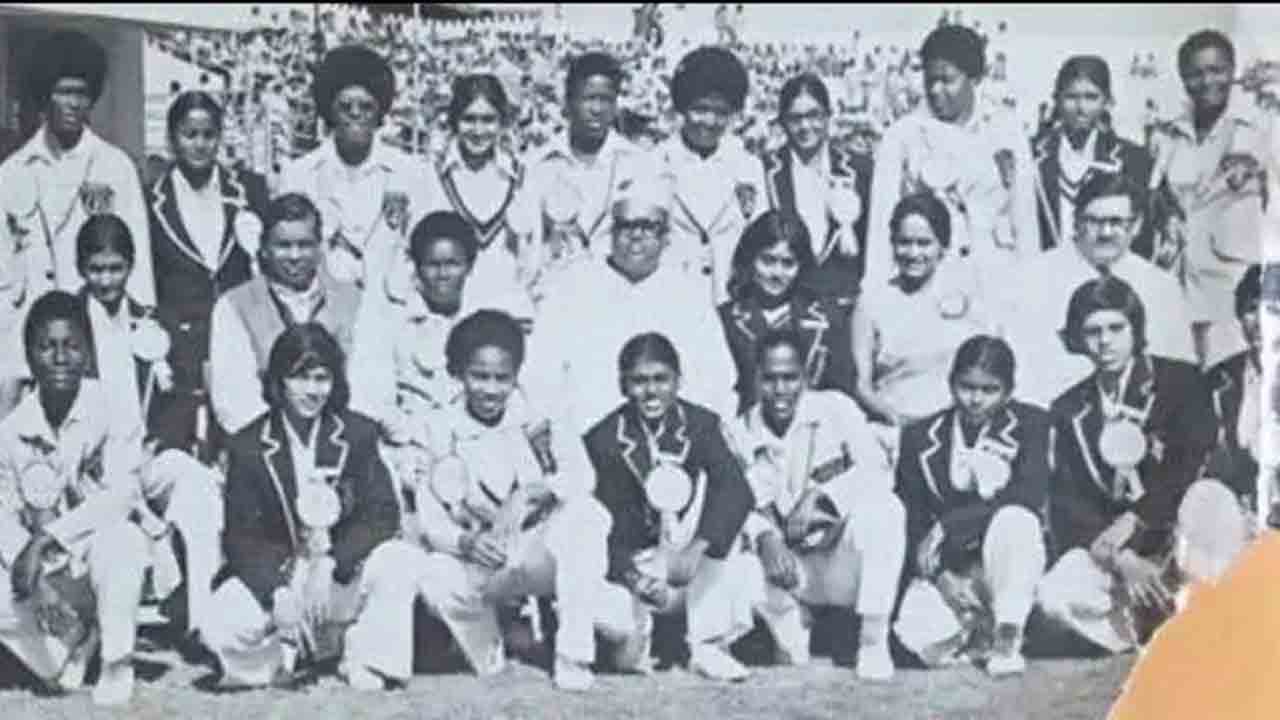
“All of us were very excited,” Kulkarni recalled. “We were all very young, mostly college-going girls around 17 or 18 years old. We were just getting exposed to international competition, and all of us were thrilled to be playing international matches.”
At 17 years and 104 days, she became the third-youngest debutant in Women’s Test history. A pre-series camp under Lala Amarnath prepared India for a West Indies attack known for its fast bowlers. “We thought our spinners were very good, and we were really looking forward to the competition,” she said.
The leg-spinner proved it immediately, taking five for 48 in the first Test and finishing with seven for 76. At Patna’s Moin-ul-Haq Stadium, India secured their first women’s Test victory; Kulkarni’s three for 43 and four for 14 helped seal it. Her 23 wickets in the series remain a joint record. The Patna crowd of around 30,000 left an enduring memory. “After we won, the crowd response was so overwhelming that it took us a long time to get back to the hotel because the crowds wouldn’t allow the bus to move. We kept signing autographs,” she remembered.
Yet acceptance remained hard-won. Parents feared injuries from the hard ball, or that long hours in the sun would affect their daughters’ complexion. Players paid their own fares, stayed in dormitories and travelled unreserved, often carrying food. “Initially, people came out of curiosity just to see us play. But once they started watching, they appreciated our skills and realised that girls could play cricket too,” Kulkarni said.
Her career bridged that struggle and modern professionalism. In 17 consecutive Tests, she bowled 3,329 deliveries, took 60 wickets, claimed five five-wicket hauls, the 2nd highest in women’s Test history, and 16 of them stumped. She also took 38 ODI wickets, while her captaincy debut against England in 1986 produced a career-best 118 and a 106-run eighth-wicket stand with Minoti Desai. The Arjuna Award followed in 1985, but her greater legacy came as WCAI Honorary Secretary, helping drive the 2006 merger with the BCCI.
“That is where things changed for women’s cricket in India, and that is when the girls started getting the facilities,” she said, crediting former BCCI president Sharad Pawar. Equal match fees, central contracts, quality venues, air travel and the Women’s Premier League have transformed the ecosystem. “The WPL has opened up numerous opportunities for domestic players to play alongside international stars and learn from them in the dressing room.”
The emotional peak came on 2 November 2025, when Harmanpreet Kaur’s India beat Laura Wolvaardt’s South Africa by 52 runs at Navi Mumbai’s DY Patil Stadium for their maiden senior ICC title. “It was a dream come true for most of us former players because winning a World Cup is something we all wanted,” Kulkarni said.
That momentum carried into the historic Lord’s Test from 10–13 July 2026, soon after the ICC Women’s T20 World Cup in England and Wales. Sent in by Nat Sciver-Brunt, India made 285 and 341 for seven declared before bowling England out for 186 to win by a record 270 runs. Yastika Bhatia’s 113 and Kranti Gaud’s five for 37 earned places on the Lord’s Honours Board, with Gaud becoming the first woman so honoured.
For Kulkarni, the anniversary also belongs to founders Mahendra Kumar Sharma, Pramila Bai Chavan and Chandra Tripathi, who gave the game institutional shape in 1973. With India hosting the inaugural ICC Women’s Champions Trophy from 14th to 28th February 2027, she believes the timing is right. “After winning the World Cup last year and then the match at Lord’s, I think we have the momentum,” she said. “Those were challenging times. But looking back at where we are today, it gives us a sense of satisfaction that what we did in the beginning has borne fruit.”
(Quotes sourced from the BCCI Press Release)

I am Yash Tailor, and I believe work should be driven by passion. Therefore, after completing my Engineering, I chose to work in the Cricket industry, my passion. My goal is to reach a stage where I truly enjoy what I do and give my best to every task with energy and purpose.