In a candid conversation on the No Balls Podcast with England pacer Kate Cross and co-host Alex Hartley, former Australia captain Meg Lanning opened up about her early international retirement at 31, explaining that while she doesn’t miss the grind, the unique intensity of World Cup moments still lingers, and that the relentless energy required to stay at the very top simply “ran out” at some point.
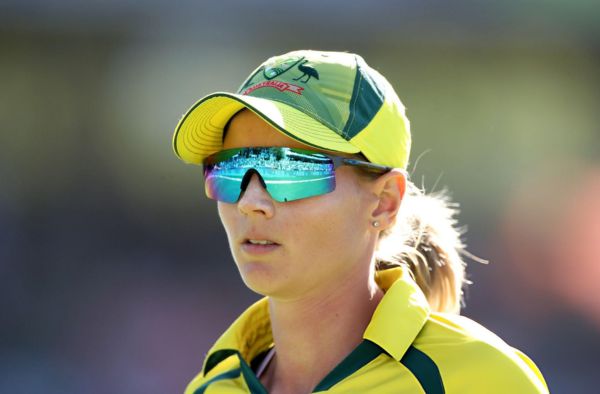
Meg Lanning announced her international retirement on 9 November 2023, stepping away at the peak of her powers after a career defined by ruthless consistency and silverware. Her decision surprised many, given she remained among the world’s best batters, but in her own words, the cost of excellence had become unsustainable. “The constant travel, the relentless nature of it, every decision I was making was literally around how to be as good as I could and how we could win as many games,” she told Cross. “I don’t regret any of that. That’s what I wanted to do, and that’s also what I think made me good.”
When Cross pressed whether she missed the international stage, Lanning was clear: only in fleeting, high-stakes moments. “There’s a very small moment when they’re playing the World Cup finals, semi-finals and finals of World Cups. They just had like a completely different feel. Apart from that, no.” It’s a revealing admission from a player who turned pressure into a habit, lifting seven World Cup titles as a player, ODI crowns in 2013 and 2022, and T20 World Cups in 2012, 2014, 2018, 2020, and 2023. Four of those triumphs came under her leadership (2014, 2018, 2020, 2023 T20s, plus the 2022 ODI), cementing her reputation as the most decorated captain in women’s cricket history.
Lanning’s statistical footprint remains staggering. She held the record for most international centuries (17) across formats during her career, a benchmark later matched by India’s Smriti Mandhana and South Africa’s Laura Wolvaardt after her retirement. In ODIs, she amassed 4,602 runs at an average of 53.51 and a strike rate of 92.20 across 103 matches, including 15 centuries and 21 half-centuries. Her T20I ledger reads 3,405 runs at 36.61 with a strike rate of 116.37, featuring two centuries and 15 fifties in 132 appearances. She made her ODI debut on 5 January 2011 against England at Perth’s W.A.C.A., and never looked back.
Her captaincy also delivered historic milestones, including Australia’s gold-medal win at the 2022 Commonwealth Games in Birmingham, where they defeated Harmanpreet Kaur’s India in the final at Edgbaston on 7 August 2022. Even after her exit, Australia’s success continued: Alyssa Healy’s side fell to India in the 2025 T20 World Cup semi-final in Navi Mumbai, before India claimed their maiden senior ICC title by beating South Africa in the final; and in 2026, Sophie Molineux led Australia to a seventh T20 World Cup crown at Lord’s, overcoming Nat Sciver-Brunt’s England.
Lanning hasn’t left the game entirely. In the 2026 Women’s Hundred (21 July–16 August), she captained the Manchester Super Giants (formerly Manchester Originals), finishing as the franchise’s second-highest run-scorer with 143 runs at a strike rate of 120.16 and an average of 23.83 across seven innings. The side ended fourth with 18 points from eight games, four wins, three losses, and one washout, just shy of the knockouts. It’s a fitting postscript: still impactful, still competitive, but on her own terms.
Lanning’s reflection, “I also feel like that energy just ran out at some point”, captures the quiet truth behind many early retirements at the elite level. Greatness demands totality; when the willingness to surrender everything else fades, walking away isn’t weakness, it’s wisdom. For fans who wanted more, her message is gentle but firm: the hunger that built a legacy can’t be faked, and once it’s spent, even the best must listen.
(Quotes sourced from No Balls Cricket Podcast)

Loves all things female cricket