It was a bruising week for Indian cricket. While the headlines reeled from a shock men’s defeat to Ireland, the Indian women’s national team found themselves facing a familiar, painful exit on the big stage.
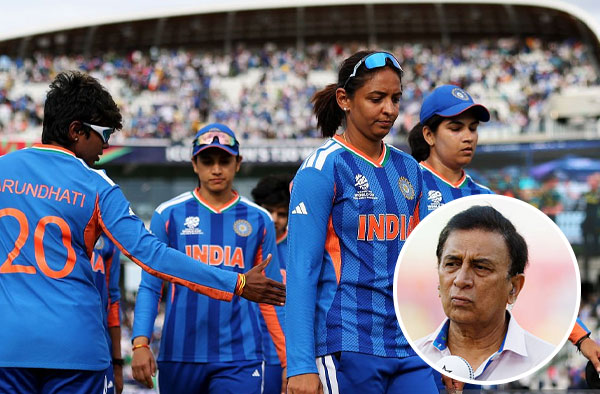
For many fans, losing to a clinical Australian side is a script they have seen before. But as cricket legend Sunil Gavaskar pointed out in his latest column for Sportstar, the real damage wasn’t done by the Aussies. It was self-inflicted, born out of basic errors and questionable selections that leave a stinging question in their wake: Are we setting our players up to fail?
India’s tournament trajectory didn’t just slip away; it was dropped. Reflecting on the campaign, Gavaskar pulled no punches about the match that truly doomed the team’s chances. “They should have beaten South Africa, but so abysmal was their fielding against them that they lost from a good position and were virtually out of the tournament with that loss.”
Fielding has long been the barometer of a team’s mental sharpness under pressure. When the pressure mounted against South Africa, the fundamentals collapsed. Fumbles, dropped catches, and slow reactions turned a commanding, winning position into a desperate defeat. In modern T20 cricket, where margins are razor-thin, a lazy field doesn’t just give away runs—it leaks momentum. By the time they faced Australia, the damage to their confidence was already done.
Beyond the dropped catches, Gavaskar raised a more systemic issue regarding player management. Watching the tournament unfold, observers couldn’t help but notice players taking the field visibly taped and restricted. It begged the question of whether India was prioritizing reputation over readiness.
“To see players playing with bandaged fingers does give the impression that they are carrying an injury, even if it may be a minor one. Did we play all fit players, or were there some who weren’t 100%?”
Gavaskar acknowledged that risking a less-than-fit player is acceptable if they are a genuine “impact player” who can change a game in three overs or four balls. But when ordinary squad members are pushed through with injuries, it reveals a deeper, more worrying flaw in Indian cricket’s development.
“Otherwise, it suggests that the reserve players are not good enough to take the injured player’s place.”
If the gap between the starting eleven and the bench is so massive that the management must rely on injured players, it points to a failure in building real squad depth. A healthy bench pressure forces the starting players to stay sharp; a weak bench creates complacency and forces injured athletes to play through pain, lowering the overall standard of the game.
Finally, the critique shifted from physical fitness to tactical awareness. Modern cricket is a game of data and dynamic adjustments, yet India’s leadership seemed stuck in a rigid blueprint. Even when opponents found a clear scoring avenue, the field remained stubbornly unchanged.
“Despite the 50-over win and the other matches where runs against the spinners were regularly taken over extra cover, there was no attempt to cover that gap with a fielder and make the batters attempt lofted shots with an open face of the bat.”
To let opposing batters repeatedly exploit the exact same gap over extra cover without adjusting the field is a tactical failure. By refusing to plug that hole, India allowed batters to collect low-risk runs. Had they placed a fielder there, it would have forced the opposition to change their stroke play, risking a mistimed lofted shot into the deep. Instead, the tactical passivity allowed the opposition to dictate the game.
For India to transition from perennial semifinalists to actual champions, the fix isn’t just about practicing harder in the nets. It requires an honest look at squad depth, stricter fitness standards, and a captaincy that can adapt on the fly. Until those changes happen, bandages and blind spots will continue to tell the story of what could have been.

Loves all things female cricket