Australia captain Sophie Molineux believes versatility, adaptability and a strong team culture could hold the key as Australia chase a record-extending seventh ICC Women’s T20 World Cup title in England and Wales next month.
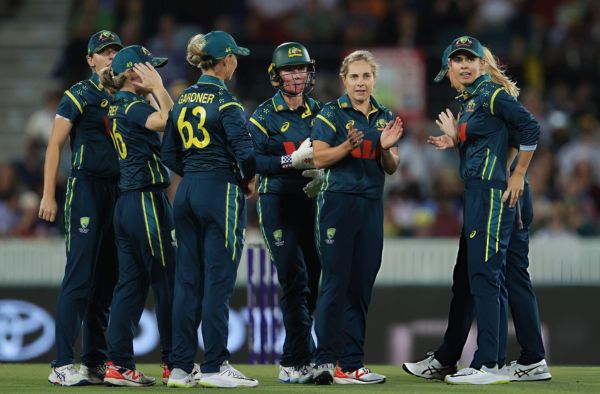
The 28-year-old will lead Australia at an ICC tournament for the first time in her career, stepping into one of the biggest leadership roles in world cricket following Alyssa Healy’s retirement earlier this year. Already a two-time Women’s T20 World Cup winner as a player, Molineux now carries the responsibility of guiding a new-look Australian side seeking to reclaim global dominance after consecutive disappointments in major ICC events.
Australia remains the most successful team in Women’s T20 World Cup history, having lifted the trophy six times. But semi-final exits at both the 2024 Women’s T20 World Cup and the 2025 ODI World Cup have created fresh motivation within a side accustomed to winning cricket’s biggest prizes. For Molineux, preparation and adaptability will define Australia’s campaign. “If we prepare well, adapt quickly, and play our style of cricket, we’ll give ourselves the best chance,” Molineux said ahead of the tournament.
Australia’s squad blends experienced stars with emerging talent, creating a balance the captain believes could prove crucial over a long tournament. Established names such as Ellyse Perry, Beth Mooney, Ashleigh Gardner and Megan Schutt remain central figures within the side, while younger players including Phoebe Litchfield, Georgia Voll and Lucy Hamilton continue to establish themselves at the international level.
Australia have consistently built success through squad depth, flexibility and players capable of changing games across departments. Molineux believes that balance remains one of their greatest strengths heading into England. “There is belief in the group and what excites me most is the balance we have,” she said.
[embedpress]https://x.com/i/status/2058852351679811791[/embedpress]
The captaincy role has also brought personal growth for Molineux. Having stepped into leadership duties earlier this year, she acknowledged that her focus now extends far beyond her own performances. Leadership, communication and building the right team environment have become equally important responsibilities. “I am spending more time thinking about how to create the right environment for others, making sure communication is strong, that players feel supported, and that we are aligned on how we want to play. It has been a shift, but a really enjoyable one.”
That emphasis on culture and clarity reflects Australia’s broader transition period. Following leadership changes and the introduction of younger talent, the squad enters this World Cup balancing evolution with the expectations that come with representing one of women’s cricket’s most dominant teams.
Molineux herself understands what success on the global stage requires. Having been part of Australia’s triumphant T20 World Cup squads in 2018 and 2020, she carries valuable tournament experience into her first campaign as captain.
But despite Australia’s rich history, she made clear that previous success alone guarantees nothing. “Australia has an amazing history in World Cups, and that is something we don’t forget, but it also motivates us to keep evolving rather than relying on what has been done before.” Australia will head into the tournament among the favourites once again, carrying both expectation and opportunity.
The challenge now is not simply preserving a legacy built over more than a decade of dominance. It is proving that even through change, Australian women’s cricket can continue setting the standard. For Sophie Molineux, her first ICC event as captain offers the chance to shape that next chapter and perhaps add another trophy to Australia’s unmatched World Cup legacy.
(Quotes sourced from Sophie Molineux’s column for ICC)

Loves all things female cricket