Yet again, the India and Pakistan players refused to shake hands pre-match or post-match, which, by now, we’ve already seen on a number of occasions in cricket as well as in various other sports.
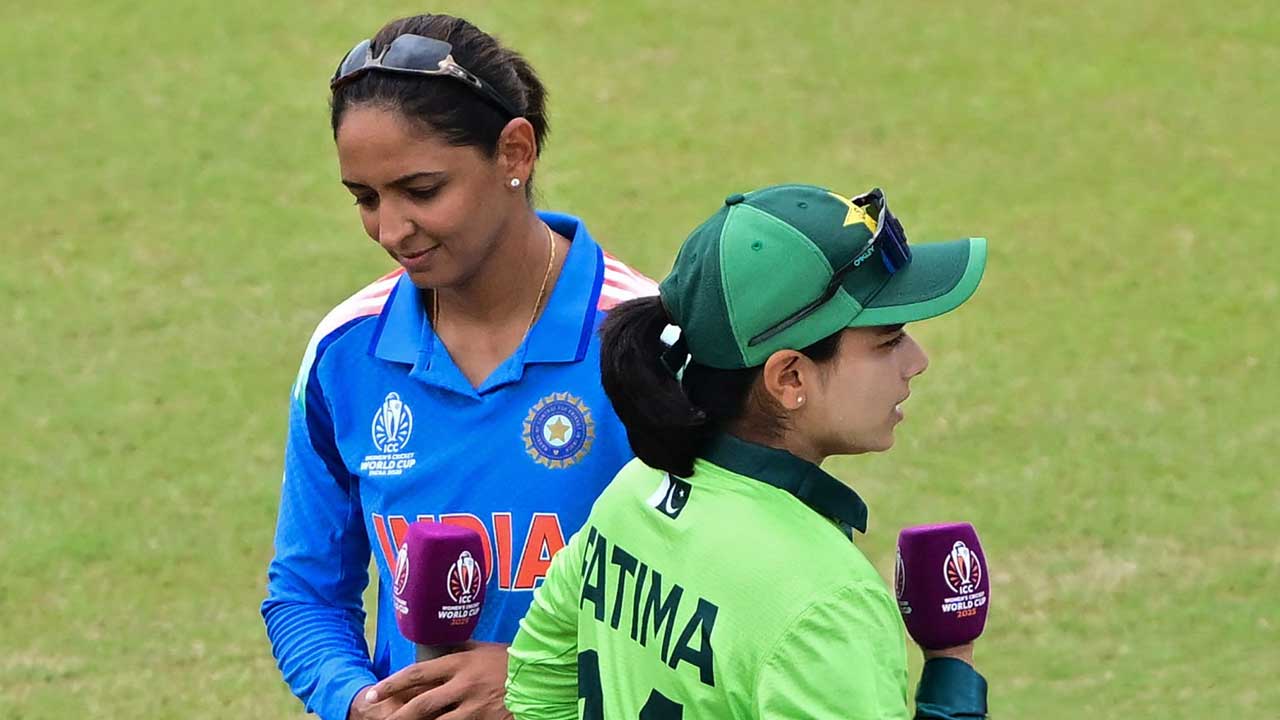
There were cold vibes between the players, whose body language remained stoic, as the India A Rising Stars side returned to the dressing room after losing to their Pakistani counterparts in Doha on Sunday, November 22, during the men’s Rising Stars Asia Cup 2026.
Fraser Stewart Says MCC Cannot Enforce Handshakes
The absence of the customary handshake has once again placed the spotlight on the limits of cricket’s rule-makers. The Marylebone Cricket Club (MCC), custodian of the Laws of Cricket, has said it would like to see India and Pakistan players shake hands, but accepts that it cannot insist on the gesture when instructions come from higher authorities.
“If there are edicts coming from above about handshakes, that’s not something that MCC can control. We would like to see it, but we realise there are bigger issues at play, and that’s something beyond our control,” Fraser Stewart, the MCC’s Laws Manager and Head of Cricket, said.
Stewart’s remarks make clear that the MCC’s authority is confined to the laws and spirit of the game, not the political or diplomatic decisions that shape relations between teams. “There are certain instances that transcend cricket and come from a level that’s above my station to talk about geopolitical situations. What we can control is that, on the field, the players respect each other, they respect the umpires, the authority of the umpires and the game,” he added.
MCC and ICC Have Different Roles in Governing International Cricket
The distinction is important. The MCC, founded in 1787, maintains, interprets and updates the Laws of Cricket, which govern how the sport is played. The International Cricket Council (ICC), by contrast, is the global governing body for international cricket. It frames playing conditions, runs international tournaments and enforces the Code of Conduct that deals with player behaviour and disciplinary matters.
In practice, that means the MCC can advocate sportsmanship, mutual respect and fair play, but it cannot compel players to shake hands or intervene in decisions taken by teams, boards or governments. Matters involving player conduct and international cricket fall under the jurisdiction of the ICC and, in certain cases, individual cricket boards.
The India-Pakistan handshake issue has been a recurring feature since last year’s Asia Cup in Dubai. Following the Pahalgam terror attack in April 2025 and the subsequent cross-border hostilities, Indian teams aligned with the BCCI and the Indian government’s stance by avoiding pre- and post-match handshakes, in solidarity with the Pahalgam attack victims and in support of the Indian Armed Forces after Operation Sindoor.
The practice extended across Indian sport and age categories. In women’s cricket, Harmanpreet Kaur’s India first declined handshakes with Fatima Sana’s Pakistan during the 13th ICC Women’s ODI World Cup, hosted by India and partly in Sri Lanka from September 30 to November 2, 2025. India won that league-stage clash in Colombo by 88 runs after dismissing Pakistan for 159 in 43 overs while defending 248.
India went on to lift their maiden senior-level ICC title under Harmanpreet and head coach Amol Muzumdar, beating Laura Wolvaardt’s South Africa by 52 runs in the final at the DY Patil Stadium in Navi Mumbai on November 2, 2025.
The stance continued through the 10th ICC Women’s T20 World Cup in England and Wales from June 12 to July 5, 2026, and the sixth ACC Women’s T20 Asia Cup in the UAE from August 28 to September 13, 2026. Harmanpreet led India to their fourth T20 Asia Cup title, after 2012, 2016 and 2022, by defeating Sri Lanka by 72 runs in the Dubai final.
Soon after, on the morning of October 6, 2026, Harmanpreet stepped down as India’s captain across formats. Smriti Mandhana was announced as the new all-format skipper later that evening, with Deepti Sharma and Shafali Verma serving as ODI and T20I vice-captains, respectively.
The MCC is also attempting to make the sport’s laws more accessible. The rule book is now available in Hindi, Urdu, Kannada, Marathi and Bangla, alongside English. “Part of our role is to make the game accessible. The laws are complicated. They’re not an easy read, particularly when they’re not in your first language, so it’s on us to try to make those laws understandable,” Stewart said.
For now, though, the handshake between the arch-rivals remains beyond cricket’s control.

I am Yash Tailor, and I believe work should be driven by passion. Therefore, after completing my Engineering, I chose to work in the Cricket industry, my passion. My goal is to reach a stage where I truly enjoy what I do and give my best to every task with energy and purpose.