Four highlights of one winter: How the 2026-2027 season turned women’s cricket into the world’s biggest show
A gust of wind sweeps over the stands at Mumbai’s Brabourne Stadium just as the scoreboard lights up with the final over. Only a few weeks earlier, those same players had been battling for points in the Australian league under the scorching sun of Perth and Sydney, while several thousand kilometers to the northeast, on the grounds of Kathmandu and Chattogram, 17-year-old girls from Nepal, Nigeria, and India were stepping onto the field for the first time in their lives under the gaze of dozens of television cameras.
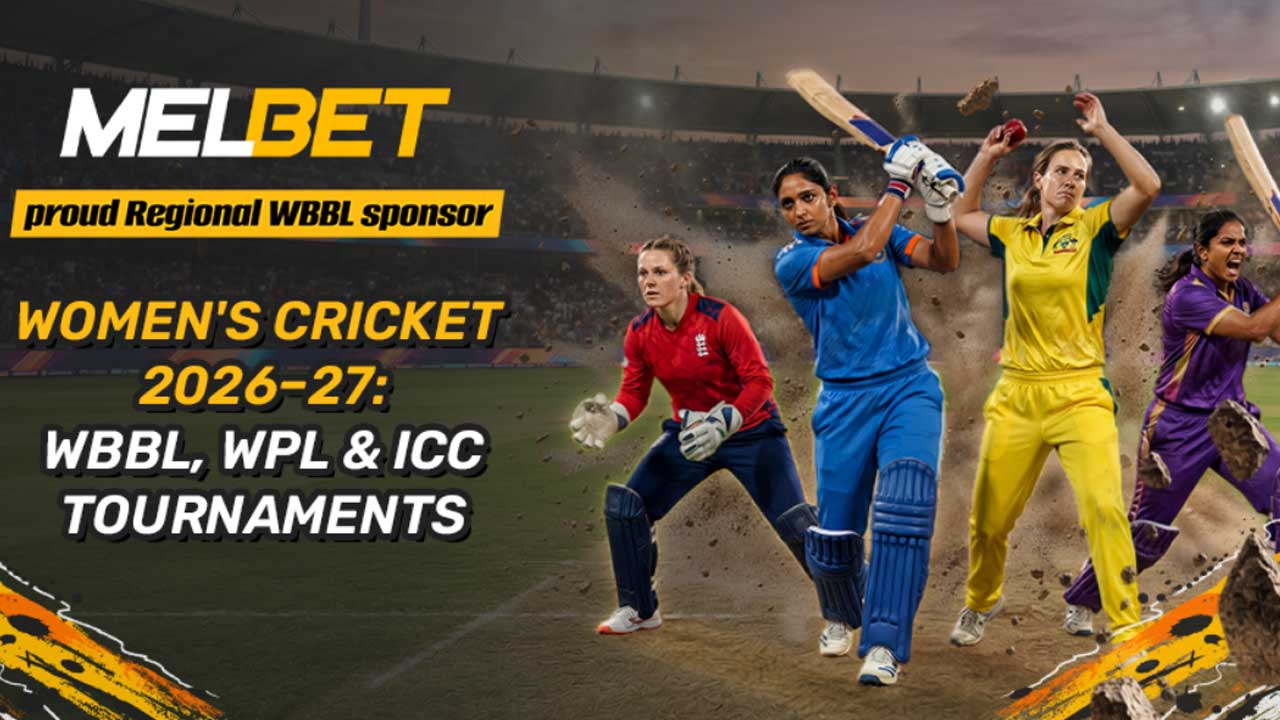
This contrast, between the roaring, commercially polished arenas of the wbbl and India, the almost homely excitement of the junior World Cup in South Asia, and the academic rigor of the historic first Champions Trophy, is the defining portrait of the 2026-2027 season. Never before has women’s cricket had such a packed, dramatically structured, high-quality schedule. Over four months, from late October 2026 to late February 2027, the sport goes through a full cycle: from club battles and auction records to scouting the next generation of talent and crowning the undisputed champion among the elite. Women’s cricket has finally ceased to be a “supplementary” product squeezed into the broadcast schedule as a warm-up. Today, it dictates the rhythm of the entire industry.
Why the 2026–27 Women’s Cricket Season Matters
For many years, fragmentation remained the main structural problem facing women’s cricket. Bright moments, such as the World Cups, were followed by months-long hiatuses, during which the general public lost its emotional connection to the teams and players. The winter of 2026-2027 breaks this inertia through continuity.
A packed wbbl schedule, which began on October 29 and concludes with the final on December 5, 2026, kicks off this four-month marathon. Barely have the Australian playoff celebrations died down when India’s Women’s Premier League takes over in January for its fifth edition. Running parallel to the decisive stage of the Indian franchise league, Bangladesh and Nepal will host the ICC U19 Women’s T20 World Cup from January 21 to February 6. And just eight days after the junior final, on February 14, the historic inaugural ICC Women’s Champions Trophy kicks off in Mumbai and Vadodara and runs through February 28.
This powerful surge naturally follows recent structural shifts: we’ve already taken an in-depth look at global trends in women’s cricket, the new era of speed, and historic attendance records that laid the groundwork for this winter’s cricket marathon.
This sequence of events creates a unique cross-tournament dynamic:
- A unified pool of superstars. The world’s top female cricketers, Ellyse Perry, Amelia Kerr, Ashleigh Gardner, Sophie Devine, Harmanpreet Kaur, and Smriti Mandhana, move from one tournament to another without losing their competitive edge. Fans first see them as overseas stars and leaders of Australian franchises, then as the main headliners in India, and in February, representing their national teams in the battle for a new ICC trophy.
- A clear visual path for the next generation. Junior players competing at the World Cup in Kathmandu and Sylhet in late January can watch the athletes they aspire to emulate in the best leagues and national teams, with both tournaments appearing in the same broadcast window. The path to the top is no longer abstract – it’s quantified and shown live on TV.
- The convergence of two major markets. Australia, with its exemplary development system, and India, with its enormous fan base and commercial clout, form a single hub for the global game. When these two ecosystems work in unison, women’s cricket achieves maximum media exposure and commercial returns.
Women’s Big Bash League (WBBL 2026): Schedule, Teams and Highlights
When the 12th season of the Women’s Big Bash League kicked off in Melbourne in late October, the tournament immediately reaffirmed its status as the premier tactical and talent development ground for world cricket. Eight franchises, 40 regular-season matches, and three playoff games at iconic venues like WACA Ground in Perth, North Sydney Oval, and Adelaide Oval set the bar exceptionally high at the start of the long winter marathon.
Millions of fans worldwide follow wbbl live, witnessing the incredible depth of the Australian domestic cricket system. Unlike leagues where results depend on three or four star players, in Australia even a number eight batter can turn the tide in just two overs. The opening weeks have already demonstrated this: the defending champions, the Hobart Hurricanes, faced fierce competition from the Perth Scorchers’ Beth Mooney and Sophie Devine, the Sydney Sixers’ Ellyse Perry and Ashleigh Gardner, and the revamped Melbourne Stars’ Annabel Sutherland.
Key trends from the current Australian season will directly shape the game for the entire upcoming winter:
- Aggression right from the first ball. Teams are increasingly moving away from cautious probing in the opening overs, regularly scoring 175-195 runs per innings.
- A new generation of all-rounders. Young Australian players like Georgia Voll, Phoebe Litchfield, and Charli Knott are stepping into the spotlight. At just 20-22, they aren’t afraid to take the lead in crucial overs.
- The perfect warm-up for overseas stars. For players from New Zealand, England, South Africa, and India, Australian pitches, with their pace and extra bounce, serve as the best test of technique before moving on to the slower, more spin-friendly grounds of India. It’s no surprise that every well-considered wbbl prediction today is built around an analysis of players’ current form and statistics.
Women’s Premier League (WPL 2027): Schedule, Teams and Growth
If in Australia the local league provides women’s cricket with tactical depth and structure while continuing to grow rapidly in competitive appeal, India has transformed it into a blockbuster industry and a true role model. This tournament needs no introduction, and its success serves as an example for those who aspire to achieve such status. The fifth season of the Women’s Premier League, wpl 2027, is the primary commercial and media driving force behind the entire sport, setting financial standards for cricket worldwide.
Since its launch, the league has revolutionized the economics of women’s sports, instantly becoming one of the world’s most valuable women’s leagues in terms of media rights and franchise value. The player auction held on October 28, 2026, in Kochi once again confirmed the club owners’ ambitions: five franchises (Mumbai Indians, Delhi Capitals, Royal Challengers Bengaluru, Gujarat Giants, and UP Warriorz) have built full-fledged media empires. A total of 146 female athletes vied for 27 open spots, and Australian all-rounder Sophie Molineux became the draft’s most expensive acquisition, joining the UP Warriorz for ₹1.10 crore (₹11 million).
The officially confirmed wpl 2027 start date is January 14, when the world’s best cricketers will take the field in front of crowds numbering in the thousands, kicking off the winter season’s premier club festival.
The Indian market is currently setting the standard for in-depth analytical coverage. We are witnessing a well-established system of genuine success. This is further confirmed by a detailed analysis of women’s cricket trends in India following the 2026 World Cup, which identified the move of the Indian franchise league to the winter window as the primary and undisputed catalyst for the new season.
The wpl 2027 schedule features 22 action-packed matches at venues in Vadodara (BCA Stadium) and Mumbai (the legendary Brabourne Stadium), culminating in the grand final on February 7.
However, the Indian league’s powerful influence on the global market has two sides:
- A powerful catalyst for development. The league has turned Indian female cricketers into national superstars with multimillion-dollar endorsement deals. Having a 19-year-old rookie from rural India share a dressing room with a two-time world champion from Australia or England accelerates local players’ tactical maturation exponentially.
- The gravitational pull and competition for calendar space. The league’s financial clout inevitably draws sponsors, broadcasters, and the world’s top overseas players, forcing other national associations to adjust their schedules to fit India’s January-February window.
What makes this fifth edition unique is that, for the first time, the tournament serves as a direct lead-up to the home-hosted ICC Women’s Champions Trophy. Each match at Brabourne Stadium in late January and early February will be a dress rehearsal for India, Australia, England, and South Africa on the very same ground where they will compete for the winter’s top trophy on February 28.
ICC U19 Women’s T20 World Cup 2027: The future of the game in the heart of South Asia
While the senior franchise leagues light up Mumbai and Vadodara with fireworks and high-octane action, Bangladesh and Nepal will host a tournament from January 21 to February 6, 2027 that could shape women’s cricket for the next decade. The third-ever u 19 world cup will bring together 16 national teams, which will play 41 matches at Bir Shrestha Flight Lieutenant Matiur Rahman Stadium in Chattogram, Sylhet International Cricket Stadium in Sylhet, as well as TU International Cricket Ground and Upper Mulpani Cricket Ground in Kathmandu.
The choice of host countries is no accident. According to the ICC, nearly 40% of Bangladesh’s and Nepal’s population is under 20, and cricket in these countries borders on a national religion. Against the backdrop of an extremely packed schedule for the senior super leagues, the junior level remains the main showcase where new names emerge, regardless of past achievements.
The tournament is notable for several reasons:
- Expanded geographical reach. Alongside the traditional powerhouses, the two-time defending champions from India, as well as Australia, England, and South Africa, the competition will feature teams from Nepal, Samoa, Nigeria, the USA, Scotland, and the UAE.
- A direct path to the senior level. The first two editions have shown that the best players sign contracts with franchise leagues and make their senior international debuts within just 6-12 months. Scouts from all five Women’s Premier League franchises and eight Women’s Big Bash League clubs will be watching the matches in Sylhet and Kathmandu in real time.
ICC Women’s Champions Trophy 2027: The historic crowning of the elite
The culmination of this four-month marathon will be the inaugural ICC Women’s Champions Trophy, to be held in India from February 14 to 28, 2027. For the first time in history, women’s cricket will have a third global ICC title, alongside the ODI-format ICC Women’s Cricket World Cup and the ICC Women’s T20 World Cup.
The tournament format is ruthless and leaves nothing to chance:
- Only the top 6 teams in the world rankings. Six of the strongest national sides in the T20I rankings will take the field: hosts India, reigning world champions Australia, England, New Zealand, South Africa, and Sri Lanka. There are no easy fixtures or underdogs here – every game can prove decisive.
- A grueling round-robin format. The teams will face each other once in a single round-robin stage, comprising 15 group matches. The top two sides will then qualify directly for the final on February 28 at Mumbai’s Brabourne Stadium. With no semifinals, even one or two defeats could cost a title favorite its chance of lifting the trophy.
A look back at the recent global competition helps assess the balance of power among the six top teams: our detailed tournament guide and analysis of the favorites for the ICC Women’s T20 World Cup 2026 clearly shows what keeps Australia, England, and India in the lead over the long haul.
For the top national sides, this tournament is immensely important for prestige and historical legacy. Lifting the first-ever women champions trophy is a motivation comparable to winning the World Cup. This competition provides the final, unifying chapter to the winter season. After months of franchise rivalry, the stars return to their national teams to determine whose training system is stronger here and now.
How Women’s Cricket Leagues Develop Young Players
Behind the record-breaking attendance figures and television ratings lies a process that is transforming the social fabric of entire regions. In India, Bangladesh, Nepal, Sri Lanka, and the Caribbean, women’s cricket has become a real, tangible social ladder – a sports version of the Slumdog Millionaire story, where the ticket to a new life is not a stroke of luck, but a bat, a ball, and thousands of hours of hard work.
When a young woman from a small village in Maharashtra or a modest neighborhood on the outskirts of Dhaka signs a contract with an Indian franchise or makes the national team through u 19 cricket, her entire family’s life changes. Income from professional leagues and equal prize money from the ICC (the women’s prize pool at World Cups has been brought into line with the men’s and exceeds $13.88 million) allow these former schoolgirls to buy homes for their parents, pay for their siblings’ education, and open local cricket clubs in their hometowns.
For girls who are just now picking up plastic bats in the backyards of Kathmandu, Colombo, or Chennai, the world looks different than it did 10 years ago. They no longer hear that cricket is “not a woman’s game” or “a waste of time with no future.” They see their peers on TV earning millions of rupees and playing in front of packed stadiums.
This influx of new talent is directly contributing to the squad depth and stronger internal competition:
- Franchise leagues strengthen the national teams. Second-tier players, who used to compete exclusively in local state tournaments, now regularly face the world’s best bowlers in the Women’s Big Bash League and the Women’s Premier League, overcoming their fear of big names.
- National teams boost the leagues’ value. A standout performance by a young female cricketer at a junior championship or in an ICC Women’s Champions Trophy match instantly makes her the top target at upcoming auctions.
Read more about how experience in Australia and India builds a winning mentality, and why analytics in women’s sport are reaching new heights, in Dwayne Bravo’s in-depth feature on tactics, the strength of women’s cricket, and a smarter approach to predictions.
Having grown up in Trinidad and worked his way from street cricket to the packed stadiums in India and Australia, Bravo highlights three factors that have made the women’s game truly spectacular:
- Fearlessness in the closing overs. Modern batters in women’s T20 have a full arsenal of unconventional shots, from reverse sweeps to powerful lofted drives over mid-on, and aren’t afraid to take risks in the decisive overs.
- Tactical flexibility of the bowlers. The variety of deliveries in the death overs (16th to 20th) has increased significantly. Slower balls, yorkers, and changes in bowling angles have become standard weapons, even for 18-year-old debutants.
- The energy of the stands and the audience’s engagement. When the stadium cheers for the women’s team just as loudly as it does for the men’s, the game reaches a whole new emotional level.
That is precisely why MelBet, as an active regional sponsor and partner in key cricketing markets, India, Bangladesh, Sri Lanka, and Nepal, consistently fosters interest in women’s tournaments. As any recent melbet review shows, the platform adapts to the needs of modern fans by offering detailed statistical dashboards, heat maps, and match analytics in a single interface, helping audiences better understand the finer details of the game.
Top 7 Women’s Cricket Players to Watch in 2026–27
To avoid getting lost in the kaleidoscope of more than 120 matches over four months, keep an eye on these seven female cricketers, whose paths will cross in several major winter tournaments:
- Phoebe Litchfield (Australia / Sydney Thunder / UP Warriorz / ICC Women’s Champions Trophy). At just 23, Australia’s left-handed top-order batter has already become a nightmare for any bowler. Her ability to find gaps in the field in Australia’s domestic league and her knack for coolly closing out finals make Litchfield the Australian women’s team’s main offensive force in India.
- Amelia Kerr (New Zealand / Sydney Sixers / Mumbai Indians / ICC Women’s Champions Trophy). One of the most valuable all-rounders on the planet, whose phenomenal statistics and form are followed daily by millions of fans via melbet online and official tournament trackers. After a strong start in Sydney, the New Zealander will head to Mumbai, where she will orchestrate the Mumbai Indians’ play, and then lead the New Zealand national team into battle against the top sides at the major international tournament in February.
- Shafali Verma (India / Delhi Capitals / ICC Women’s Champions Trophy). The embodiment of uncompromising offense. The winner of the first-ever ICC Under-19 Women’s T20 World Cup, Shafali Verma will once again set the power plays ablaze for Delhi Capitals in January, and in February she will be the biggest threat to India’s opponents at home stadiums in Vadodara and Mumbai.
- Georgia Voll (Australia / Sydney Thunder / UP Warriorz). A rising star of Australian cricket who made a strong impression in the opening rounds of the domestic season. Her aggressive batting style suits Indian pitches, and she could be the biggest revelation of the January-February stretch.
- Ashleigh Gardner (Australia / Sydney Sixers / Gujarat Giants / ICC Women’s Champions Trophy). The epitome of a modern power-hitting all-rounder. A string of Player of the Match awards in Australia, a key role with the Gujarat Giants, and her leadership of the Australia national team heading into February make Gardner a must-watch athlete.
- Deepti Sharma (India / UP Warriorz / ICC Women’s Champions Trophy). The tactical mastermind of the India national team. Entering the winter in phenomenal form, Deepti Sharma will be a key spinner and finisher for both the UP Warriorz and the national side in their quest for the trophy.
- Puja Mahato (Nepal / 2027 ICC U19 Women’s T20 World Cup). The leader and captain of Nepal’s junior national team, she will lead her squad in home matches in Kathmandu amid a passionate, roaring crowd. Her performance against her peers will serve as a prime example of the progress made by emerging cricket nations.
The Future of Women’s Cricket Beyond 2027
When fireworks light up the sky over Brabourne Stadium in Mumbai on February 28, 2027, to celebrate the first-ever winner of the ICC Women’s Champions Trophy, women’s cricket will awaken to a new reality.
This winter will leave behind more than just statistical records and the names of champions. It will introduce the world to a new generation of stars forged in Chattogram and Kathmandu. It will strengthen national teams and make them more tactically sophisticated thanks to the close ties between Australia’s and India’s domestic leagues. Most importantly, it will permanently cement in the minds of millions of fans the idea that women’s cricket deserves to be followed as a mainstream, standalone sporting product in its own right.
This isn’t just an exciting stretch of the calendar featuring four tournaments. It’s a historic turning point, as women’s cricket claims its place in prime time, major stadiums, and the hearts of people worldwide. Follow every over of this incredible winter, discover new heroes, and celebrate the sport’s progress alongside MelBet, a brand that shares fans’ passion, invests in the long-term development of women’s sports, and offers new users a welcome melbet bonus code to make watching and analyzing top-level cricket even more exciting.

Loves all things female cricket