Lydia Greenway’s appointment as the England and Wales Cricket Board’s Head of Women’s Game Strategy is more than a senior promotion for a former England batter. It is a deliberate attempt to connect the expanding domestic landscape with the demands of international cricket, placing a 225-cap former player at the centre of decisions that will shape England’s talent pipeline for years to come.
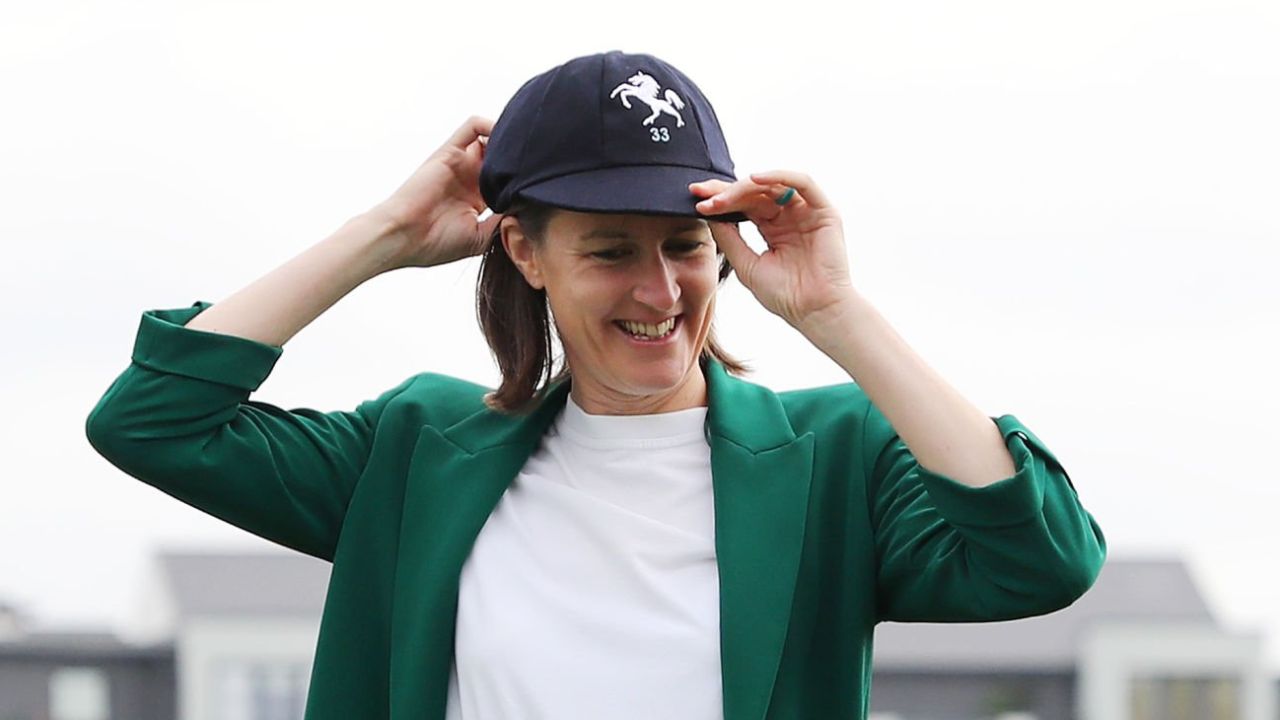
Greenway, who has served as Women’s National Selector since May 2025, will now lead the ECB’s long-term strategy for the women’s game in England and Wales. Her remit includes reviewing the domestic structure, assessing the relationship between Tiers 1, 2 and 3, and ensuring competitions prepare players for the intensity, skill and consistency required at international level.
A Role Built on Experience
Few appointments feel as intuitively suited to the challenge. Greenway represented England, Women 225 times across a 13-year international career, captained Kent, and later moved into coaching, media and administration. Her work as an assistant coach with Mumbai Indians and Sydney Sixers, alongside a head-coach spell with Kent, gives her an unusually rounded view of the modern women’s game.
That experience matters because England’s domestic system is in a period of transition. The regional model introduced five years ago gave way, from the 2025 season to a three-tier county-aligned structure, with eight counties initially awarded Tier 1 status. Yorkshire joined this year, while Glamorgan are set to enter next season.
The tiers were designed as “closed” until the end of the 2028 season, with no promotion or relegation. Tier 1 counties are expected to work with Tier 2 and Tier 3 sides in their regions to build effective development pathways, but the real test will be whether talent can move smoothly from local opportunity to national selection.
The Challenge Ahead
Greenway’s central task is to ensure that domestic cricket is not merely producing players, but producing players ready for England. That means examining whether the competitions provide sufficient high-pressure match exposure, whether coaching environments are consistent, and whether young cricketers can progress without being lost in the gaps between tiers.
Her words on Monday captured both the scale of the task and her intent. “It is a great honour to be asked to expand my role within the women’s game at the ECB,” Greenway said. “The game continues to evolve at great pace both internationally and domestically, and it is vital that we continue to push ourselves to keep improving and ensuring that we have the best possible environments for all our women to develop as cricketers in our game.”
The timing is significant. The Women’s Hundred has become a major platform since its inaugural edition in 2021, with eight franchises competing in the 2026 edition: Birmingham Phoenix, Manchester Supergiants, MI London, Southern Brave, Sunrisers Leeds, Trent Rockets and Welsh Fire. The competition has already produced six different title-winning narratives, from MI London’s back-to-back early triumphs to Trent Rockets’ maiden crown in the sixth edition.
From the Hundred to England Cap
The Hundred’s growth has widened the visibility of women’s cricket, but Greenway’s role will be judged by a harder question: can the domestic system consistently convert promise into international performance? England’s next assignment offers an immediate reminder of the standard required, with Nat Sciver-Brunt’s side set to play a three-match T20I series in Sri Lanka from February 1 to 5.
Beyond that tour, England will take part in the inaugural ICC Women’s Emerging Nations Trophy in India from February 14 to 28, 2027. The six-team tournament, also featuring India, New Zealand, South Africa, Sri Lanka and Australia, will place emerging players under international scrutiny and make a functioning pathway more important than ever.
Greenway’s appointment suggests the ECB understands that strategy cannot be written from a distance. It must be informed by those who have played at the highest level, coached in elite environments, and understood the practical realities of building a career in women’s cricket.
For a game expanding rapidly in profile, investment and ambition, England have chosen a former player who knows both the demands of the international arena and the importance of creating opportunities beneath it. Greenway’s challenge now is to ensure that the next generation does not simply have a route into the game, but a credible route to the top.
(Quotes sourced from Cricinfo)

I am Yash Tailor, and I believe work should be driven by passion. Therefore, after completing my Engineering, I chose to work in the Cricket industry, my passion. My goal is to reach a stage where I truly enjoy what I do and give my best to every task with energy and purpose.